
Last updated November 2, 2026
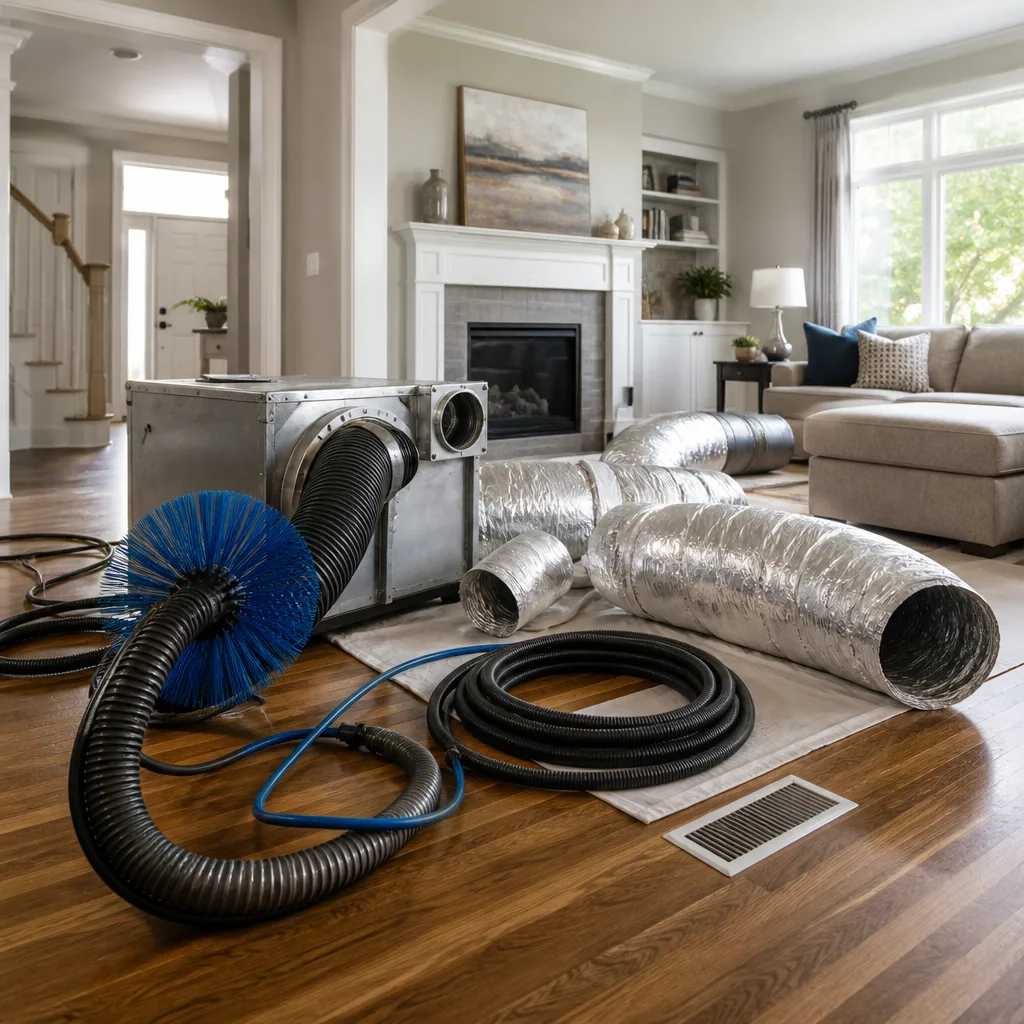 Whole-home duct cleaning
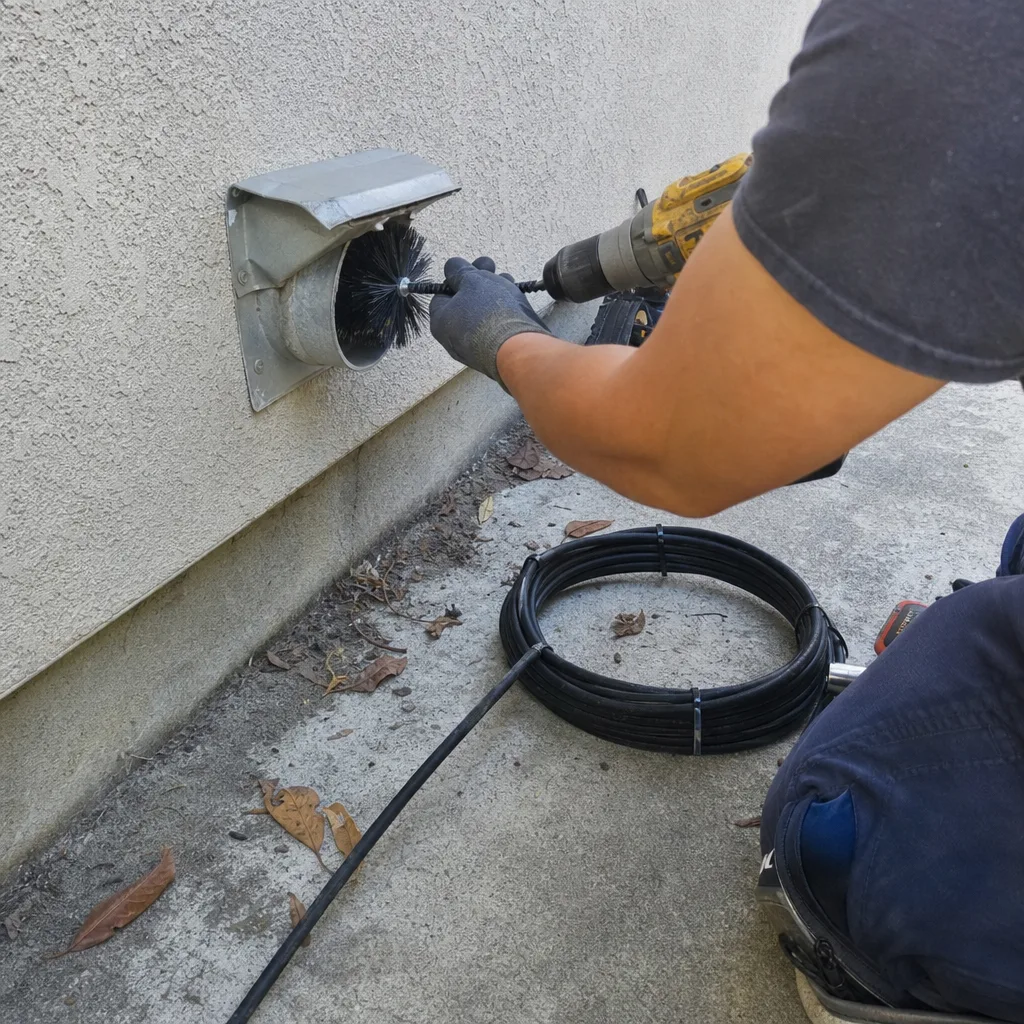
 Dryer vent cleaning
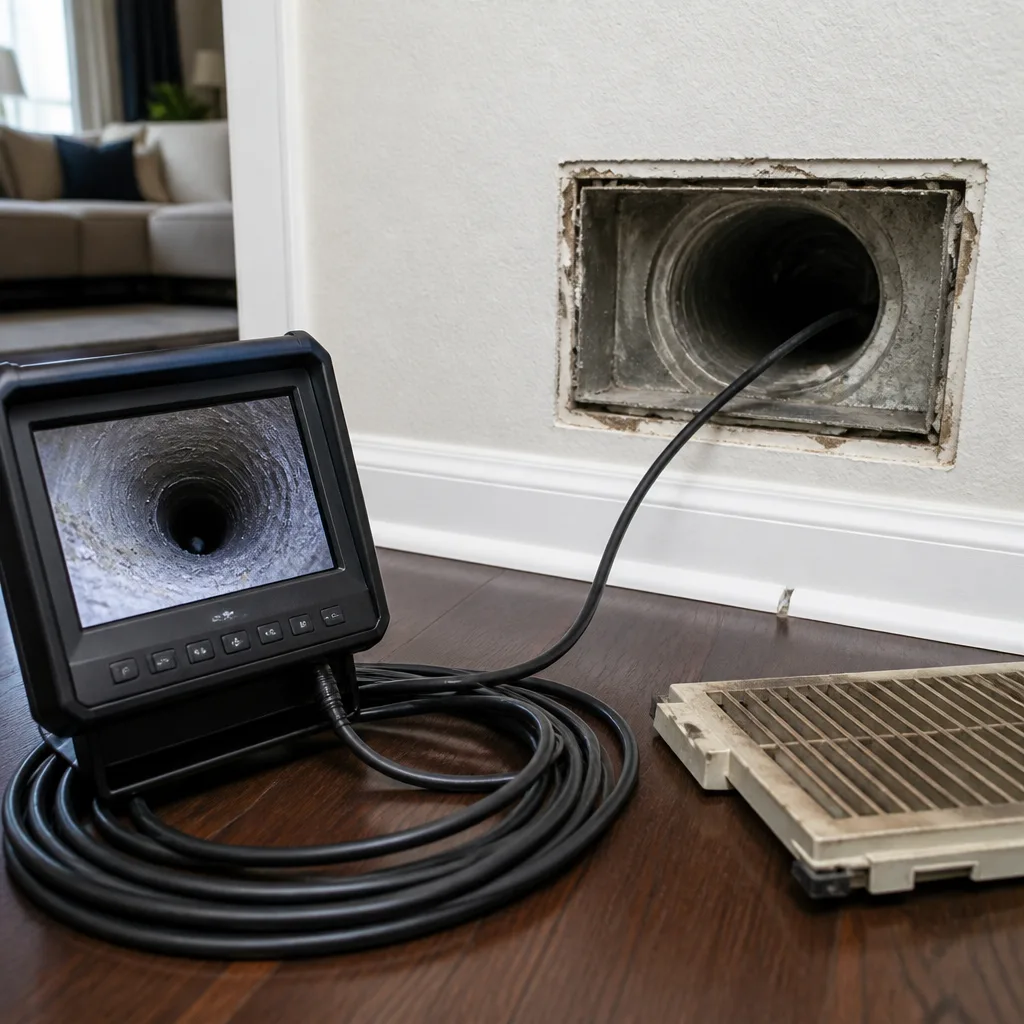 Camera inspection
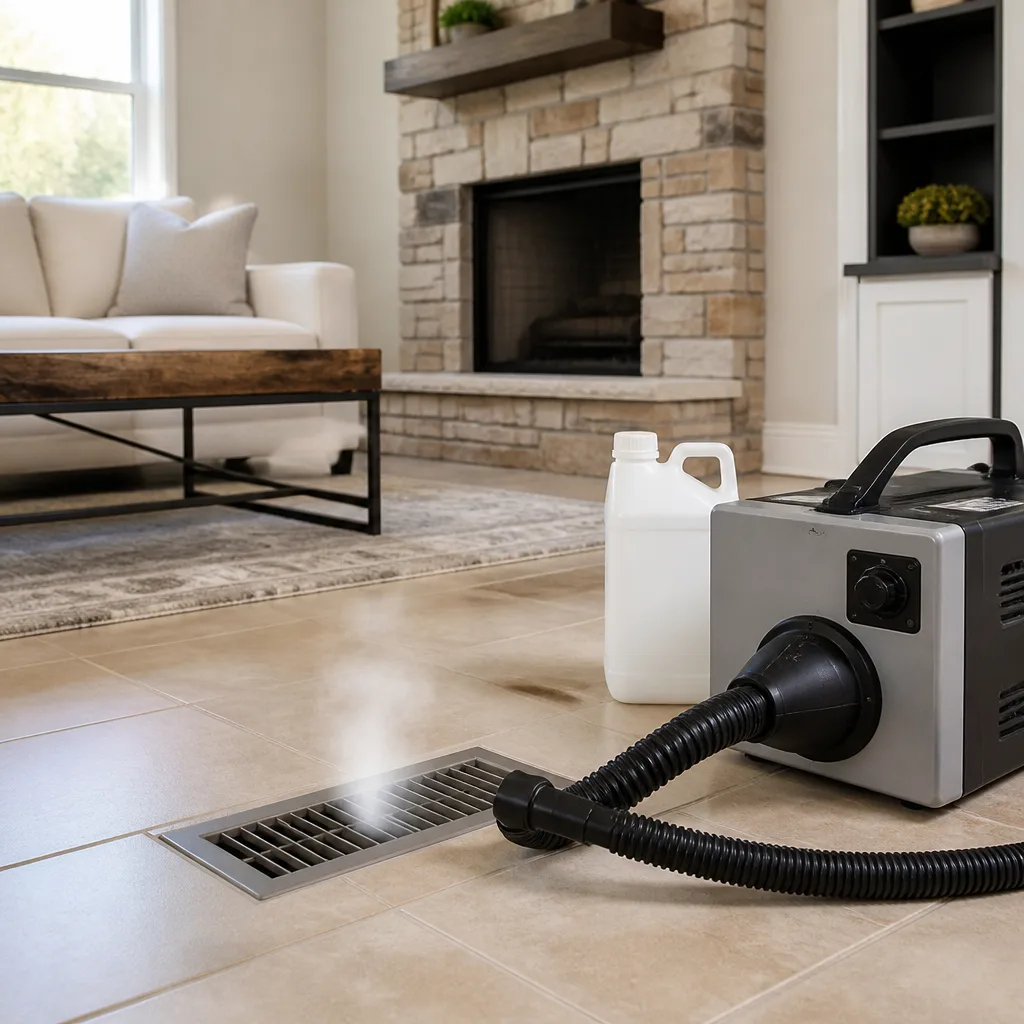 Sanitizing & deodorizing
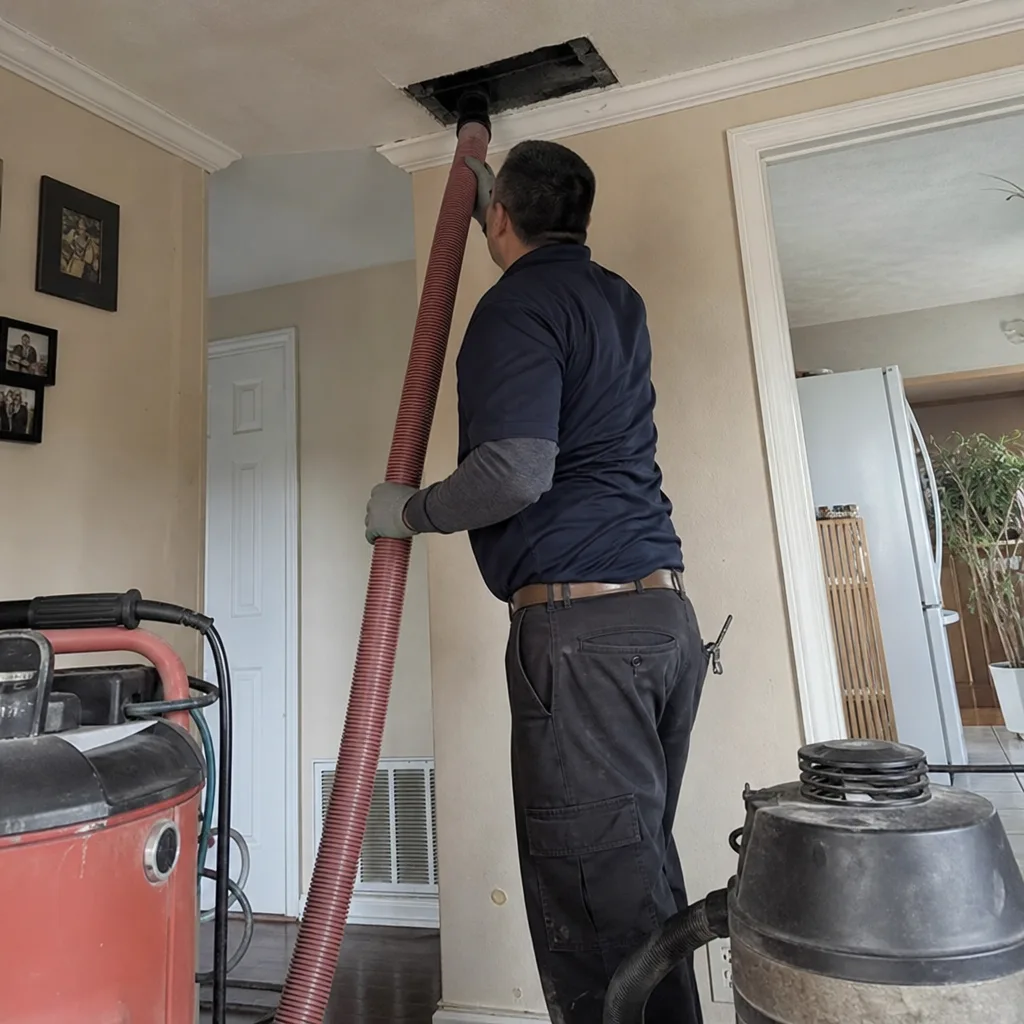
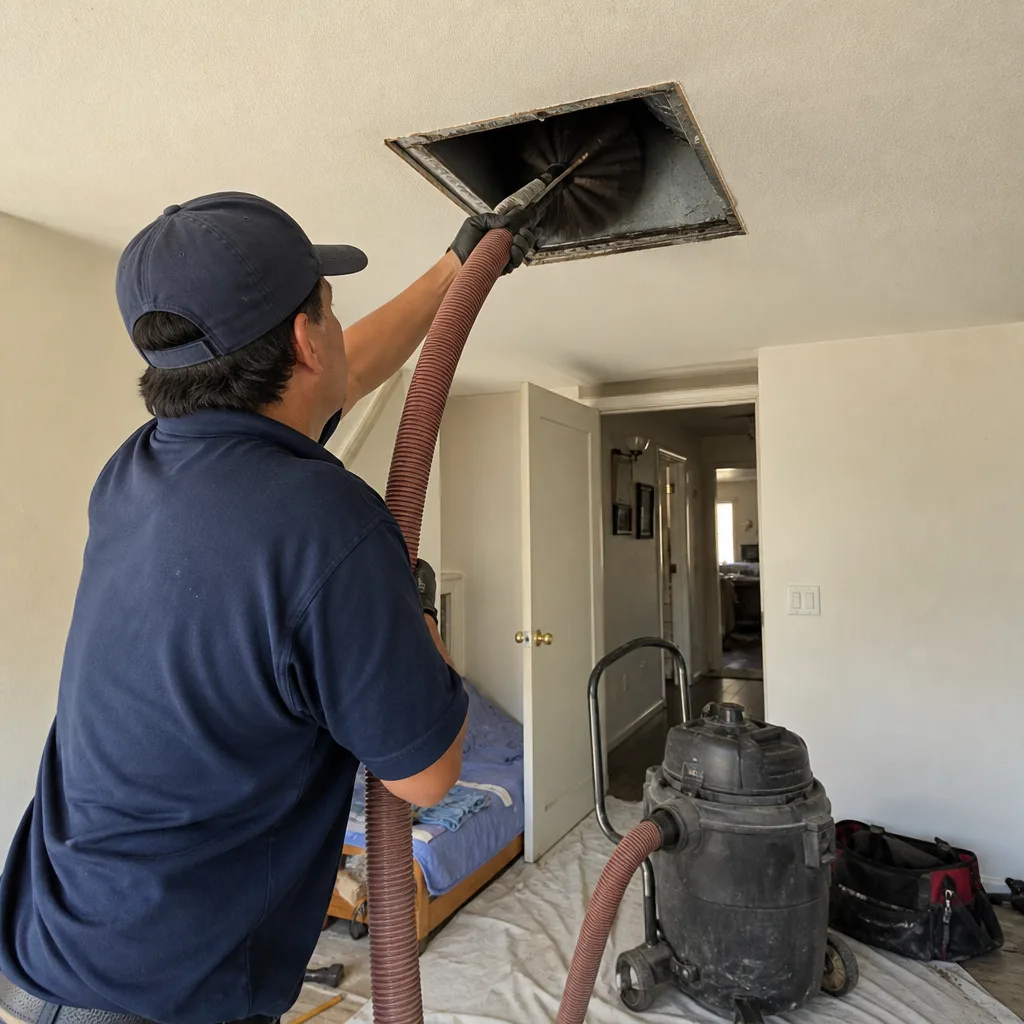
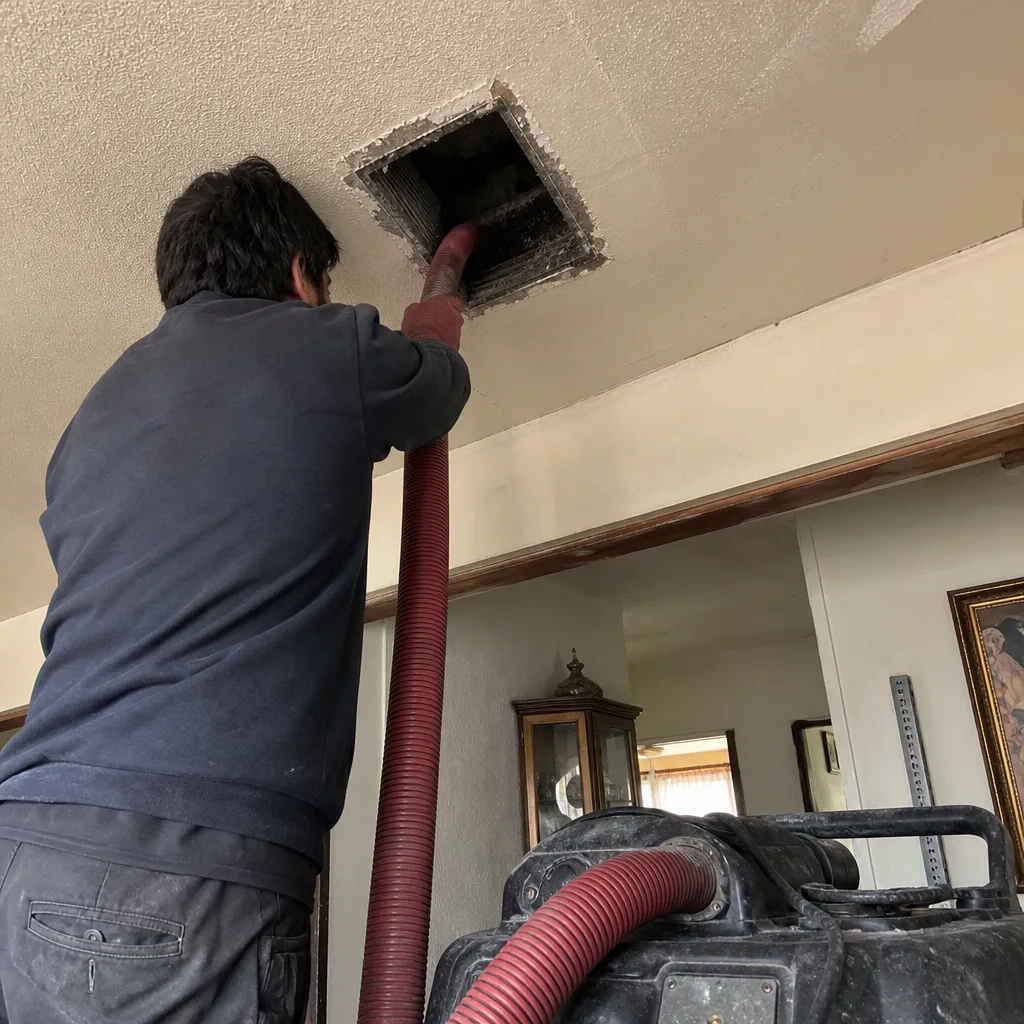
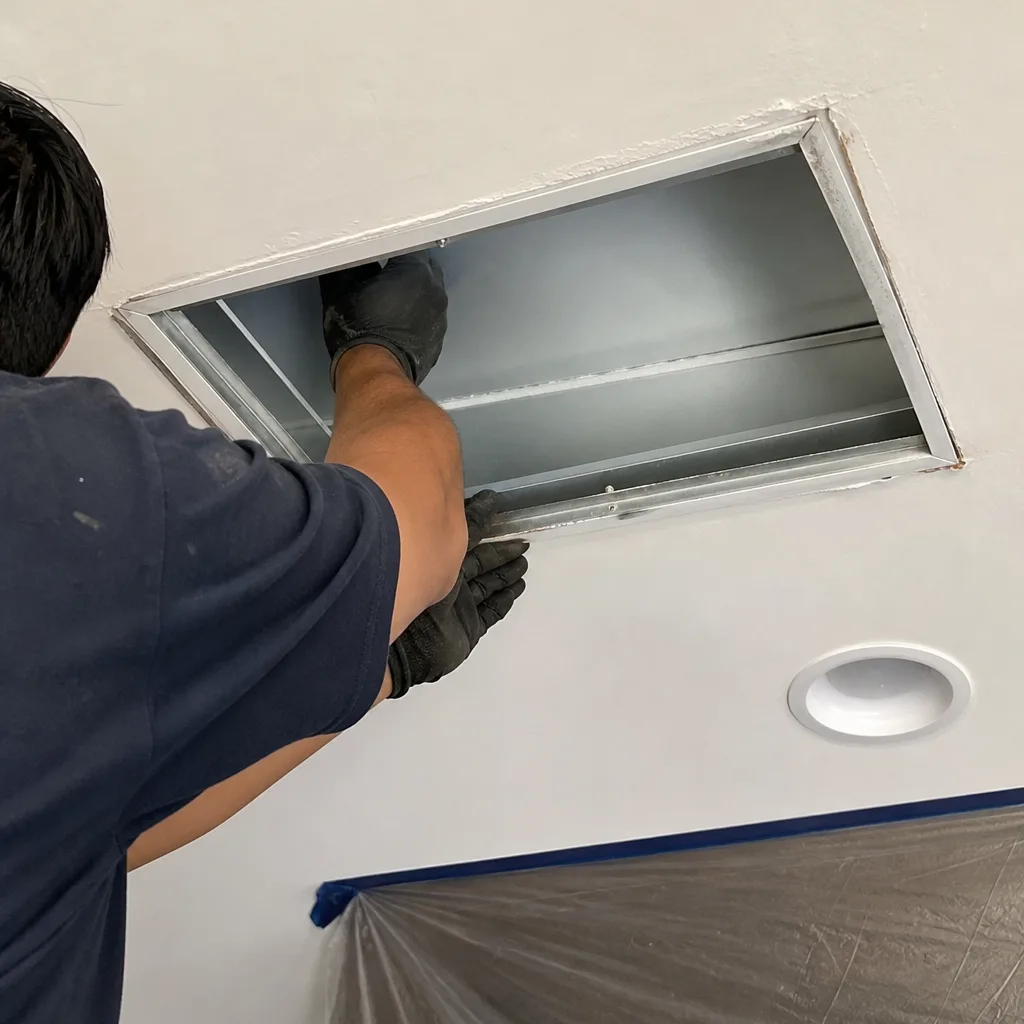
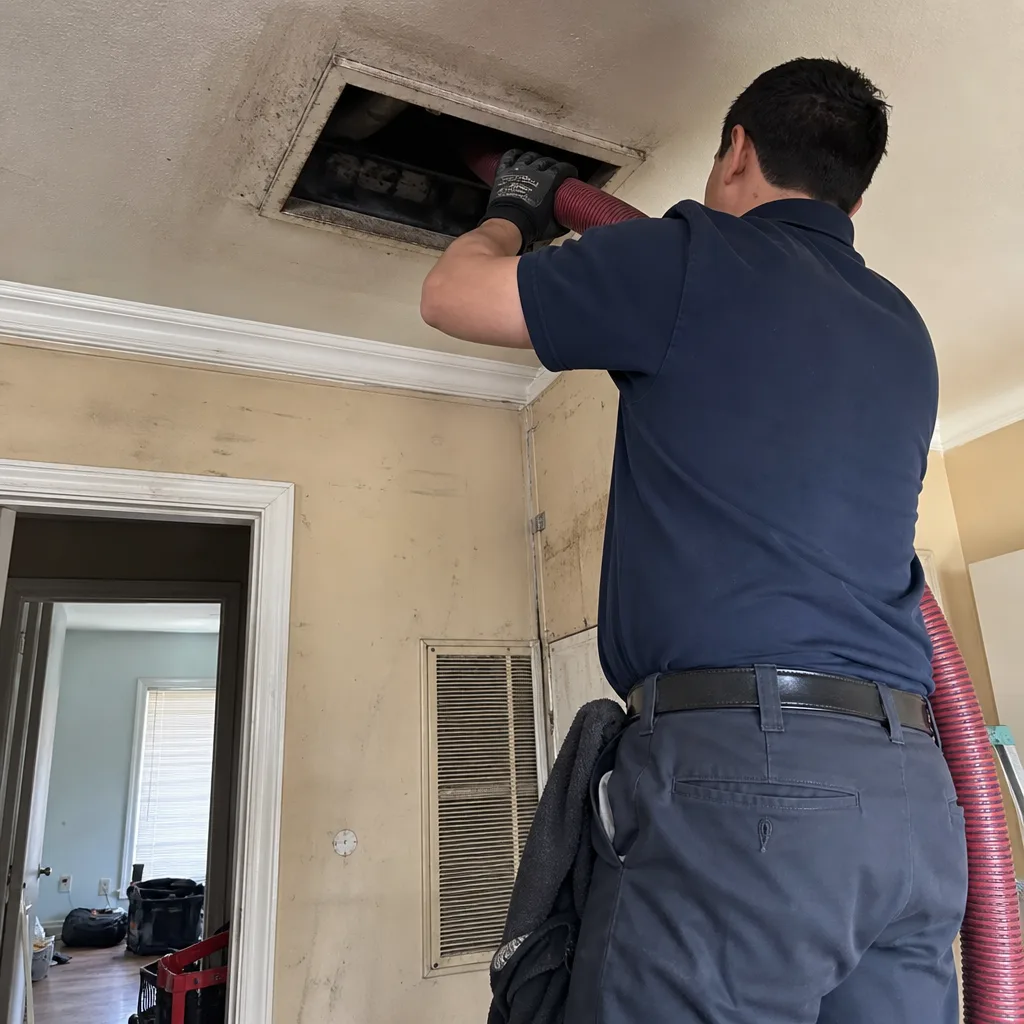
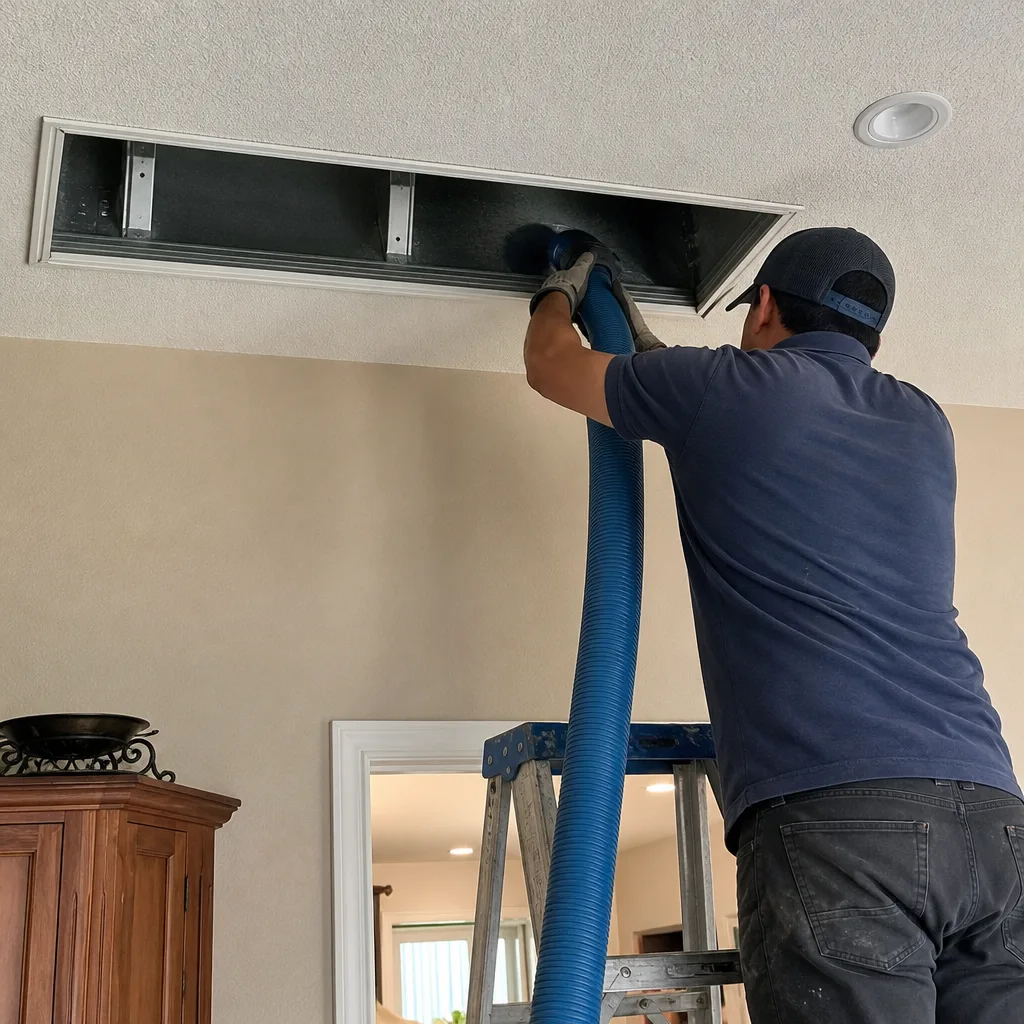
Whole-system duct and dryer vent check with before-and-after photos - you see exactly what came out of your vents
That "$99 whole-house special" is a bait ad - the real number appears once they are in your hallway, or the "clean" is a shop-vac at the register. We photograph the inside of your ducts before and after instead.
Air Duct Cleaning Warning Signs: A El Monte Homeowner’s Reference Guide
By the time a supply register starts coughing visible dust into a room, the contamination inside your ductwork has been building for months, sometimes years. The dust cloud is the final symptom, not the first one. In El Monte, where summer temperatures routinely push past 90 degrees and homes run air conditioning for five or six months straight, the volume of air moving through your ducts makes early detection both harder and more important. Your system is constantly producing evidence of its own condition. Most homeowners just haven’t been taught to read it. This guide will show you how to interpret the physical signals your ducts are already sending, from the pattern of warm and cool rooms to the smell coming out of your registers, so you can catch duct failure before it becomes a health problem and an expensive repair.
Styles & brands we work with
- Whole-home duct cleaning
- Dryer vent cleaning
- Camera inspection
- Sanitizing & deodorizing
Quick Answer
The most reliable early warning signs of duct problems in El Monte are uneven room temperatures that follow a pattern, a persistent musty or burning smell from registers, visible grey buildup on return grilles that looks like felt, and a cooling bill that climbs even when your usage habits haven’t changed. If you notice any two of these together, the duct system needs professional inspection. Localized dust discharge from supply registers is a late-stage symptom that means contamination has already accumulated to a significant degree.
Table of Contents
- Reading Uneven Room Temperatures as a Duct Diagnostic
- The Smell Index: What Odors From Registers Actually Mean
- What Your Return Grille Is Telling You
- Energy Bill Analysis: The Leakage You Can’t See
- Dryer Vent Warning Signs El Monte Homeowners Miss
- Understanding the Three Contamination Types
- A 10-Point Home Duct Inspection Checklist
- Common Mistakes to Avoid
- When to Call a Professional
- Frequently Asked Questions
- The Bottom Line
Reading Uneven Room Temperatures as a Duct Diagnostic
Every El Monte homeowner has a mental map of which rooms run warm in August. Most people chalk it up to sun exposure or a weak AC unit. But the pattern of your hot and cold zones is diagnostic information, and it tells you more about your ductwork than it does about your HVAC equipment. If the blower motor is pushing air and the coil is cold, uneven temperatures usually mean the ducts are leaking, restricted, or disconnected somewhere between the air handler and the room.
Here’s how to interpret what you’re feeling. A single room that’s consistently 4 to 6 degrees warmer than the rest of the house, especially one at the end of a long duct run, often indicates a disconnected or crushed flex duct in the attic. The air is being conditioned and then dumped into unconditioned space before it ever reaches the register. A room that’s warm but still gets some airflow may have a partially collapsed duct or a kinked section. A room that’s warm and gets almost no airflow at the register suggests a damper that’s been closed and forgotten, or a major disconnection.
Two rooms on opposite sides of the house that behave differently, one warm and one cool, point to return air imbalance. If your return ducts pull disproportionately from one side of the house, the conditioned air will follow the path of least resistance toward that return, short-changing other zones. In older El Monte homes with additions, the problem is often simpler: the original duct system was sized for the original floor plan, and the added room never got proper supply or return ducting. The duct layout, not the AC unit, is the failure point.
What the Pattern Means
- Whole upstairs warm, downstairs cool: Duct leakage in the attic is depressurizing the system. Conditioned air is escaping into attic space, and the upstairs registers are starved.
- One bedroom warm, adjacent bedroom comfortable: Check for a disconnected branch duct or a closed damper. This is usually a localized duct failure, not an equipment problem.
- Rooms farthest from the air handler warm, rooms near it cold: Duct restrictions or undersized branches. The blower can’t push enough air to the end of the run.
- Warm spots near walls or in closets on the upper floor: Return duct leakage pulling hot attic air into the system. The AC is trying to cool 140-degree attic air instead of 75-degree house air.
In El Monte, the flat lots and sprawling ranch layouts in neighborhoods north of Valley Boulevard mean long duct runs. Every foot of duct in a hot attic is a potential leak point. When we inspect a system with temperature imbalance, we trace the duct layout first, because in our experience that’s where the problem lives more often than in the equipment itself. Our air duct repair work in El Monte regularly finds disconnected flex ducts in attics that homeowners had been compensating for with portable AC units for years. The duct was broken. The AC was fine.
The Smell Index: What Odors From Registers Actually Mean
Your nose is a diagnostic instrument. Odors coming from supply registers are not random; each category of smell corresponds to a specific type of contamination or failure inside the duct system. The challenge is that most homeowners acclimate to household odors within a few weeks. What you should do is pay attention when the smell changes, or when a smell returns immediately after you’ve aired out the house. A smell that comes back within an hour of opening windows is being actively produced somewhere in the system.
Musty or earthy odor: This is the smell of microbial growth. It’s most common in the evaporator coil area where condensation creates persistent dampness, but it also develops in ducts when humid air condenses on the interior surfaces of uninsulated metal ductwork. In El Monte, the pattern is predictable: homes that run AC constantly during summer create a cold duct interior, and when the system cycles off, warm humid air from the attic or crawlspace enters through leaks and condenses. That moisture never fully dries during the cooling season. The musty smell is the result. It’s not coming from the outdoors; it’s being generated inside your ductwork.
Burning or electrical smell: A burning smell that appears when the heat runs for the first time in late fall is often just dust burning off the heat exchanger. That should dissipate within a few hours and is not a duct problem. What concerns us is a burning smell that persists, or one that appears during cooling season when the heat hasn’t run in months. That can indicate overheated debris caught against the heat exchanger, a failing blower motor, or wiring inside the air handler that’s degrading. A persistent burning smell during heating season in an El Monte home where the heat runs intermittently is worth investigating, because debris accumulation on the heat exchanger increases the fire risk the longer it bakes.
Chemical or paint-like odor: The most common source is pest activity. Rodents and insects leave droppings and urine in ductwork, and the decomposition of those deposits produces an ammonia-like chemical smell. This is also the smell most likely to trigger respiratory irritation in occupants. If the smell is strongest in one room or one section of the house, the pest activity is likely localized to that branch duct. If it’s throughout the house, the contamination is probably in the main trunk line or the air handler.
Odor Diagnostic Table
- Musty, earthy, damp smell → Microbial growth in coil or ducts → Requires cleaning and moisture-source correction
- Burning, hot electrical smell → Debris on heat exchanger or failing component → Immediate professional inspection
- Chemical, ammonia-like smell → Pest activity and biological contamination → Requires cleaning and pest exclusion
- Stale, heavy “dirty sock” smell → Accumulated organic dust and skin cells in duct lining → Professional air duct cleaning in El Monte
- No smell but visible dust on registers → High particulate load in ductwork → Cleaning recommended before it becomes an odor problem
When we encounter odor complaints in El Monte homes, we use Nikro industrial extraction equipment to pull the source material out of the duct system rather than just masking the smell. The difference matters: chemical deodorizers sprayed into a register treat the symptom. Removing the contaminated material treats the cause. For homes with serious contamination scenarios, including significant pest activity or microbial growth, Abatement Technologies-grade filtration equipment is used to capture particulates during extraction so they’re not redistributed into the living space during the cleaning process.
What Your Return Grille Is Telling You
Walk to your main return grille right now. Look at the pattern of buildup on the filter or the grille itself. That pattern is a diagnostic readout of how well your system is managing the air it pulls in. Most homeowners see buildup and think “time to change the filter.” But the pattern of that buildup tells a more detailed story, and knowing how to read it can catch a developing duct failure before it becomes a visible dust problem.
Heavy grey felt-like buildup across the entire filter surface: This is normal filter loading, more or less. It means the filter is doing its job, capturing airborne particles before they enter the return duct and the equipment. What it also means is that your home’s ambient dust load is high, and that dust is coming from somewhere: aging carpet, pet dander, El Monte’s dry summer soils tracked in from outside, or a duct system that’s already leaking dust into the living space. If the filter loads up faster than a month, the house itself is generating more particulate than the system was designed to handle.
Spotty or streaky buildup with clean gaps: This is the pattern that should concern you. It means air is being pulled around the filter, not through it. The clean gaps on the filter correspond to gaps between the filter and its frame, or a filter that’s undersized for the grille opening. Air bypassing the filter carries unfiltered dust directly into the return duct, the blower, the evaporator coil, and then back into your house. The dust you’re seeing on supply registers is the dust that never passed through a filter. Filter bypass is often the result of a filter that doesn’t fit properly, a bent filter rack, or a grille that’s been warped by years of removal and replacement. In older El Monte homes with original equipment, filter racks are frequently out of square.
Buildup on the grille itself but not the filter: The grille is acting as a pre-filter because the return is pulling air from the room through a narrow gap. This indicates a return air path that’s too restrictive, often because there aren’t enough return registers for the square footage of the house. The system is trying to pull more air than the return path can provide. This starves the blower, reduces system efficiency, and creates negative pressure zones that pull outside air through wall cracks and door gaps. In El Monte, that outside air in summer is hot and dry and in winter is cool and sometimes damp, which means the system is constantly fighting unconditioned infiltration.
The return grille is the only place in a duct system where the homeowner has direct visual access to what the system is processing. Reading it correctly is free, takes thirty seconds, and tells you more about duct health than any other single observation.
Energy Bill Analysis: The Leakage You Can’t See
Your Edison bill is a duct diagnostic tool. Duct leakage has a measurable signature in energy consumption, and the signature is recognizable if you know what you’re looking at. The key variable is this: when a duct system develops a significant leak, the equipment works longer and harder to maintain the same temperature, and that shows up as a rise in cooling cost that isn’t explained by weather or usage changes.
El Monte’s climate makes this analysis cleaner than in many other parts of the country. We don’t have the shoulder-season complexity of four-season climates. Cooling season runs roughly May through October, and during those months the AC is the dominant electrical load for most homes. If your July bill this year is 18% higher than July last year, and July temperatures were comparable, and your thermostat settings haven’t changed, and the house is occupied by the same number of people doing the same things, then something in the system is working harder. The usual suspects are low refrigerant, a failing compressor, or duct leakage. Of the three, duct leakage is the one that returns the fastest payback when repaired.
Here’s the mechanism: when conditioned air leaks from supply ducts into the attic, that cooling never reaches the living space. The thermostat sits in the hallway, sees the temperature rising, and calls for more cooling. The AC runs longer cycles. The house eventually reaches the set temperature, but only by pushing significantly more air through the system, a portion of which keeps leaking into the attic. The result is a house that’s comfortable but a bill that’s climbing. The energy isn’t being wasted in the equipment; it’s being wasted in the ductwork.
A rise in cooling cost without a change in usage behavior is the single most common signal of duct leakage we see in El Monte homes before the homeowner notices any other symptom. By the time the registers start showing visible dust, the leakage has usually been present for a full cooling season or longer. If you keep utility records, pull up the last three summers and compare July-to-July usage. A consistent upward trend with flat usage habits is a strong indicator that the duct system needs inspection. For a complete picture of how this works, our duct cleaning and duct health services page covers the full scope of what a professional inspection involves.
Dryer Vent Warning Signs El Monte Homeowners Miss
The dryer vent is the only duct in your house that removes a documented fire hazard. Lint is combustible, and the dryer is a heat source. When the vent duct becomes restricted, lint accumulates faster, the dryer runs hotter, and the combination creates the conditions for a vent fire. El Monte homeowners should treat dryer vent symptoms as urgent, not as laundry-day annoyances. Dryer vent cleaning in El Monte is a service we treat as a fire-risk mitigation, which is what it is.
Most homeowners know the classic symptom: laundry takes longer to dry. But there are three earlier warning signs that show up before the extended dry times become obvious, and these are the ones that get missed.
The Three Early Warning Signs
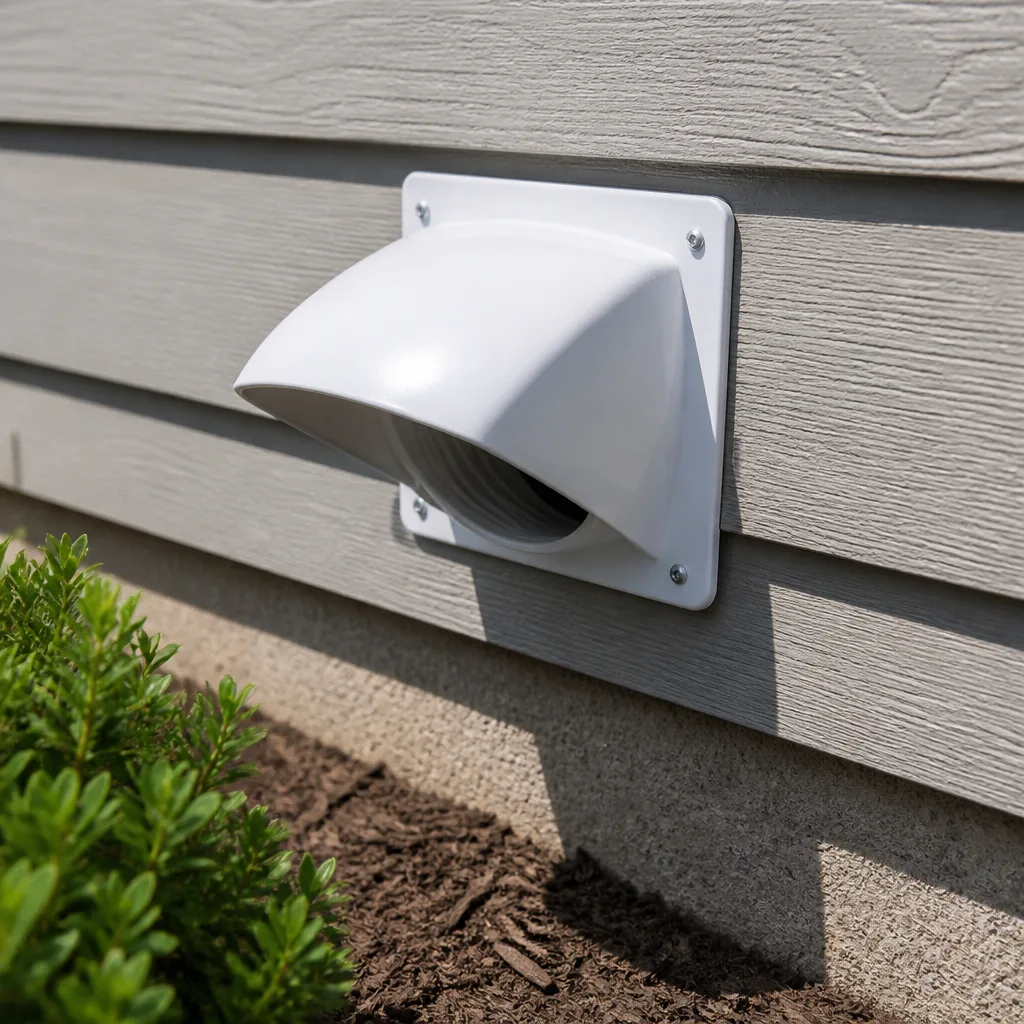
- The exterior vent flap doesn’t fully open during operation. Stand outside while the dryer runs. The flap should be pushed fully open by the force of the exhaust air. If it’s only partially open, or fluttering weakly, the airflow through the vent is already restricted. The restriction is usually upstream: lint accumulation at the connection point, a kinked flex duct behind the dryer, or buildup in the wall cap itself.
- Lint appearing around the machine body. If you see lint accumulating on the floor around the dryer, on the back of the machine, or on nearby surfaces, the exhaust path is leaking somewhere between the dryer and the wall connection. That means lint is also escaping into the laundry area, which means the vent isn’t carrying the full exhaust load. A properly sealed vent duct contains all the exhaust; visible lint outside the dryer means the seal has failed.
- The laundry room gets noticeably warmer and more humid while the dryer runs. Dryer exhaust is hot and damp. If the vent duct is working correctly, all of that heat and moisture goes outside. If the laundry room heats up when the dryer runs, a portion of the exhaust is leaking into the house. In El Monte’s climate, that added humidity is extra load for your AC during cooling season, and the heat is wasted energy at any time of year.
If you’re seeing any of these, the dryer vent needs attention now, not at the annual inspection. A restricted vent is a progressive condition; it doesn’t get better on its own, and every cycle adds to the restriction. We use Rotobrush and Nikro equipment for dryer vent cleaning because the brush-fed system mechanically dislodges compacted lint from the duct walls, then the extraction unit pulls the loosened material out under negative pressure. A shop-vac can’t reach the full length of a typical El Monte dryer vent run, and a partial cleaning leaves the restriction in place. That’s a false sense of security we’re not willing to give.
Understanding the Three Contamination Types
Duct contamination is not all the same. The material accumulating inside a duct system falls into three broad categories, and each requires a different response. Understanding the distinction matters because some cleaners treat everything as dust, and some problems can’t be fixed by cleaning alone.
Particulate contamination is what most people picture: dust, skin cells, pet dander, fabric fibers, and El Monte’s fine dry soil that enters the house on shoes and clothes. This material is light, dry, and mobile. It accumulates in the duct system because the filter isn’t catching all of it and because dust settles out of slow-moving air in duct corners and branch runs. Particulate contamination is the target of routine professional duct cleaning. The Rotobrush system uses rotating brushes to mechanically agitate this material off duct walls while the Nikro extraction unit pulls it out of the system under vacuum. This is straightforward, effective, and addresses the largest share of residential duct problems.
Biological contamination is the musty smell category. It includes mold growth, mildew, and the accumulated organic material that comes from pest activity inside the ducts. Biological contamination requires more than cleaning; it requires identifying and correcting the moisture source that’s supporting the growth. In El Monte, the most common moisture source is condensation on the evaporator coil migrating into the supply plenum and the first few feet of supply duct. Another is humid outdoor air entering return ducts through leaks in attic or crawlspace areas. If you clean the ducts but don’t correct the moisture source, the biological contamination returns. This is also where our Abatement Technologies filtration capability matters: when we’re extracting biological material, we run HEPA-level capture to keep spores and particulates from re-entering the living space.
Mechanical damage contamination is different. This is crushed ducts, disconnected sections, holes in the duct wall, or separating joints. The “contamination” here isn’t material inside the duct; it’s attic insulation, drywall dust, or outside air being pulled into the system through breaches in the duct wall. Mechanical damage requires repair, not just cleaning. You can clean a crushed duct, but it’s still crushed. You can clean a disconnected section, but it’s still disconnected. This is why our air duct repair service in El Monte exists: we fix the duct so the cleaning actually holds. A cleaner who doesn’t repair is leaving the door open for the problem to return.
A 10-Point Home Duct Inspection Checklist
This is a systematic walkthrough you can perform in about twenty minutes. It requires no special tools beyond a flashlight, a step stool, and your senses. Go through the numbered steps in order. Any item you mark as “yes” warrants professional follow-up.
- Check the main return grille. Look at the filter buildup pattern. Streaky or spotty loading means filter bypass. Heavy felt-like loading means high particulate load. Remove the filter and shine a flashlight into the return duct. You should see the duct walls and the back side of the grille. If you see years of accumulated dust coating the interior surfaces, the system needs cleaning.
- Inspect all supply registers. Walk the house and remove one or two registers that are easy to access. Look at the inside of the register boot and the first few inches of visible duct. Grey fur-like accumulation on the boot walls means the system is moving dirty air. Black staining around the edge of a supply register means air leakage around the boot connection is pulling attic dust into the supply stream.
- Listen for air movement. Stand near the air handler with the system running after a cycle has just ended. A hissing sound from the duct connections near the unit indicates air escaping through loose joints. The whisper should be from the unit, not from the duct seams.
- Smell the air at the first supply register after startup. That first air pushed out after the system has been off is the most concentrated sample of what’s inside the ducts. A musty, stale, or dusty smell at startup is a reliable indicator of internal contamination.
- Check the temperature difference between rooms. Use a cheap infrared thermometer. Walk the house and measure the temperature at each supply register while the system runs. More than a 3-degree difference between supply temperatures in different rooms indicates a duct distribution problem somewhere in the system.
- Inspect the visible ductwork. If you have attic or crawlspace access, shine a flashlight along the duct runs. Look for sections that are sagging, crushed, disconnected, or wrapped in condensation-soaked insulation. Look for gaps at the connections to the plenum and the register boots. Any visible opening is leaking conditioned air.
- Check the dryer vent. Run the dryer and go outside to watch the flap. Full open equals good airflow. Partial open or weak flutter equals restriction. While you’re at it, check inside the laundry room for lint around the machine body.
- Review your energy bills. Compare the last two summers side by side. Any significant increase in cooling cost that isn’t explained by weather or usage is a duct leakage suspect.
- Look for condensation. On a humid morning, check the visible supply ducts in the attic. Condensation beading on the outside of the duct means the interior is too cold and the exterior is warm and humid, classic conditions for duct sweating that saturates insulation and eventually the duct interior.
- Ask yourself: when was the last professional cleaning? If you can’t remember, it’s been too long. Duct systems in El Monte should be inspected every 2 to 3 years at a minimum, more often if you have pets, smokers in the house, or a history of allergies in the family.
Common Mistakes to Avoid
- Replacing the filter and assuming the problem is solved. A clean filter catches new dust; it does nothing for the years of accumulated material already sitting in the duct system. The filter is a gate, not a cleaner. The dust behind the gate stays where it is.
- Attributing all dust to the house and never the ducts. El Monte homes near the freeways and industrial corridors deal with more ambient particulate than homes in quieter areas. But if you’re dusting furniture twice a week and still seeing a film settle within days, the duct system is likely redistributing particulate, not just the outdoors.
- Closing registers in unused rooms to save energy. This raises static pressure in the duct system, which forces more air through the remaining registers and increases leakage through every seam and joint. It’s the opposite of an energy-saving strategy.
- Using a shop-vac or homemade cleaning rig on a dryer vent. A shop-vac reaches maybe 5 to 8 feet into a typical vent. Most El Monte dryer vents run 10 to 25 feet. The remaining lint compaction stays in place, gives the appearance of being clean, and the problem returns with the next load of laundry.
- Ignoring a musty smell because it comes and goes. The smell comes and goes because the system cycles on and off. When the blower runs, the smell is distributed; when it shuts off, the smell is concentrated in the ductwork. The odor is there in both cases. Intermittent odor is not intermittent contamination.
- Treating symptoms with air fresheners or register filters. Register filters restrict airflow and don’t stop the source. Air fresheners mask odor without removing the material generating it. Both are temporary illusions, and airflow restriction makes the blower work harder.
- Deferring dryer vent cleaning because the dryer still works. The dryer works right up until the vent becomes so restricted that the high-limit switch trips, or the lint catches fire. The dryer operating is not evidence that the vent is safe. It’s evidence that the dryer hasn’t failed yet.
When to Call a Professional
Some duct problems announce themselves clearly; others require professional equipment to find. Call for an inspection when you see any combination of the warning signs in this guide: temperature differences between rooms of more than a few degrees, persistent musty or chemical smells from registers, visible dust discharge from supply vents, a cooling bill that climbs without explanation, or dryer vent symptoms like slow drying or a weak vent flap. If your home hasn’t had a professional duct inspection in more than three years, that alone is sufficient reason to schedule one. Duct Cleaning El Monte offers free estimates in El Monte, and we’ll tell you plainly whether your ducts need cleaning, repair, or neither. Call (844) 573-0760 to schedule an inspection.
Frequently Asked Questions
Air duct cleaning in El Monte typically costs between $350 and $700 for a complete system cleaning of a single-family home, depending on the number of registers, the accessibility of the ductwork, and the level of contamination present. Homes with severe biological contamination, pest activity, or mechanical damage will fall on the higher end or require additional services like repair. We quote one flat price per system before any work begins, so the number you’re given is the number you pay. Call (844) 573-0760 for an exact quote on your home, estimates are free.
Air ducts should be inspected every 2 to 3 years and cleaned when inspection shows visible accumulation, contamination, or airflow problems. The honest answer is that not every system needs cleaning on a fixed schedule. Homes with pets, smokers, recent remodeling, or a history of allergies in El Monte typically need cleaning more frequently than homes without those factors. The right approach is inspection first, cleaning when it’s warranted, and skipping it when it isn’t.
Cheaper duct cleaning quotes usually mean the company is using contractor-grade portable equipment, skipping sections of the system, or planning to upsell you once they’re in the attic. A legitimate whole-system cleaning requires professional-grade extraction equipment like the Rotobrush and Nikro systems we use, and the time involved is real. When a quote is $99 or $149 for a whole house, the math doesn’t work unless something is being left out. Get a flat price for the complete system before work starts, and ask what equipment they’re using. Call (844) 573-0760 to discuss what a full-system cleaning actually involves and what it should cost.
Ask for before-and-after photos of the interior of the ductwork. Any professional using proper equipment can photograph the inside of supply runs, return ducts, and the main trunk line. The before photos show the accumulation; the after photos should show bare duct walls. You should also be able to inspect the ducts yourself after the work using a flashlight and a removed register. If the interior surfaces look clean and the airflow at the registers feels stronger, the work was done. We provide photo documentation on every job because you deserve to see what you paid for.
Dirty air ducts can aggravate respiratory conditions, allergies, and asthma by continuously redistributing accumulated dust, pollen, pet dander, and biological contaminants like mold spores throughout the living space. The people most affected are those with pre-existing respiratory sensitivities, the elderly, and young children who spend more time indoors. Removing the accumulated material from the duct system reduces the daily particulate load those occupants are breathing. For homes with serious contamination, our Abatement Technologies filtration equipment captures the biological material during extraction rather than redistributing it.
Cleaning removes accumulated material from the interior of the duct system. Repair fixes mechanical problems: disconnected sections, crushed flex duct, leaking joints, holes in the duct wall, and damaged register boots. The two are related but different. A duct that’s been cleaned but is still leaking at the connections will re-contaminate quickly because attic air is being pulled into the system. A duct that’s been repaired but not cleaned still contains whatever accumulated before the repair. The right answer is to do both when both are needed, which is why our air duct repair service in El Monte exists alongside cleaning. We clean it, and if it’s broken, we fix it.
The Bottom Line
Your duct system leaves evidence. Uneven temperatures, register odors, return grille buildup patterns, climbing energy bills, and dryer vent symptoms are all telling you something specific about what’s happening inside the ducts. Learning to read those signals means catching duct failure at the restriction or leakage stage, not at the contamination or failure stage. El Monte’s climate, with its long cooling season and hot attic conditions, accelerates both duct leakage and biological contamination compared to milder climates. The warning signs covered in this guide are the same ones we look for on every inspection we perform, and they’re the reason we built our service scope around complete duct health: cleaning, repair, and dryer vent safety. If you’re seeing any of these signs in your home, an inspection is the next step.
Written by the team at Duct Cleaning El Monte, serving El Monte since 2013.
See the difference
 Before
 After
 Before
 After
 Before
 After