
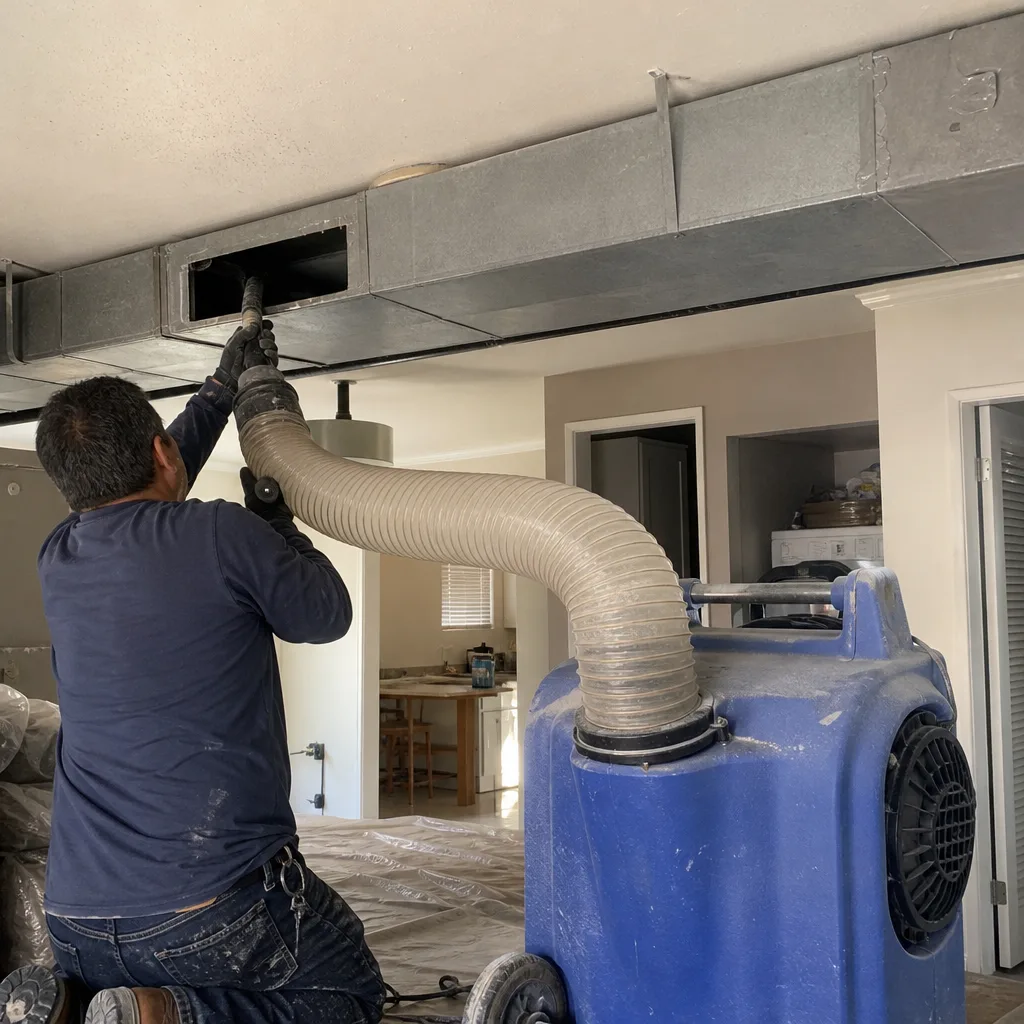
Last updated November 2, 2026
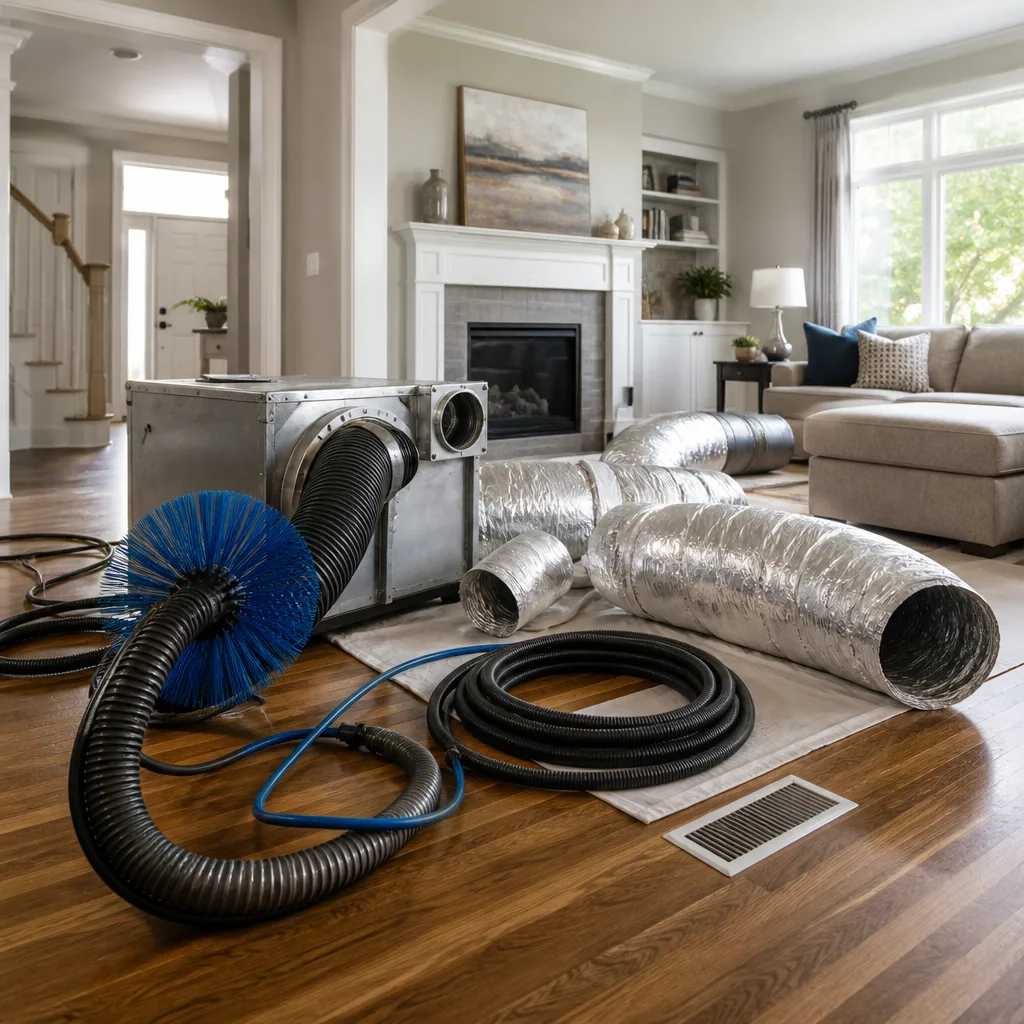 Whole-home duct cleaning
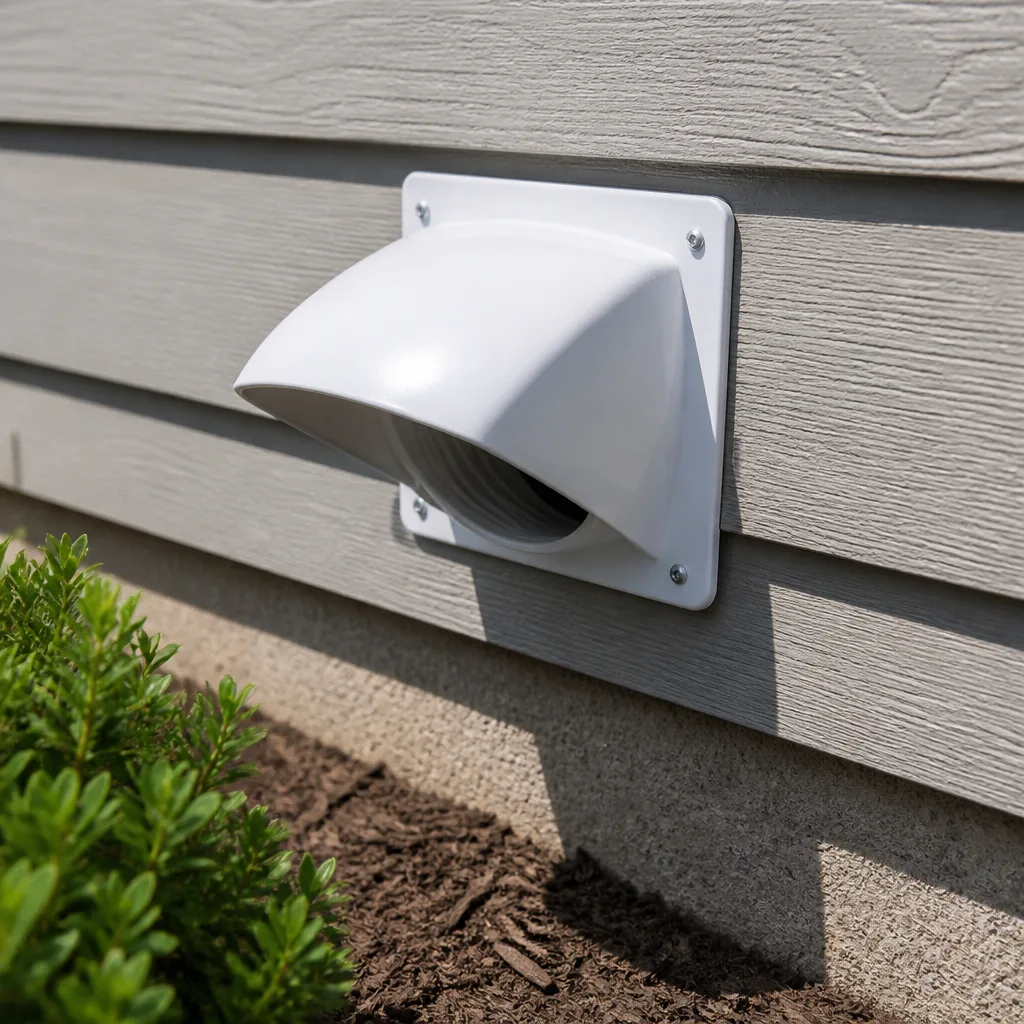 Dryer vent cleaning
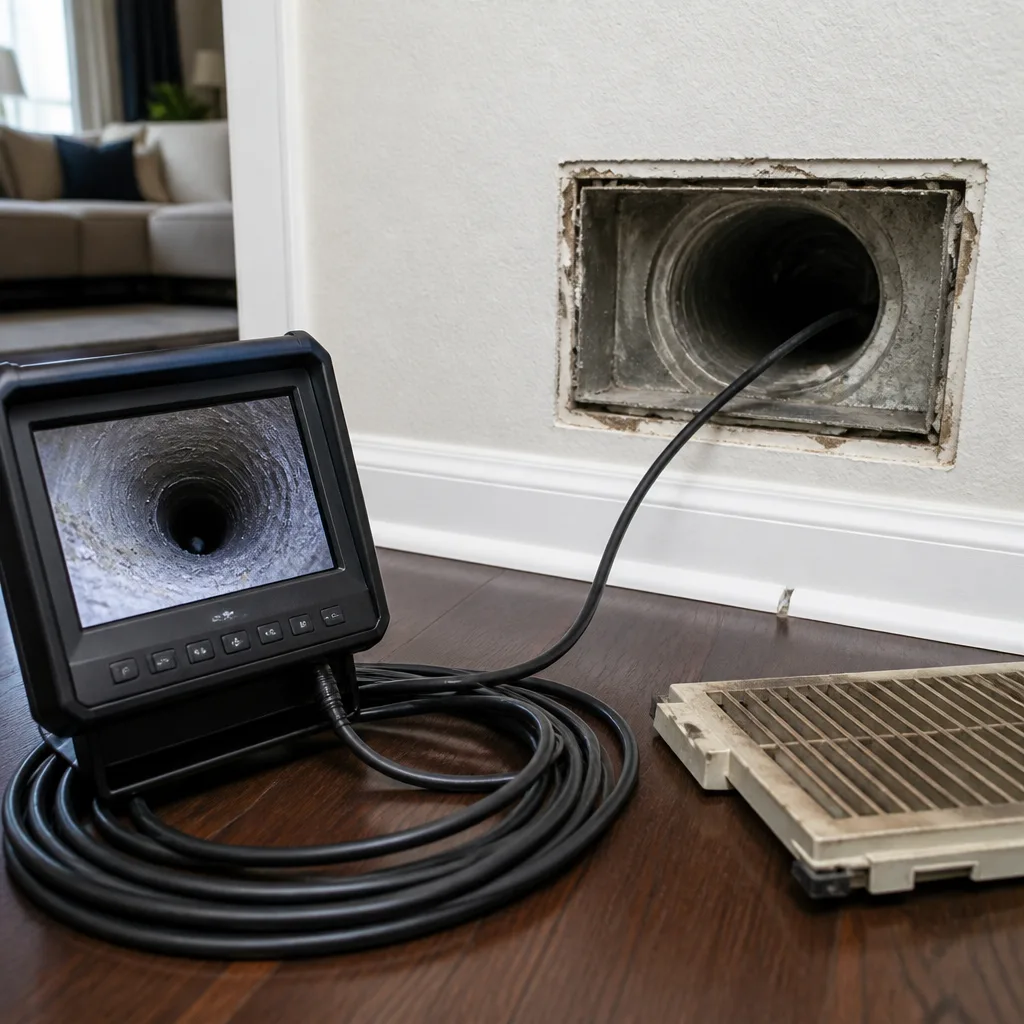 Camera inspection
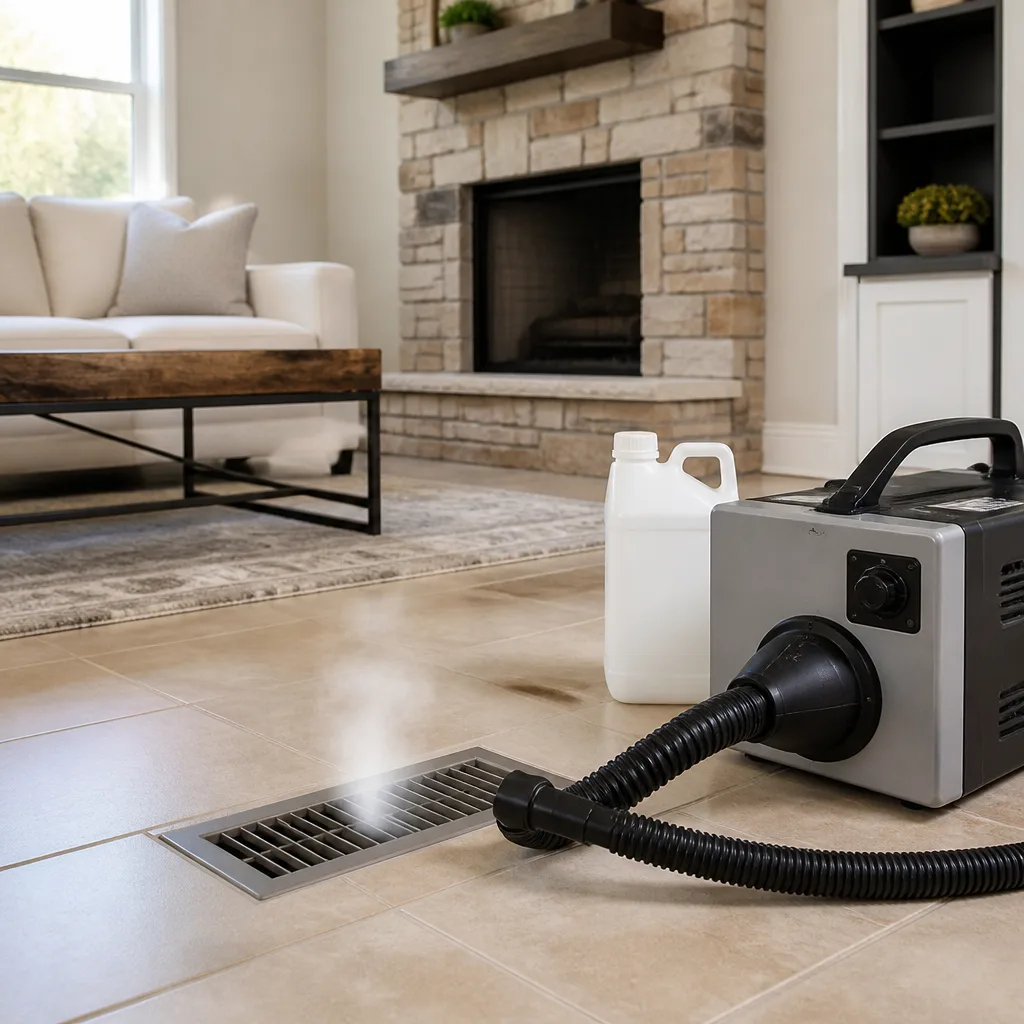 Sanitizing & deodorizing
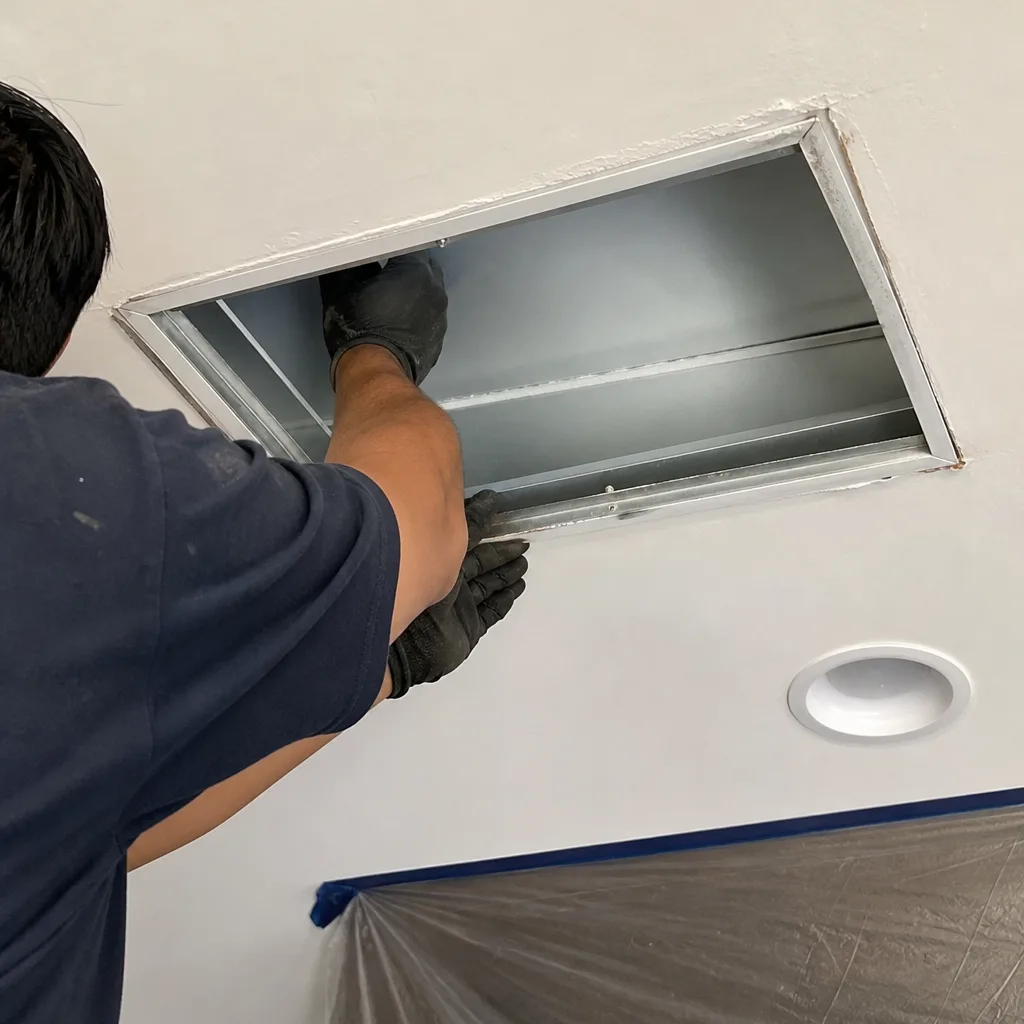
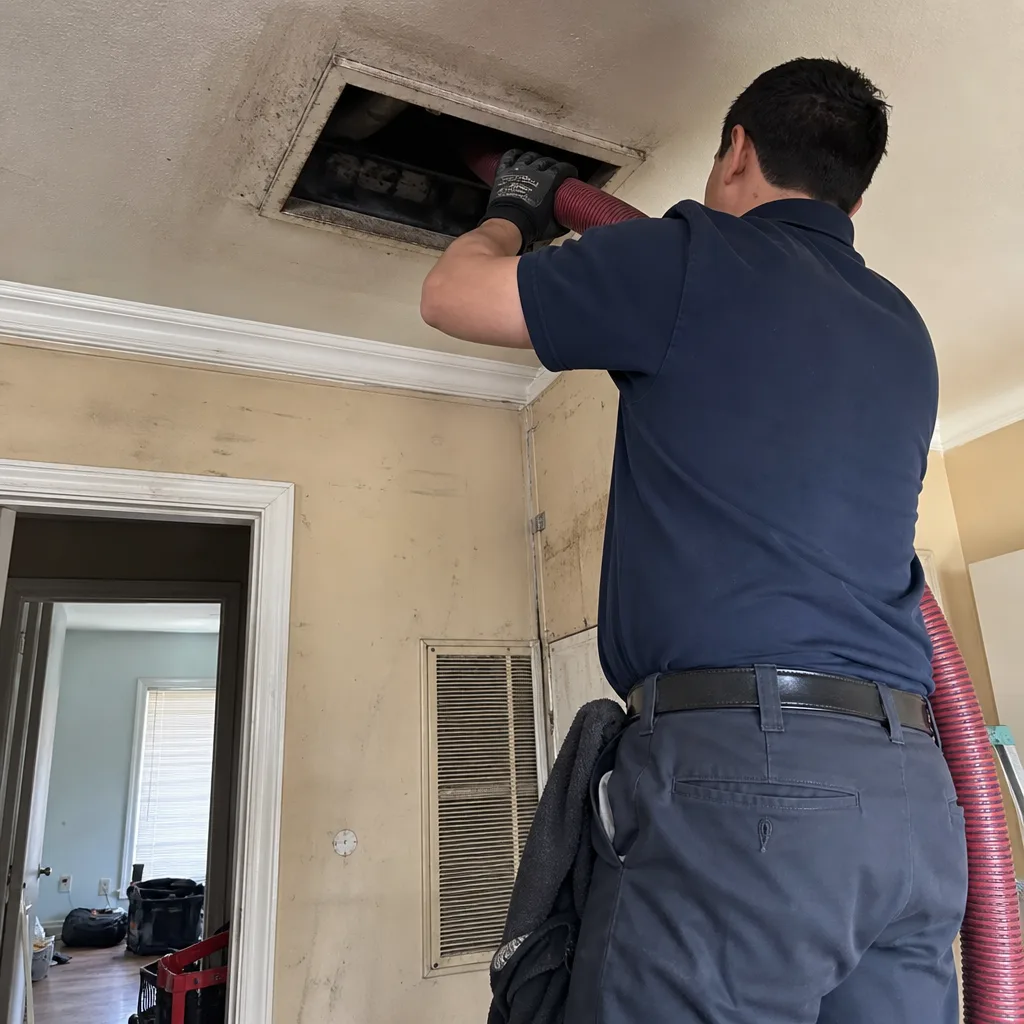
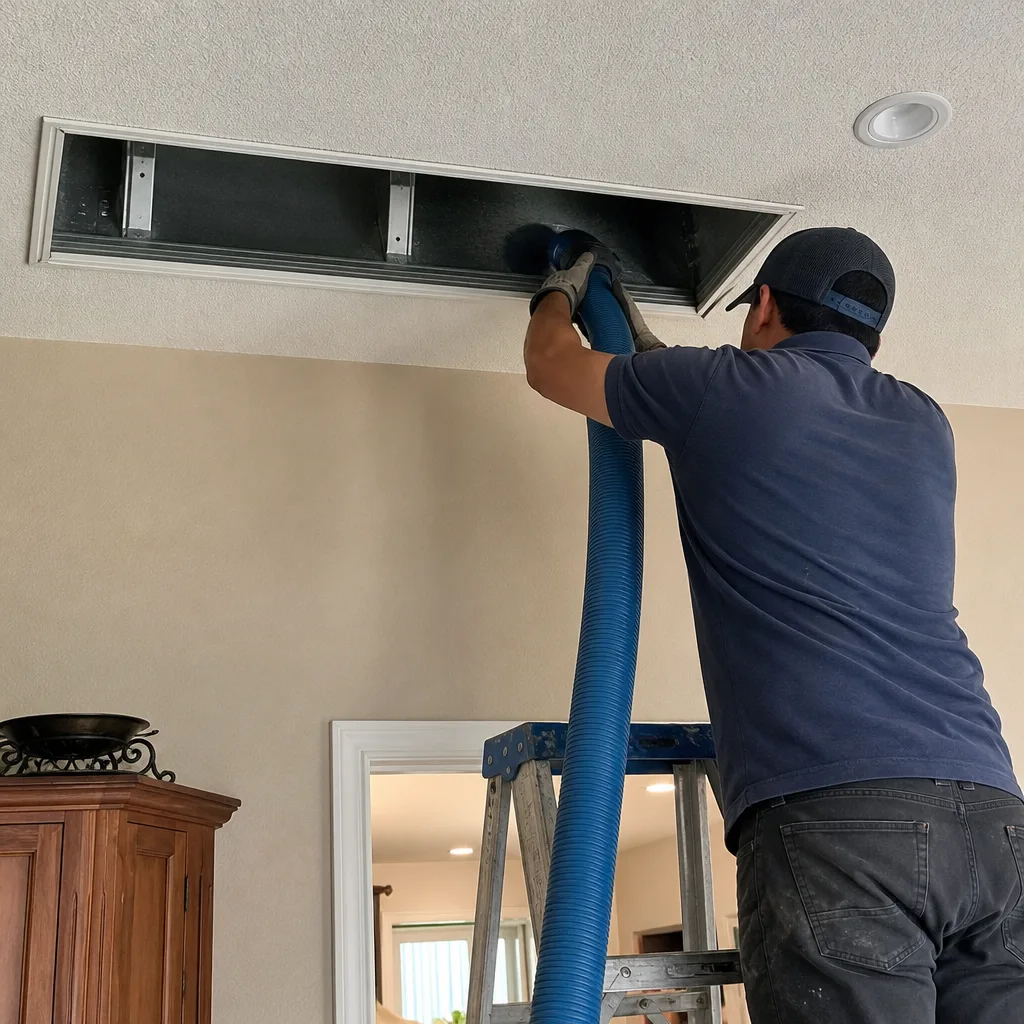
Whole-system duct and dryer vent check with before-and-after photos - you see exactly what came out of your vents
That "$99 whole-house special" is a bait ad - the real number appears once they are in your hallway, or the "clean" is a shop-vac at the register. We photograph the inside of your ducts before and after instead.
Seasonal Air Duct Cleaning Care for El Monte: Year-Round Homeowner’s Guide
Most air duct cleaning guides are written for places with real winters. Places where the furnace kicks on in October, runs hard for five months, and shuts off in spring. El Monte is not that place. Your HVAC system runs roughly nine months a year. The heat in the San Gabriel Valley means your cooling system is cycling constantly from April through November, and the mild winters mean it’s still running occasionally in January. That changes the math on when ducts need attention, what kind of debris accumulates, and which failure points matter. This guide maps duct care to El Monte’s actual seasonal conditions: the June marine layer, the summer ozone peaks, the Santa Ana wind events, and the winter moisture cycles. You’ll learn what to check, when to act, and when a professional inspection genuinely pays for itself. For more guides & resources, explore our blog. We’re writing this from El Monte, for El Monte, because the advice that works in Minneapolis doesn’t apply here.
Quick Answer
In El Monte, the most important time for Air Duct Cleaning services is April through May, before the cooling system starts running at full load through the long summer. A second inspection window opens after Santa Ana wind events from October through December, when fine particulate gets forced into return duct systems. Annually is enough for most homes, but if you own pets, live near a major road like the 10 or 60 freeways, or have allergy symptoms, twice a year is realistic. Dryer vents need separate attention since Southern California homes run dryers year-round, and lint accumulation is a documented fire risk regardless of season.
Styles & brands we work with
- Whole-home duct cleaning
- Dryer vent cleaning
- Camera inspection
- Sanitizing & deodorizing
Table of Contents
- Pre-Summer Prep: The April-May Window That Actually Matters
- Summer Load Season: What Constant Cooling Does to Ducts
- Santa Ana Season: October-December Particulate Intrusion
- Winter Rainy Season: Condensation Risk in Attic Duct Runs
- AQI and Your Ducts: How El Monte Air Quality Data Should Drive Scheduling
- Dryer Vent Care Year-Round: Why Once a Year Isn’t Enough Here
- Signs Your Ducts Need Attention Between Seasons
- Common Mistakes to Avoid
- When to Call a Professional
- Frequently Asked Questions
Pre-Summer Prep: The April-May Window That Actually Matters
Forget spring cleaning in the traditional sense. In El Monte, April and May are when you want your ducts inspected and cleaned because late May and June are when your air conditioning starts running in earnest. Once temperatures in the San Gabriel Valley hit the high 80s and stay there, your system is moving air constantly. Any dust that’s been sitting in your ducts since last year is about to be recirculated through every room, every day, for the next five to six months.
Here’s what a pre-summer duct check should cover in El Monte:
- Return duct integrity. The return side of your system pulls air back to the HVAC unit. In older El Monte homes, which often date from the 1950s through 1970s, return ducts frequently run through unconditioned spaces with old tape and sealant that’s degraded. Gaps pull in attic air, which means attic dust and insulation particles entering your system. This is visible on inspection.
- Coil condition. The evaporator coil sits directly above your furnace or in your air handler. If it’s coated with dust, your system works harder to pull heat out of the air, which means higher energy bills and reduced cooling capacity. Duct cleaning that doesn’t address the coil solves half the problem.
- Register balance. Walk your home and feel airflow at each register. If one room is noticeably weaker, that’s not normal. It usually means a crushed flex duct, a disconnected section, or a damper that’s been closed and forgotten. These are repairable issues, but they need to be found first.
- Filter service. If your filter has been sitting for months, replace it now. A clogged filter makes the blower work harder and accelerates wear on the entire system.
One thing we see regularly in El Monte: homeowners schedule duct cleaning in July when the system is already working hard. There’s nothing wrong with that, but the better window is April or May. You’re getting ahead of the demand, and any issues are addressed before they’re being compounded by daily use. Professional air duct cleaning in El Monte works best when it’s proactive.
Summer Load Season: What Constant Cooling Does to Ducts
Your HVAC system is not a sealed, static object. It’s a mechanical system that flexes, expands, contracts, and vibrates. During an El Monte summer, when your system cycles on and off dozens of times a day for months, the metal ductwork expands with heat and contracts as it cools. Over years, this repeated thermal cycling loosens joints and fittings.
What that means in practice:
- Duct separation at joints. Sections of metal duct connected with slip joints and tape can pull apart slightly. A quarter-inch gap at one joint might not sound like much, but across a whole system, the cumulative leakage can be 20 to 30 percent of your conditioned air. That’s air you’re paying to cool that’s ending up in your attic or crawlspace instead of your living room.
- Increased static pressure. When ducts are undersized, dirty, or kinked, the blower has to work against more resistance. That means more noise, more energy use, and a shorter lifespan for the blower motor. El Monte’s long cooling season turns a marginal static pressure problem into a real wear issue.
- Dust accumulation in the return plenum. The return plenum is the box where return air enters the HVAC unit. It’s a low point in the system, and in homes with older filter setups, it collects dust that then gets redistributed whenever the system runs. This is exactly the kind of issue a Rotobrush or Nikro professional system is built to handle – extraction that pulls years of fine particulate out of the system rather than just agitating it.
During peak summer, there’s also a simple practical issue in El Monte: every service company gets busy. If your system goes down in August, you’re competing with every other homeowner in the 91731 and 91732 zip codes for emergency service. The time to have your ducts inspected and any air duct repair in El Monte done is before peak demand, not during it.
Santa Ana Season: October-December Particulate Intrusion
Santa Ana winds are not just a fire risk. They’re a duct contamination event.
Here’s what happens: high pressure builds over the Great Basin, and air flows down through the passes toward the coast. By the time it reaches El Monte, that air is dry, warm, and moving fast. Winds of 20 to 40 mph with gusts to 60 are common during strong Santa Ana events. That wind doesn’t just rattle fences. It carries dust, pollen, soot, and fine particulate from the Inland Empire and high desert right across the San Gabriel Valley.
Your HVAC system has an outdoor component, but the part that matters here is the return side. If your home has any exterior air intake or if your return ducts have even minor leakage in attic or wall cavities, wind-driven particulate gets pulled into the system. During a Santa Ana event, the pressure difference between outside and inside means air pushes into your home through every small gap. If those gaps include return duct connections, the dust goes straight into your ductwork.
What to do after a strong Santa Ana event:
- Check your filter. Take a look at the filter. If it’s significantly darker after a wind event, that’s particulate that would otherwise be in your ducts or your lungs. A clogged filter after Santa Ana is a sign your system is doing a lot of work.
- Look at window sills and ledges. If you have visible dust accumulation near windows and on sills after a wind event, that same dust is in your HVAC system.
- Listen for whistling or changes in airflow. Wind can loosen duct connections. If airflow at registers feels different after a wind event, it’s worth investigating.
- Consider a post-season inspection if you’re in a high-exposure area. Homes in north El Monte, closer to the foothills, or near open areas with less tree cover tend to get more wind exposure. Same for homes near freeways where brake dust and tire particulate are part of the local air mix.
You don’t need to panic after every wind event. But if you’re noticing more dust on surfaces, more allergy symptoms, or a filter that’s getting dirty faster than normal, the Santa Ana season is likely a contributor. An inspection after the wind season – November or December – can tell you whether the ducts themselves are holding accumulated particulate.
Winter Rainy Season: Condensation Risk in Attic Duct Runs
El Monte gets relatively little rain, but the rain it does get tends to come in concentrated winter bursts. January and February are the wettest months, and that moisture creates a specific problem for ductwork in unconditioned attic spaces.
Flex duct – the flexible, insulated tubing used in many Southern California homes – has an outer vapor barrier, a layer of fiberglass insulation, and an inner liner. When the air inside the duct is cold (from running the AC or from the system sitting idle) and the air outside the duct is warmer and humid (from a winter rain event), condensation can form on the inside or outside of the duct. The insulation layer can absorb that moisture, and once it’s wet, it loses its insulating value and becomes a home for mold and mildew.
This is a real issue in El Monte because many homes have HVAC systems in the attic, and the temperature swings between day and night in winter are significant. A cold attic with rain-saturated air is a condensation environment.
What to look for during and after winter rains:
- Water stains on the ceiling below attic duct runs. This is the most obvious sign. Stains indicate either a roof leak or duct condensation dripping onto the ceiling drywall.
- Musty odors when the HVAC system runs. Damp insulation or standing water in a duct produces a distinctive smell. If you notice it after the system has been running for a few minutes, that points to duct moisture rather than room moisture.
- Sagging flex duct in the attic. Flex duct should be supported every 4 to 6 feet with wide straps. Sagging allows low points where condensation can pool and drip. After rain, check visible duct runs if you can access the attic safely.
- Visible mold or discoloration on the duct exterior. Surface mold on the outside of a duct is often the first visible sign of a moisture problem.
If you find any of these signs, the issue needs to be diagnosed before the next cooling season. Wet insulation doesn’t dry out quickly in an attic. The longer it sits damp, the more damage it does. Duct repair work – replacing damaged flex sections, resealing joints, adding proper support – is part of a complete duct health approach. We clean ducts, and if a section is water-damaged or compromised, we fix it. That’s the difference between treating the symptom and addressing the actual problem.
AQI and Your Ducts: How El Monte Air Quality Data Should Drive Scheduling
El Monte sits in a part of the San Gabriel Valley that faces chronic air quality challenges. Under the South Coast Air Quality Management District (SCAQMD), the region consistently ranks among the worst in the nation for ozone and particulate pollution. For homeowners, that’s not an abstract environmental statistic. It directly affects what’s entering your ducts.
The practical takeaway: pay attention to the real-time AQI data from SCAQMD, especially during summer and fall. When AQI readings for PM2.5 and PM10 are elevated, that particulate is also settling into your HVAC system. Prolonged periods of poor air quality – which happen regularly in El Monte during summer ozone season and fall wind season – mean more accumulation in less time.
Here’s how to use AQI data in your duct maintenance decisions:
- Track trends, not just daily readings. One bad AQI day isn’t a reason to clean your ducts. Weeks of consistently elevated readings are a different story. If the SCAQMD data shows a summer with multiple weeks of ozone alerts, that’s a heavier loading season for your system.
- When AQI is high, keep windows closed and the HVAC running. This is counterintuitive for some homeowners who want to open up the house, but running your system with a clean filter is actually the best defense. It means the HVAC is actively pulling particulate out of the air – and that particulate is ending up in the filter and partially in the ducts. That’s the tradeoff: your system protects you, but it accumulates debris faster.
- Schedule cleaning after high-pollution seasons, not just on a calendar basis. If we’ve had a bad summer for ozone or a bad fall for Santa Ana particulate, that’s a signal that your ducts are carrying a heavier load. An October or November cleaning addresses that before the relatively cleaner winter months.
This is where the equipment matters. Professional-grade extraction systems – the kind serious technicians use, like Rotobrush and Nikro – are built for this environment. They’re not contractor-grade shortcuts. They pull out the fine particulate that ordinary vacuum setups leave behind. In an area with El Monte’s air quality, that distinction matters more than it does in cleaner climates.
Dryer Vent Care Year-Round: Why Once a Year Isn’t Enough Here
Somewhere in your home there’s a vent that moves air out of the house every time you do laundry. It’s the dryer vent, and it’s one of the most consistently overlooked fire risks in a home. In El Monte, the problem is compounded because there’s no seasonal break from dryer use. In cold climates, people air-dry clothes in summer. Here, dryers run year-round, often multiple times a week for families.
Lint is the issue. Every load of laundry produces lint, and no lint trap catches all of it. The fine particles get past the trap and accumulate in the vent duct, especially at bends, at the wall penetration, and at the exterior termination point. Over time, that lint builds up. If the vent is restricted, the dryer runs hotter, which makes the lint more likely to ignite. The U.S. Fire Administration reports that dryer fires cause an estimated 2,900 residential fires annually, with the leading cause being failure to clean the vent.
What a proper seasonal dryer vent inspection covers:
- Interior duct from dryer to wall connection. This junction is often poorly sealed with tape that’s failed or a fitting that’s loose. Air leaks here push lint and humidity into the laundry area instead of outside.
- In-wall or under-floor vent runs. These are the places where lint accumulates out of sight. Long runs with multiple bends are the worst offenders. This is where a professional vent cleaning with proper equipment makes the difference.
- Exterior termination point. The exterior cap or louvered vent should open freely. If it’s stuck, blocked by debris, or the louver is broken, airflow is restricted and pests can enter.
- Airflow measurement. A professional can measure the actual airflow at the exterior vent. Low flow means a restriction somewhere in the line.
- Dust accumulation on surfaces you just cleaned. If you dust a shelf and it’s visibly dusty again within days, that dust is coming from somewhere. Often it’s the HVAC system recirculating particulate.
- Visible dust or debris at registers. Look at the vent covers themselves. Gray or brown staining around the edges of a register is dust that’s been blown out of the duct.
- A persistent stale or musty smell when the system runs. This is different from a dirty filter smell. It’s the kind of odor that suggests something is growing or decaying inside the system.
- Allergy symptoms that don’t improve with medication. If you’re waking up congested or sneezy and the symptoms improve when you leave the house, your HVAC system may be a contributing factor.
- Rooms that are consistently warmer or cooler than others. Duct problems show up as uneven temperatures. One room that’s always five degrees warmer in summer is a signal that airflow to that register is compromised.
- Unusual sounds from the system. Rattling, whistling, or banging that changes with the blower cycle can indicate loose ducts, airflow restrictions, or a blower motor under strain.
- Cleaning the ducts but ignoring the coil. If the evaporator coil is dirty, you can have spotless ducts and still get poor airflow and reduced cooling capacity. The coil is part of the system, and it needs to be clean too. A proper cleaning with professional equipment addresses the entire airflow path.
- Replacing the filter but never checking the return duct. A new filter upstream of a leaking return duct is filtering air that was just pulled from the attic, not from your living space. Seal the return side before worrying about the filter’s efficiency.
- Waiting until summer peak to schedule anything. El Monte HVAC companies are slammed from June through September. If you need duct work done, schedule it in spring or fall. You’ll get faster service and often more scheduling flexibility.
- Using the cheapest duct cleaning coupon you can find. A $49 whole-house duct cleaning in El Monte is either a bait-and-switch or it’s not actually cleaning your ducts. Professional equipment costs money, and the operator of that equipment deserves fair pay. Lowball offers in this industry are designed to get a technician in your home so they can upsell you.
- Treating the dryer vent as an optional add-on. It’s a separate system from your HVAC ducts, and it requires separate attention. A clean HVAC system doesn’t mean a clean dryer vent.
- Assuming a newer home doesn’t need duct attention. New construction in El Monte can have duct problems too. Construction dust, drywall compound, and debris often end up in ducts during the build process. If your home is less than five years old and you’ve never had the ducts inspected, they probably contain construction debris.
- Ignoring the return side. Most people think about the supply side of their ducts – the registers where conditioned air comes out. But the return side is where most contamination enters the system. If your return ducts are compromised, everything downstream is dirty.
If you can’t remember the last time your dryer vent was cleaned, it’s overdue. Dryer vent cleaning in El Monte is a dedicated service – not an add-on afterthought – because the fire risk is real and the need is year-round here.
Signs Your Ducts Need Attention Between Seasons
Between your scheduled seasonal inspections, there are signs that tell you when ducts need attention sooner. Here’s what to watch for in an El Monte home:
None of these signs means you need to call someone immediately, but they’re all worth noting. If several of them are present, an inspection is the logical next step. It’s far less expensive to address a duct problem before it cascades into a system failure.
Common Mistakes to Avoid
When to Call a Professional
Some duct issues are visible and straightforward. Others require professional equipment and experience to diagnose properly. Call for an inspection when you have persistent dust despite regular filter changes, a musty odor that won’t go away, rooms that can’t hold temperature, or a dryer that’s taking longer than 45 minutes to dry a load. If you’ve had construction or renovation work done, your ducts almost certainly need attention. If you’ve never had your ducts inspected in a home that’s more than 10 years old, now is the time. Duct Cleaning El Monte offers free estimates in El Monte. Call (844) 573-0760 to schedule an inspection.
Frequently Asked Questions
Professional air duct cleaning in El Monte typically runs from $350 to $650 for a single-family home, depending on the number of systems, the home’s square footage, and the condition of the ductwork. Larger homes, multiple HVAC units, or systems that haven’t been cleaned in many years will be on the higher end. Be wary of quotes far below that range – $99 whole-house offers are designed to get a technician in the door so they can inflate the job. Call (844) 573-0760 for an exact quote. Estimates are free.
Low-priced duct cleaning offers are usually either a loss leader for aggressive upselling or a service that doesn’t actually clean your ducts. Companies that charge very little are often using contractor-grade vacuums that can’t reach deep into the duct system, or they’re running a bait-and-switch where the advertised price only covers a small number of vents. A legitimate professional service uses commercial equipment like Rotobrush or Nikro systems, and the price reflects the actual work being done. See our Air Duct Cleaning Cost Breakdown: The El Monte Homeowner’s Reference for 2026 for detailed pricing guidance. If a quote seems too good to be true, it probably is.
For most El Monte homes, every 12 to 24 months is appropriate. Homes with pets, smokers, residents with allergies, or locations near freeways and industrial areas should lean toward annual cleaning. The El Monte climate and air quality profile – with summer ozone and fall Santa Ana particulate – means dust accumulates faster here than in coastal or rural areas. If you can see dust on registers or you’re changing filters more often than every 60 days, your system is telling you it’s time.
Ask for before-and-after photos. A professional duct cleaning company can and should show you the inside of your ducts before and after cleaning. You should see clean metal or clean flex duct interior in the after photos. You should also be able to see the debris that was extracted. If a company can’t show you photos, ask why. Reputable providers have inspection camera equipment and aren’t shy about using it. This is one reason we show before-and-after documentation on every job – you should be able to verify the work yourself.
Yes. If your home has a Honeywell whole-home air cleaner, Aprilaire media filter cabinet, or similar premium air-quality equipment, professional duct cleaning is compatible with those systems. In fact, a clean duct system allows those components to do their jobs better. Your whole-home air system isn’t just the ducts – it’s the filter, the coil, the blower, and the control systems working together. A technician who understands how those integrated systems work will clean the ducts without disrupting the equipment. Call (844) 573-0760 to discuss your specific setup.
Yes. El Monte’s year-round mild weather means dryers run continuously – there’s no seasonal break where you hang clothes outside for months at a time. That constant use means lint accumulates steadily. Add in the dry conditions that make lint more combustible, and annual dryer vent cleaning is the minimum for most households. Families with four or more people doing multiple loads weekly should consider cleaning every six months. If your dryer takes longer than 45 minutes to dry a normal load, the vent is already restricted.
The Bottom Line
Air duct care in El Monte doesn’t follow a generic seasonal playbook. The system that makes sense here is built around the San Gabriel Valley’s actual conditions: a pre-summer inspection in April or May, a post-Santa Ana check in November or December, monitoring during winter rain for condensation issues, and year-round attention to the dryer vent. Your HVAC runs too hard and too long in this climate to treat it as an afterthought. Clean ducts mean better airflow, lower energy costs, fewer allergy triggers, and a system that lasts longer. If you’ve read this far and you’re not sure where your ducts stand, an inspection answers the question for less than the cost of most major repairs. Call (844) 573-0760 and get a professional assessment from the team at Duct Cleaning El Monte – the company that cleans the ducts, checks the coil, and fixes what’s broken along the way.
Written by the team at Duct Cleaning El Monte, serving El Monte since 2013.
See the difference
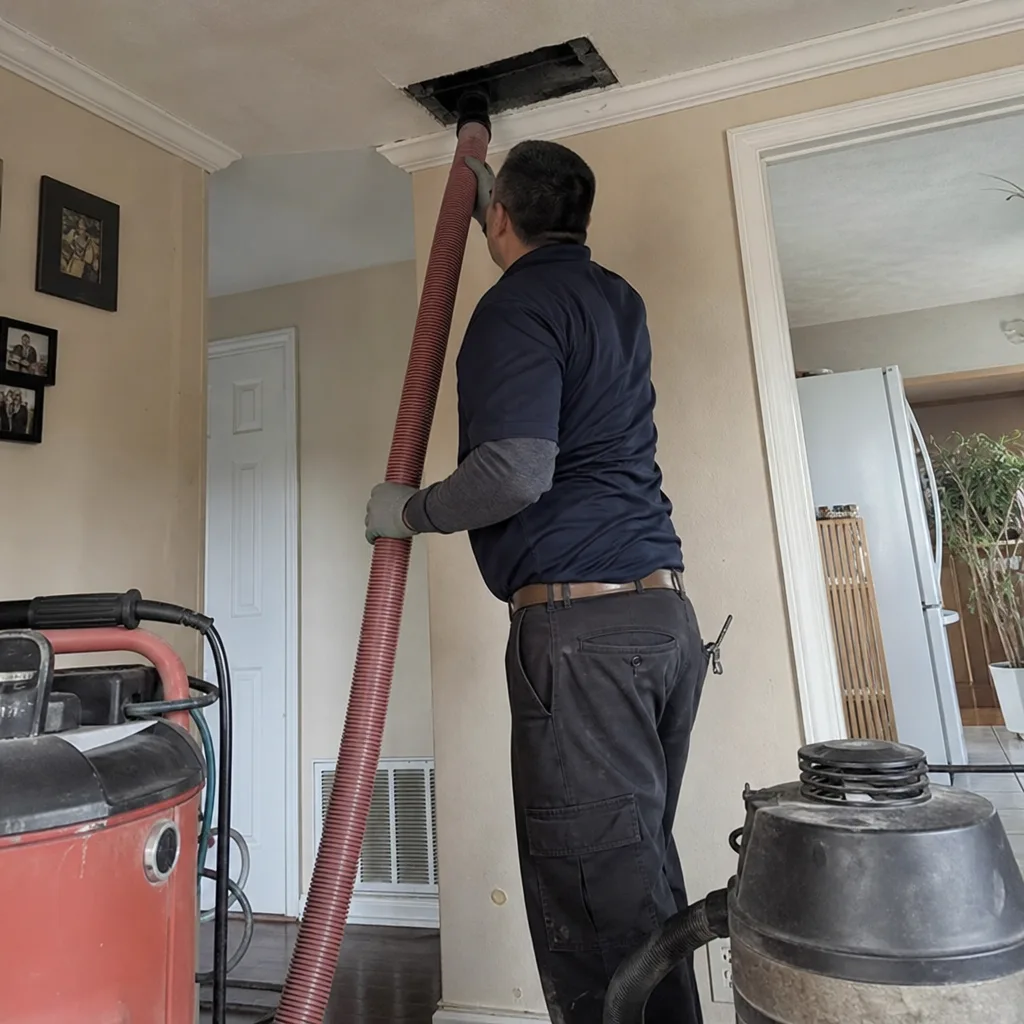 Before
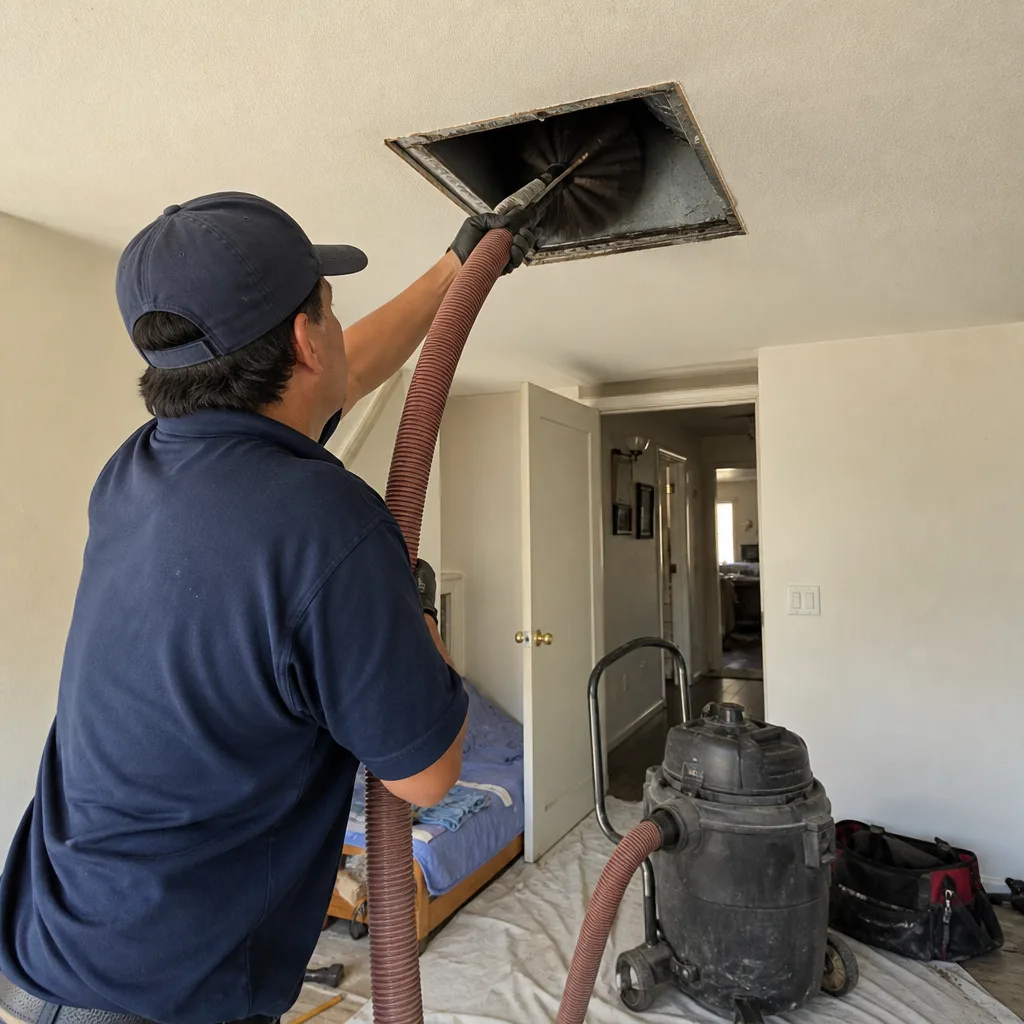 After
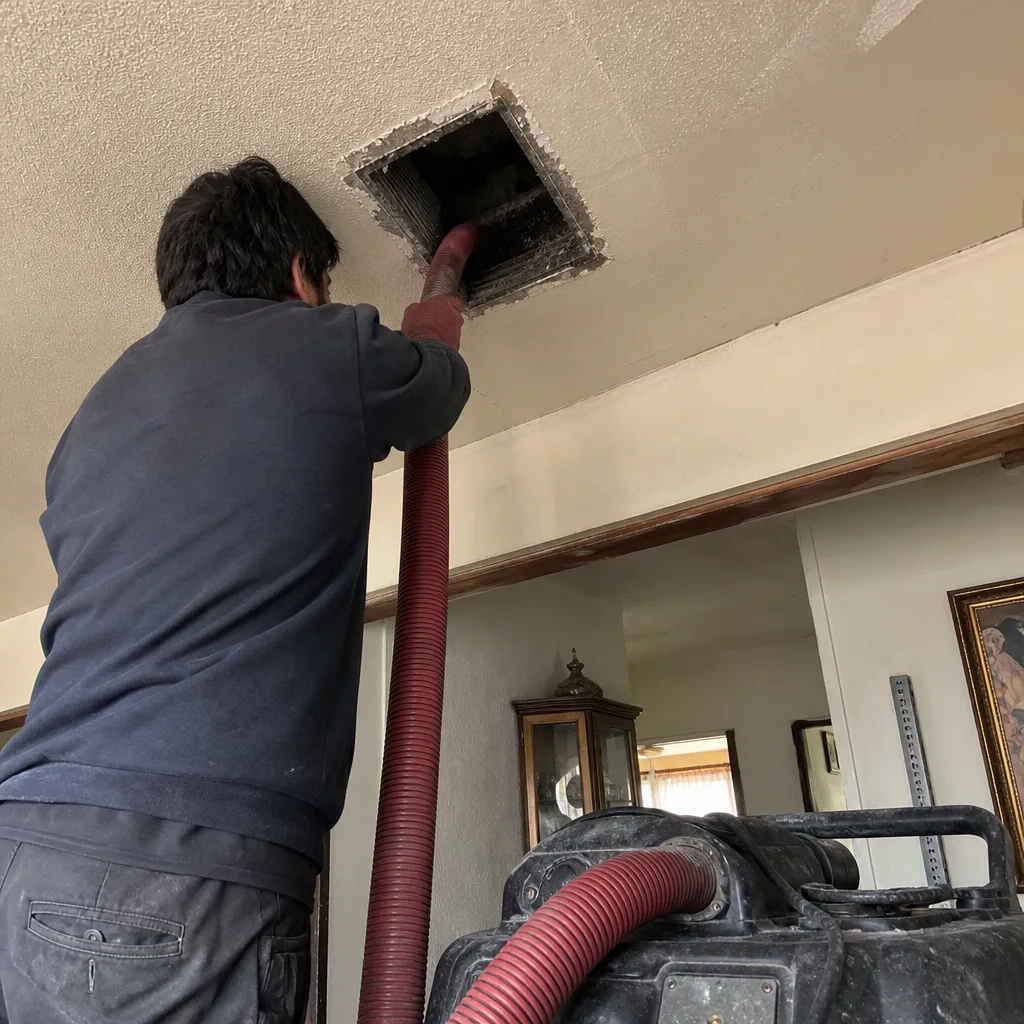 Before
 After
 Before
 After