
Last updated November 2, 2026
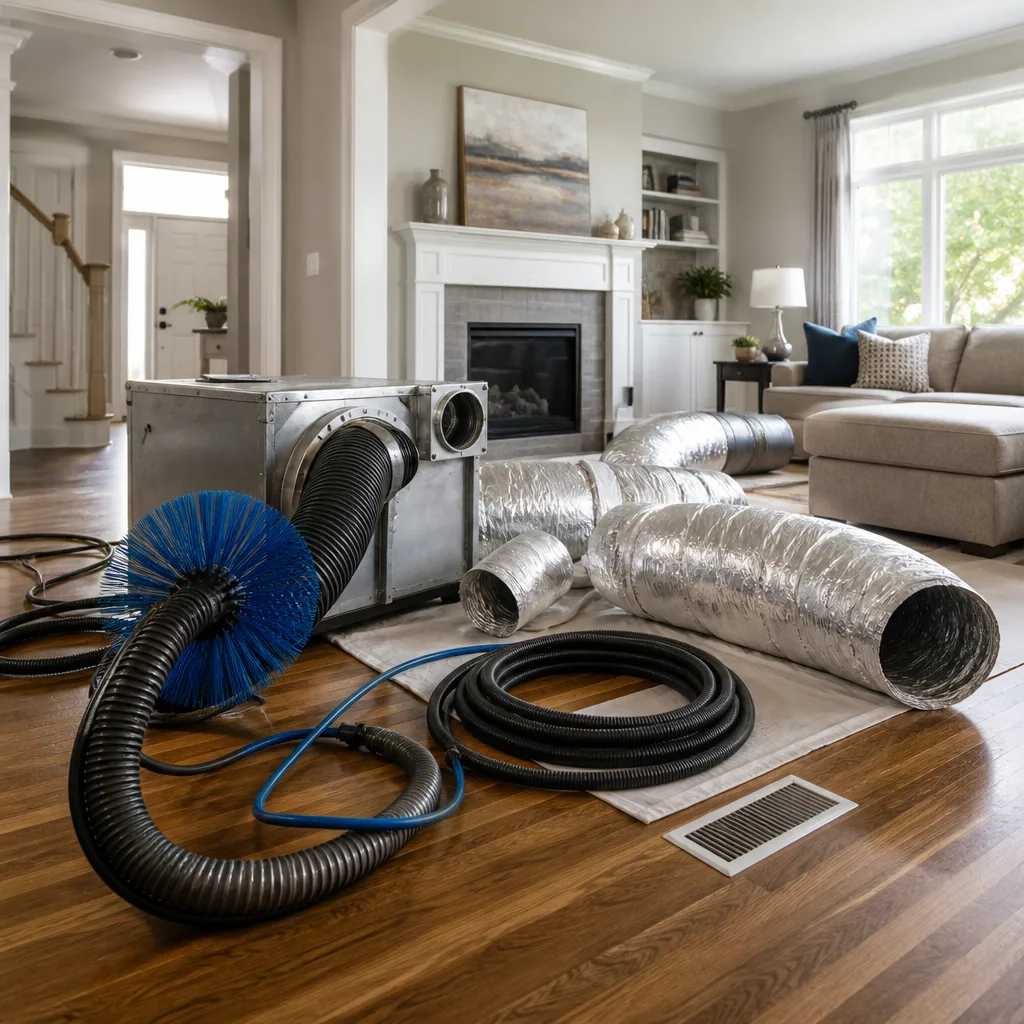 Whole-home duct cleaning
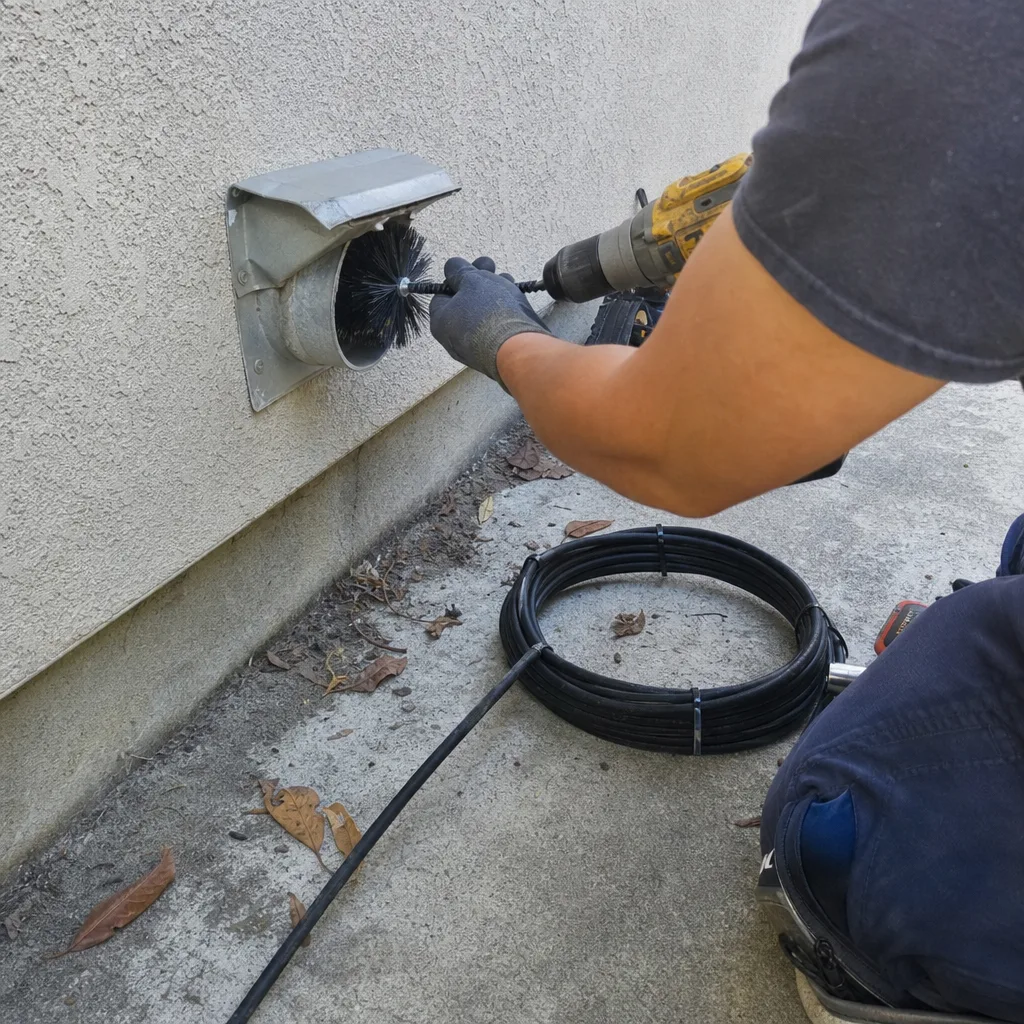
 Dryer vent cleaning
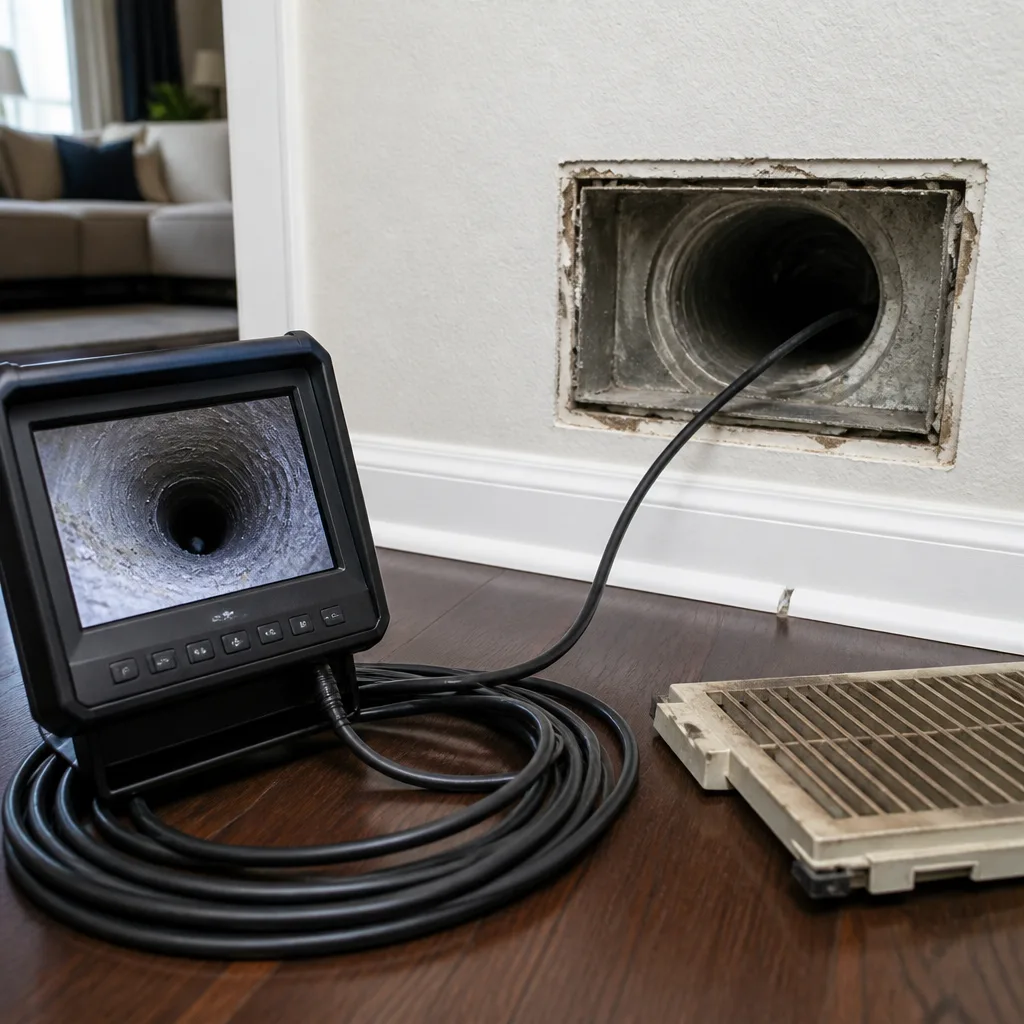 Camera inspection
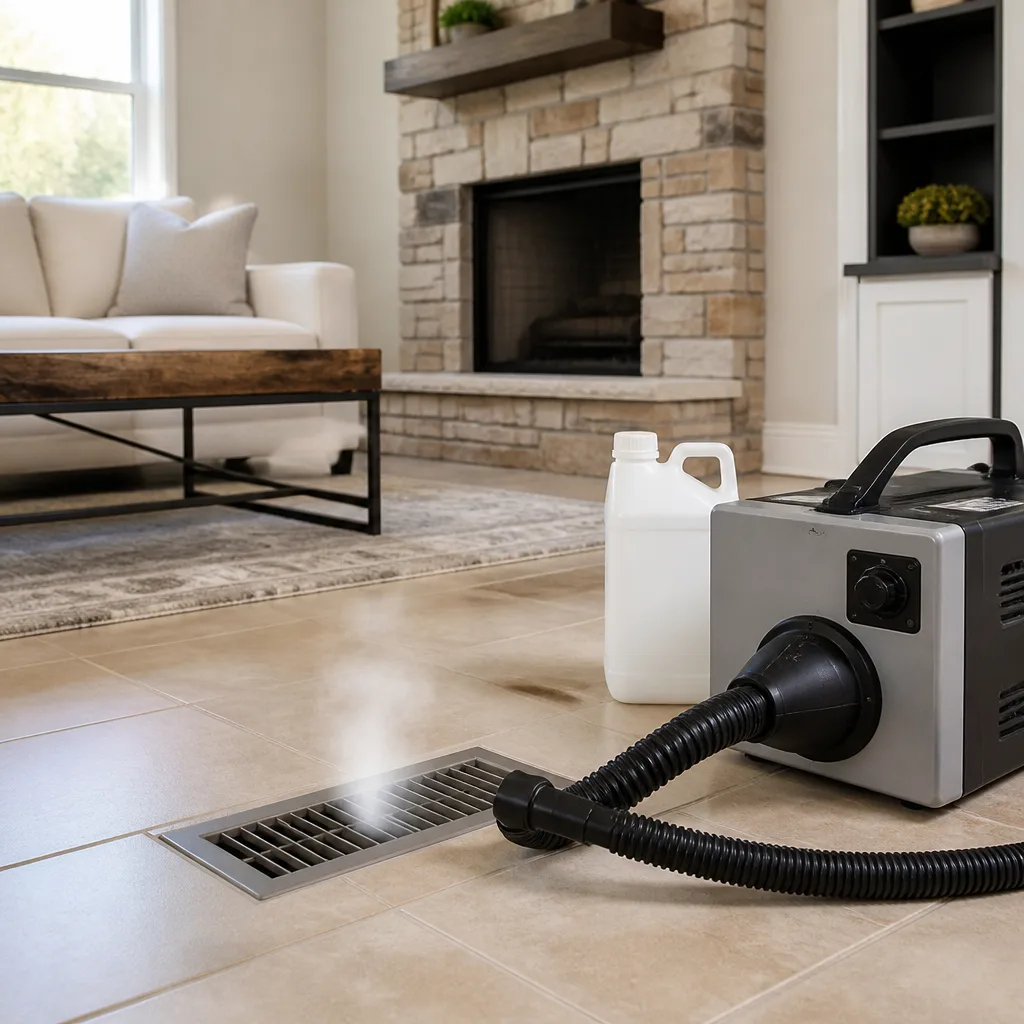 Sanitizing & deodorizing
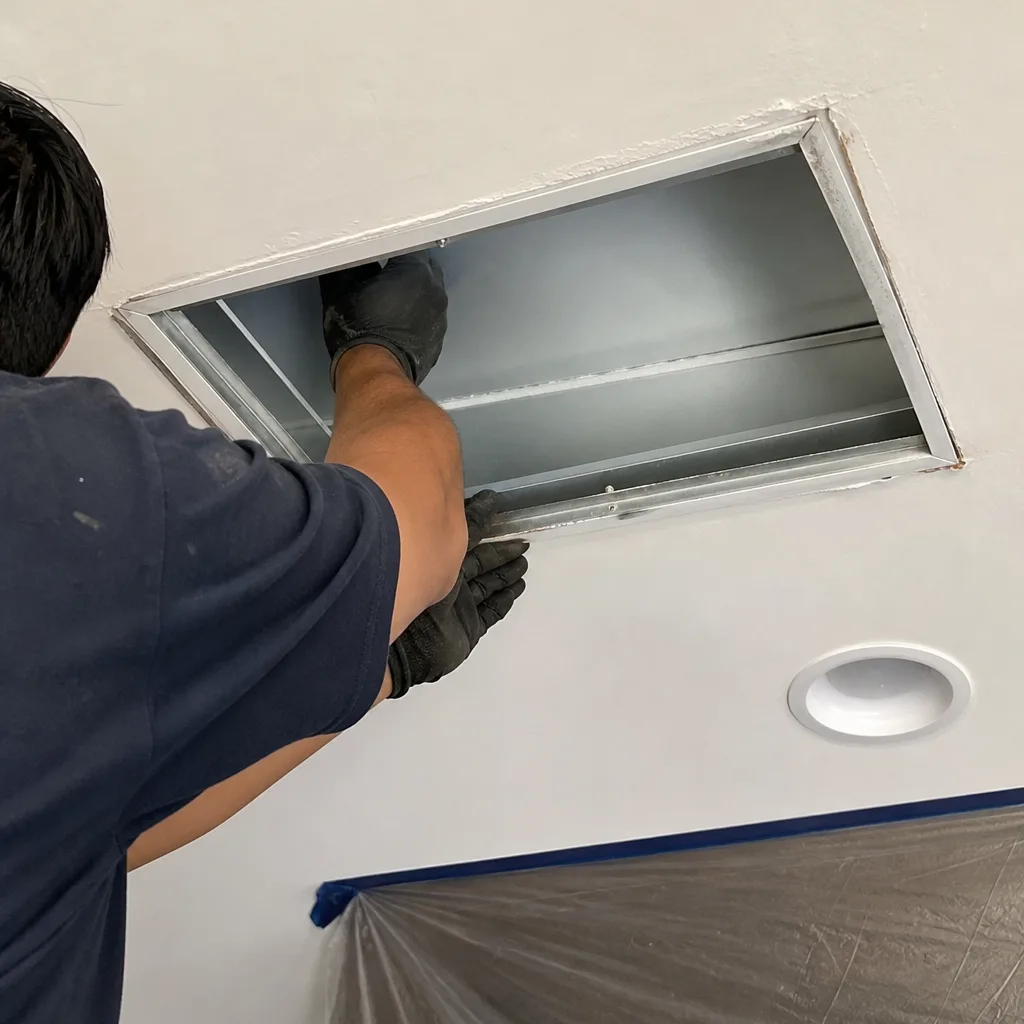
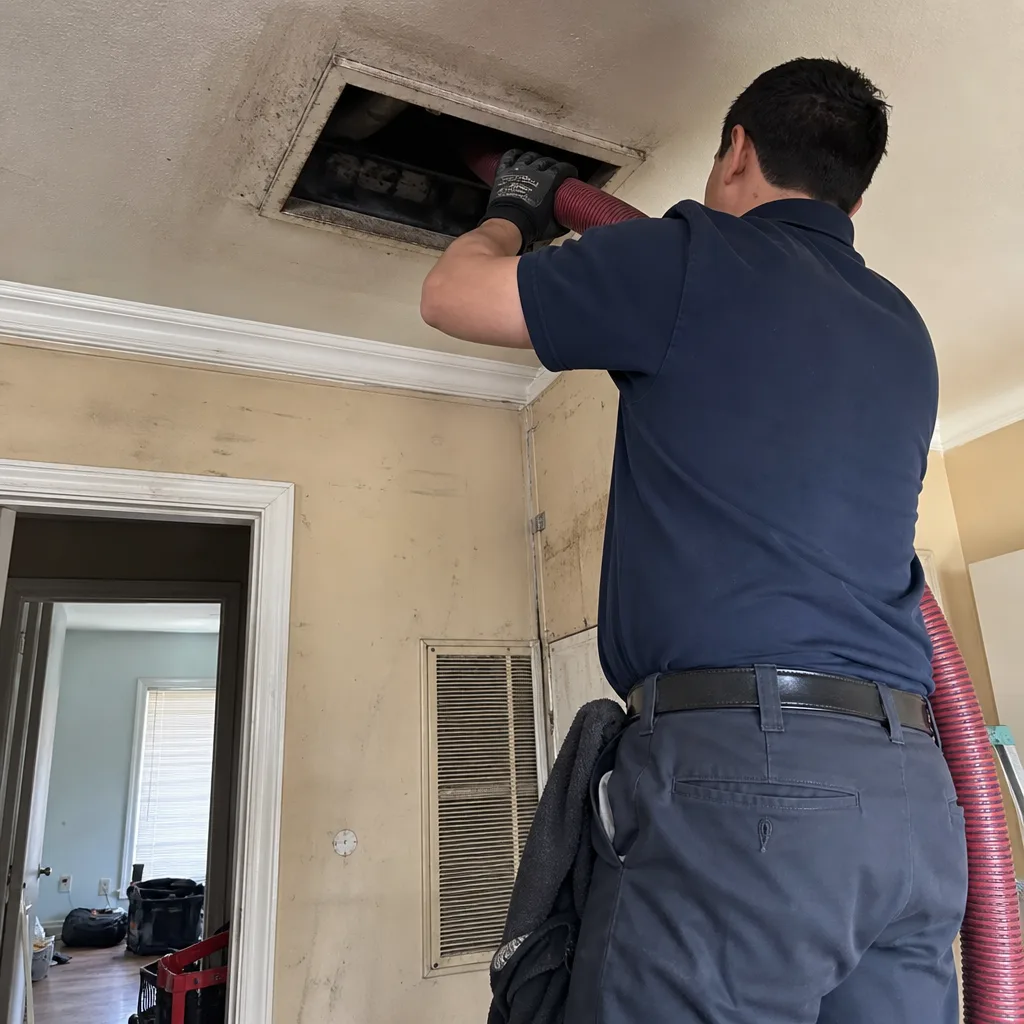
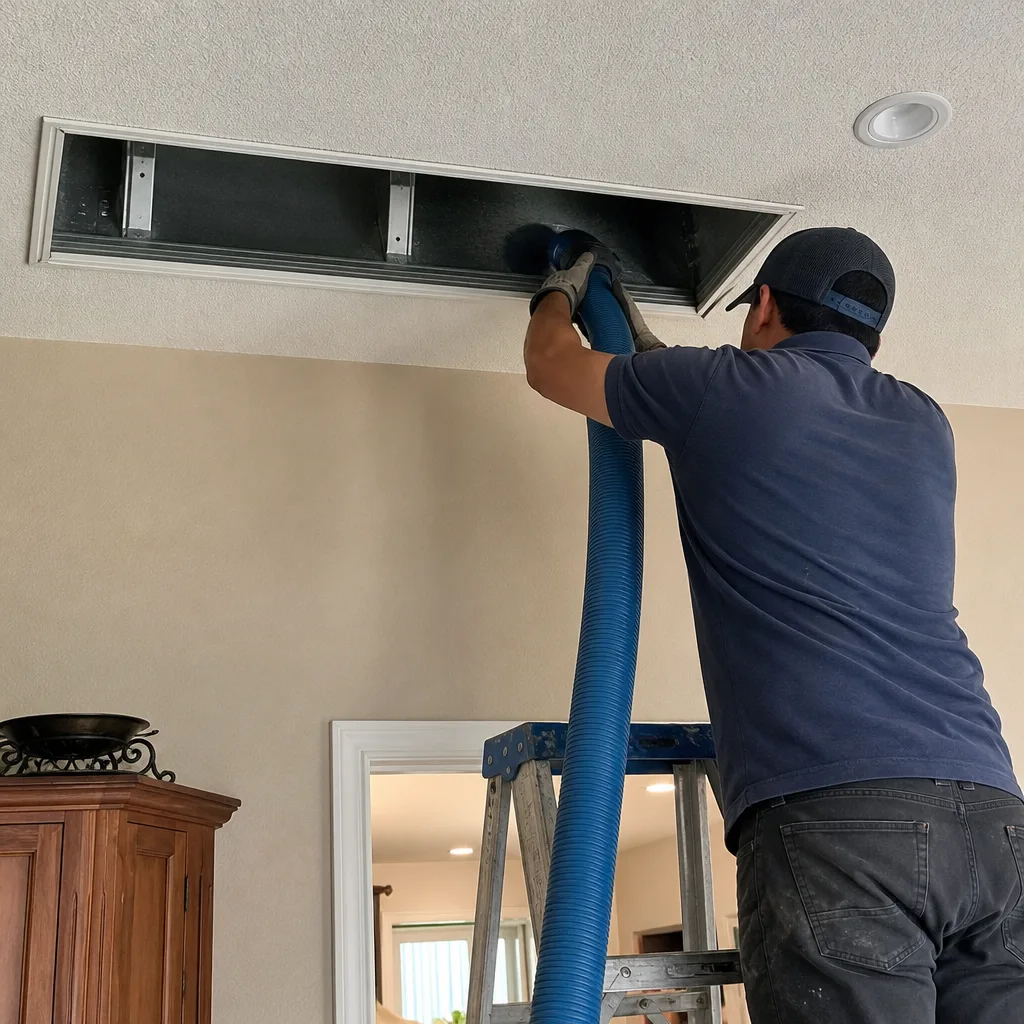
Whole-system duct and dryer vent check with before-and-after photos - you see exactly what came out of your vents
That "$99 whole-house special" is a bait ad - the real number appears once they are in your hallway, or the "clean" is a shop-vac at the register. We photograph the inside of your ducts before and after instead.
Air Duct Cleaning Maintenance Checklist for El Monte Homeowners
Most homeowners swap out their HVAC filter every three months and figure that covers duct maintenance. It doesn’t. The filter catches what’s coming through the return, but it does nothing about the film already coating the duct walls, the flex liner sagging in the attic, or the lint column hardening inside the dryer exhaust. This checklist is what we use when we walk into an El Monte home to diagnose duct health. It’s not a calendar reminder. It’s a system-level inspection protocol designed for El Monte’s specific housing stock, climate, and air quality realities, and it will teach you to catch small problems before they become $2,000 repairs.
Quick Answer
An air duct maintenance checklist for El Monte homeowners has two tracks: a quarterly visual inspection you can do yourself in about 20 minutes (check register airflow, grille debris, and dryer vent exhaust), and an annual professional inspection that includes camera access, static pressure readings, and coil condition checks. The goal is to document what you see over time, so any repair decision is based on evidence, not a contractor’s word alone.
Styles & brands we work with
- Whole-home duct cleaning
- Dryer vent cleaning
- Camera inspection
- Sanitizing & deodorizing
Table of Contents
- Why the Filter Alone Fails
- How El Monte’s Climate and Housing Stock Affect Your Ducts
- The Quarterly Visual Checklist You Can Actually Perform
- Annual Professional Inspection Points That Require Equipment
- How to Log Duct Condition Over Time
- El Monte-Specific Triggers That Accelerate the Schedule
- When a Checklist Item Fails: DIY, Professional Cleaning, or Repair
- Common Mistakes to Avoid
- When to Call a Professional
- Frequently Asked Questions
Why the Filter Alone Fails
The standard 1-inch fiberglass or pleated filter in your return grille is a first-line defense. It stops large particles from entering the blower and coil. But air moves fast through that filter face, and plenty of sub-visible particulate gets through. Over a decade in an El Monte house, that means a layer of dust adheres to the duct walls, often mixed with cooking grease, candle soot, and the fine clay dust that blows in from the San Gabriel Valley’s dry riverbeds. In our experience, when a homeowner finally opens a duct and sees what’s in there, the reaction is rarely “oh, that’s fine.”
The filter’s job is to protect the equipment. It was never designed to compensate for leaks in the return plenum, disconnected flex runs, or a collapsed duct liner. When you check the filter monthly and call it maintenance, you’re monitoring one part of the system while ignoring the parts that actually move the air into your living spaces. The checklist below corrects that blind spot.
How El Monte’s Climate and Housing Stock Affect Your Ducts
El Monte sits in the San Gabriel Valley, where summer temperatures routinely push into the 90s and the air carries a specific load of fine particulate. Two local factors make duct maintenance here different from, say, a coastal city like Long Beach. First, the aridity. Dry air means dust stays airborne longer instead of settling out, so more of it gets pulled through the return and deposited inside the duct system. Second, the housing stock. A large share of El Monte homes were built between the 1940s and 1970s, which means original sheet metal ducts, often uninsulated, running through hot attics. Those ducts sweat less than they bake, and old tape seals crack.
Wildfire smoke is now a recurring seasonal event in Southern California. When smoke infiltrates a home, the duct system acts as a particulate reservoir. The smoke odor lingers because the particles are clinging to the duct walls, not just the furniture. If you live in a neighborhood near Peck Road or along Valley Boulevard, you’re not immune to this, no matter how tight your windows are. Homes with whole-home filtration from Honeywell or Aprilaire handle some of this, but the ductwork itself still needs periodic inspection.
One more El Monte-specific factor: detached garages with laundry hookups. Many older homes here have the dryer vent running through the garage wall or up through a crawlspace, which means longer vent runs, more bends, and more places for lint to pile up. That vent is part of your duct system, and it fails faster than the HVAC ducts do.
The Quarterly Visual Checklist You Can Actually Perform
Set a reminder four times a year. March, June, September, December works well for El Monte’s seasonal shifts. Each check takes about 20 minutes and requires no tools beyond a flashlight, a tissue, and your phone camera. Here’s the full sequence:
- Walk every register and feel the airflow. With the system running, hold a tissue in front of each supply vent. It should flutter roughly equally in every room. A room that’s noticeably weaker is a sign of a disconnected flex run, a crushed duct, or a damper that’s drifted closed.
- Check the return grille for visible debris accumulation. If the grille face is coated with dust or, worse, a gray felt-like buildup, that’s what the filter is not catching. Take a photo before you wipe it. The photo becomes your documentation.
- Inspect the filter itself. Note the date you installed it and what it looks like now. A filter that’s dark in the center but clean at the edges indicates a well-sealed filter slot. A filter with dust bleeding around the edges means the filter isn’t seating correctly, which is a repair item, not a cleaning item.
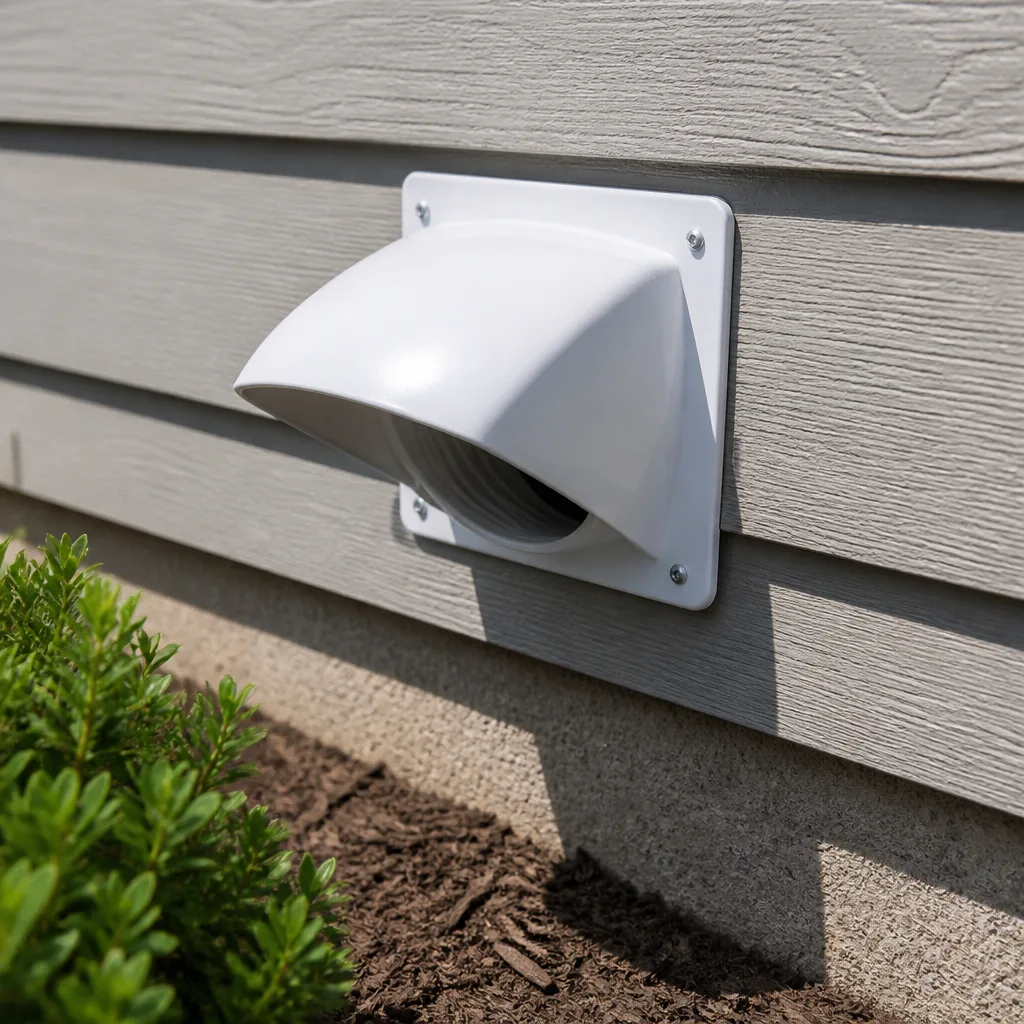
- Go outside and confirm the dryer vent exhaust flow. Run the dryer on air-fluff for five minutes, then check the exterior vent hood. You should feel a solid push of warm air. If the louvers on the hood aren’t opening, or the airflow is weak, you have a lint blockage somewhere in the run.
- Look up at any exposed ductwork in the garage, attic, or crawlspace. Use your flashlight. You’re looking for sagging flex duct, disconnected joints, or dark stains that indicate air leakage. Take photos. If you see a joint that’s come apart, that’s not a cleaning issue, that’s an air duct repair in El Monte issue, and it’s costing you money every time the system runs.
That’s the entire quarterly protocol. No ladders, no opening access panels, no touching anything electrical. It’s a documentation habit more than a maintenance task, and it builds a record you can use later.
Annual Professional Inspection Points That Require Equipment
Once a year, the checklist moves beyond what you can see. These are the five items we check on every professional air duct cleaning in El Monte inspection, and they require tools that don’t make sense for a homeowner to own:
- Duct camera access. A small camera on a flexible probe goes through the supply or return registers and shows the actual interior condition of the duct walls. This is the difference between guessing and knowing. We can see if the buildup is light surface dust or a hardened, adhered layer that needs mechanical agitation, not just vacuuming.
- Static pressure readings. A manometer measures the resistance to airflow across the system. High static pressure means the blower is working against a restriction. That restriction is often a dirty coil, a collapsed duct, or a filter that’s too restrictive for the system’s design. It’s a number, not an opinion, and it tells us whether the problem is in the ducts or in the equipment.
- Air handler coil condition. If the evaporator coil has a blanket of dust and pet hair on its upstream face, the air passing over it is being cooled inefficiently and carrying moisture into the ductwork. A wet, dirty coil breeds the conditions that lead to biological growth inside the plenum.
- Plenum and cabinet inspection. We open the air handler cabinet and inspect the return plenum for gaps, rust, or evidence of duct tape failure. In older El Monte homes, the return plenum is often a sheet metal box that’s been patched repeatedly. Every gap pulls attic air into the system unfiltered.
- Dryer vent run assessment. This includes the total linear footage, the number of elbows, and the type of vent material. Foil accordion vents are common in older El Monte homes and they are lint traps by design. They also fail fire code in many jurisdictions. A rigid metal or semi-rigid replacement is often the right call.
These five inspection points produce a data set that tells you exactly what your system needs: cleaning, repair, or both. That’s the difference between a maintenance schedule and a random guess.
How to Log Duct Condition Over Time
The single most useful thing you can do for your duct system is keep a record. Not because the ducts care, but because when a contractor tells you the system is “really bad” and hands you a $1,800 estimate, you should be able to compare that claim against your own documented history. Here’s the log format we recommend:
- Create a simple note file or spreadsheet with one row per inspection. Columns: Date, Filter Changed, Airflow Notes, Visible Debris, Dryer Vent Output, Photos Taken, Action Taken.
- Take photos every time, even when everything looks fine. Store them in a folder labeled by date. A photo of a clean duct from March becomes the baseline you compare November against. Without it, you’re relying on memory.
- Note any changes to the household. New pet, renovation project, new flooring, new HVAC equipment. All of these change the particulate load on the system and should be recorded. When we look at a homeowner’s log and see “had kitchen remodeled in April,” we immediately know why the dust load spiked in May.
- Record every repair or service call in the same log. What was done, by whom, and the invoice number. This creates a maintenance history that adds value when you sell the home and credibility when you call a new contractor.
This log is your leverage. It turns the maintenance checklist from a chore into a decision-making tool.
El Monte-Specific Triggers That Accelerate the Schedule
The quarterly and annual schedule is a baseline. Certain events in El Monte should trigger an immediate off-cycle inspection, because they dump a sudden load of particulate into the system or change the way the system operates:
- Renovation dust. Drywall sanding, flooring removal, and tile cutting produce fine dust that will be pulled through the return and deposited throughout the duct system. This dust is abrasive and, mixed with residual cooking oils in the ducts, forms a paste that’s difficult to remove later. After any major interior renovation, schedule a professional cleaning. Do not wait for the quarterly check.
- Wildfire smoke events. When the AQI spikes and your home smells like a campfire, the HVAC system is circulating smoke particulate through every duct. If you ran the system during the smoke event, the duct walls now hold those particles. Once the air clears, inspect and consider cleaning. This is a recurring reality for the San Gabriel Valley, not a one-time thing.
- HVAC system changes. If you replace the furnace, air handler, or condenser, the new equipment operates at different airflow and static pressure characteristics. The existing ductwork may now be undersized, oversized, or leaking in ways that didn’t matter before. Any major equipment change should include a duct inspection as part of the install, not as an afterthought.
- Pest activity. Rodents in the attic or crawlspace often nest in or near ductwork. We’ve seen insulation pulled into ducts, chewed flex liners, and droppings inside supply runs. If you hear scurrying or see droppings, get the ducts inspected immediately. This is a health issue, not just a cleanliness issue.
- New flooring or heavy sanding in the neighborhood. Even if the work isn’t in your house, construction dust drifts. Homes near new development along Santa Anita Avenue or redevelopment zones absorb neighborhood-level dust. If you notice faster filter loading, that’s your signal to bump the inspection schedule.
When a Checklist Item Fails: DIY, Professional Cleaning, or Repair
A checklist is only useful if you know what to do when something fails. Here’s the decision tree we walk homeowners through:
1. Light surface dust on grilles and registers
This is normal. Wipe the grille with a damp cloth, note it in your log, and move on. No professional service is warranted for dust that wipes off a register face.
2. Uneven airflow between rooms
First, check that all supply dampers are open and all registers are unblocked by furniture. If airflow is still weak in one room, the duct run serving that room may be disconnected, crushed, or undersized. This is a diagnostic call, not a cleaning call. A professional should inspect the run with a camera and take static pressure readings. If the duct is simply dirty, cleaning resolves it. If it’s collapsed or disconnected, that’s air duct repair, and cleaning will not fix it.
3. Visible debris inside the return grille or at the filter slot
If you can see debris building up behind the return grille, the duct system is holding particulate. A professional cleaning is warranted. This is not a DIY job. Household vacuums don’t have the reach or suction to pull material from 30 feet inside a duct run, and using a brush on a stick typically just knocks debris deeper into the system.
4. Dryer vent exhaust flow is weak or absent
This is the highest-urgency item on the checklist. A blocked dryer vent is a fire risk. Disconnect the dryer duct and inspect what you can reach, but if the vent run is long, has multiple elbows, or you can’t see the blockage, call for professional dryer vent cleaning in El Monte. Do not run the dryer until the exhaust is confirmed clear.
5. Sagging or disconnected flex duct in the attic
Sagging flex duct that’s still connected may be functional but inefficient. Disconnected flex duct is dumping conditioned air into the attic. Neither is fixed by cleaning. These are repair items, and the repair typically costs far less than the energy you’re losing. We clean it, and if it’s broken, we fix it.
6. Mold-like staining or persistent musty odor from the vents
If you see staining on the grille, insulation, or inside the duct opening, this is beyond a cleaning checklist item. The source of the moisture must be found first. Cleaning the duct without fixing the moisture source means the problem returns. This requires a professional inspection to determine where the water is coming from, before any cleaning happens.
Common Mistakes to Avoid
- Assuming the filter is enough. The filter protects the equipment, not the ducts. A clean filter and a dirty duct system coexist every day in El Monte homes.
- Cleaning only the registers. Wiping the visible grille face does nothing for the 30 feet of duct behind the wall. It’s cosmetic, not maintenance.
- Ignoring the dryer vent because it’s not “HVAC.” The dryer vent is part of your duct system, and it’s the only part that carries combustible lint at elevated temperature. It fails faster than the HVAC ducts and the failure mode is fire.
- Waiting until you can smell it. By the time a duct system has a detectable odor, the buildup is significant. The whole point of a maintenance checklist is to act before the problem announces itself.
- Accepting a lowball cleaning quote without understanding the method. A $99 whole-house duct cleaning in El Monte means a technician with a shop-vac and a brush, not commercial-grade equipment. Professional-grade equipment with Rotobrush agitation and Nikro extraction is a different process, and the results reflect that. You get what the equipment can physically remove.
- Skipping documentation. If you don’t log what you see, every service visit starts from zero. Your log is the only objective record you have.
- Treating cleaning as a repair. Cleaning removes accumulated material. It does not fix a disconnected run, a crushed flex liner, or a leaking plenum. If the duct is broken, cleaning it just leaves you with a clean broken duct.
When to Call a Professional
Call when your checklist shows a failed item that you can’t fix by opening a damper or replacing a filter. That includes persistent weak airflow in one room, visible debris beyond the grille face, a dryer vent with weak exhaust, sagging or disconnected duct in the attic, or any staining that suggests moisture inside the system. These are not DIY conditions. Duct Cleaning El Monte offers free estimates in El Monte. Call (844) 573-0760 and we’ll inspect what you can’t see.
Frequently Asked Questions
Most El Monte homes benefit from professional air duct cleaning every 3 to 5 years, depending on the factors recorded in your maintenance log. Homes with pets, residents with allergies, recent renovation history, or ongoing exposure to wildfire smoke may need cleaning every 2 to 3 years. The quarterly checklist is how you know: when visible debris accumulates at the return grille within weeks of cleaning it, or when airflow drops noticeably in multiple rooms, it’s time to call. Call (844) 573-0760 for an inspection and we’ll tell you what the camera shows.
Whole-system air duct cleaning in El Monte typically runs between $400 and $1,200 depending on the number of supply and return runs, the accessibility of the air handler, and the condition of the ductwork. That’s an honest range for a whole-system clean, not a per-vent teaser price. Duct Cleaning El Monte gives one flat price per system, agreed before work starts. Call (844) 573-0760 for a free estimate on your specific home.
Cheap quotes usually mean a different process. A lowball offer often covers a technician with a portable vacuum and a hand brush, working through the registers without agitating the duct walls or maintaining negative pressure on the system. The surface dust moves, but the adhered layer stays. Professional-grade equipment with Rotobrush agitation and Nikro extraction removes what’s actually attached to the duct. If the price seems too good, ask what equipment is used and whether the system is kept under negative pressure during the clean. Then call (844) 573-0760 for a real number.
Before-and-after photos are the standard of proof. A legitimate duct cleaning contractor will photograph the duct interior with a camera before the work, then photograph the same locations after extraction. If they won’t show you the photos, the work probably didn’t penetrate beyond the first few feet of the run. We run a camera on every job and the photos become part of your maintenance log.
Yes. The dryer vent is the highest-risk duct in your home because it carries combustible lint past a heat source. The National Fire Protection Association lists clothes dryers as a leading cause of residential structure fires, and the overwhelming majority involve uncleaned vents. Your quarterly checklist includes a dryer exhaust confirmation, and you should schedule a professional dryer vent cleaning annually if you run the dryer more than three times a week.
It depends on the duct material and the extent of the contamination. Hard sheet metal ducts can often be thoroughly cleaned and sanitized if the moisture source is corrected. Insulated flex duct with mold on the liner usually warrants replacement, because the liner is porous and cleaning cannot remove contamination embedded in the insulation. This is a repair and cleaning decision, not just a cleaning decision. We’ll tell you which applies after a camera inspection. Call (844) 573-0760 to schedule one.
The Bottom Line
A duct maintenance checklist is a system-level habit, not a single task. The quarterly visual checks catch airflow imbalances, grille buildup, and dryer vent failures before they compound. The annual professional inspection gets into the ducts with a camera and a manometer and produces the data a visual check never can. Document everything. The log you keep is the only objective record of your system’s condition, and it’s what makes every future service decision evidence-based. El Monte’s dry climate, older housing stock, and seasonal smoke events make this maintenance rhythm more important here than in most Southern California cities. Run the checklist four times a year, keep the log, and when an item fails, call (844) 573-0760 before it gets expensive.
Written by the team at Duct Cleaning El Monte, serving El Monte since 2013.
See the difference
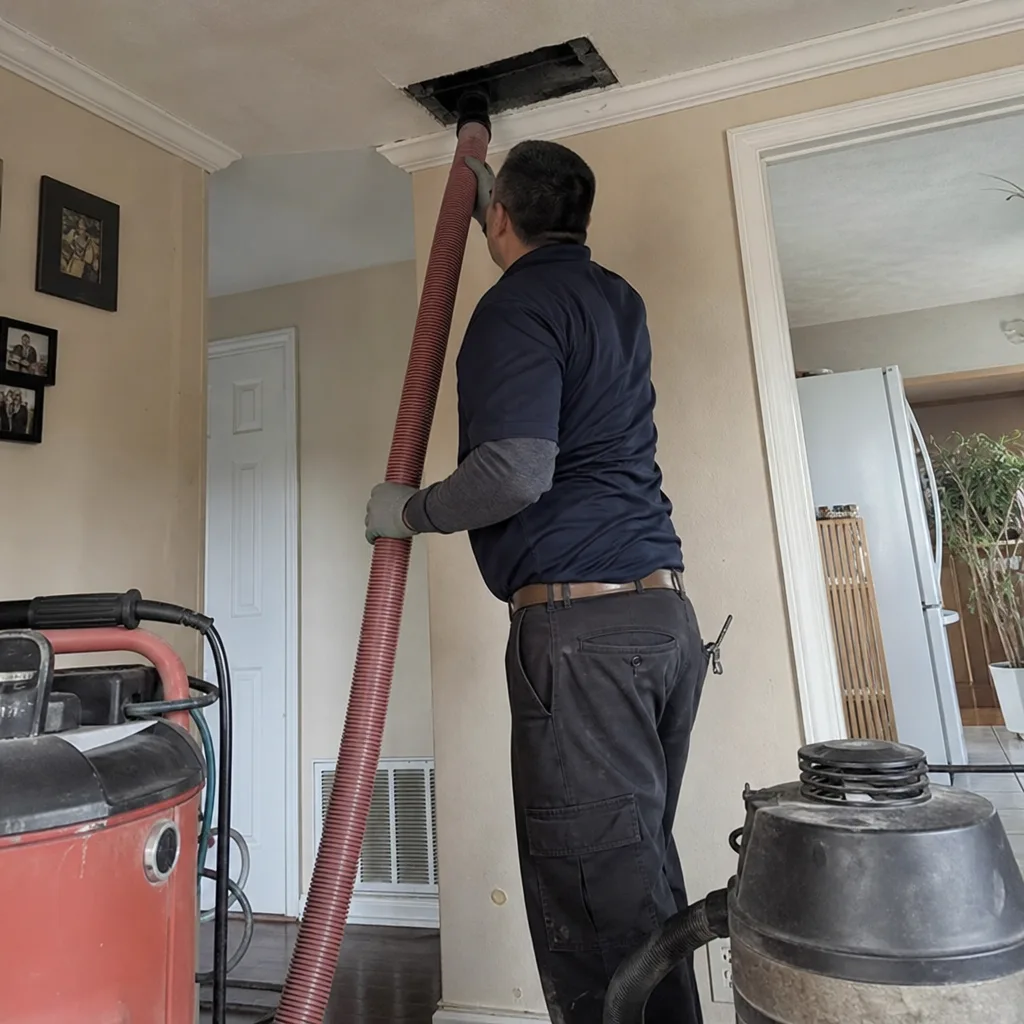 Before
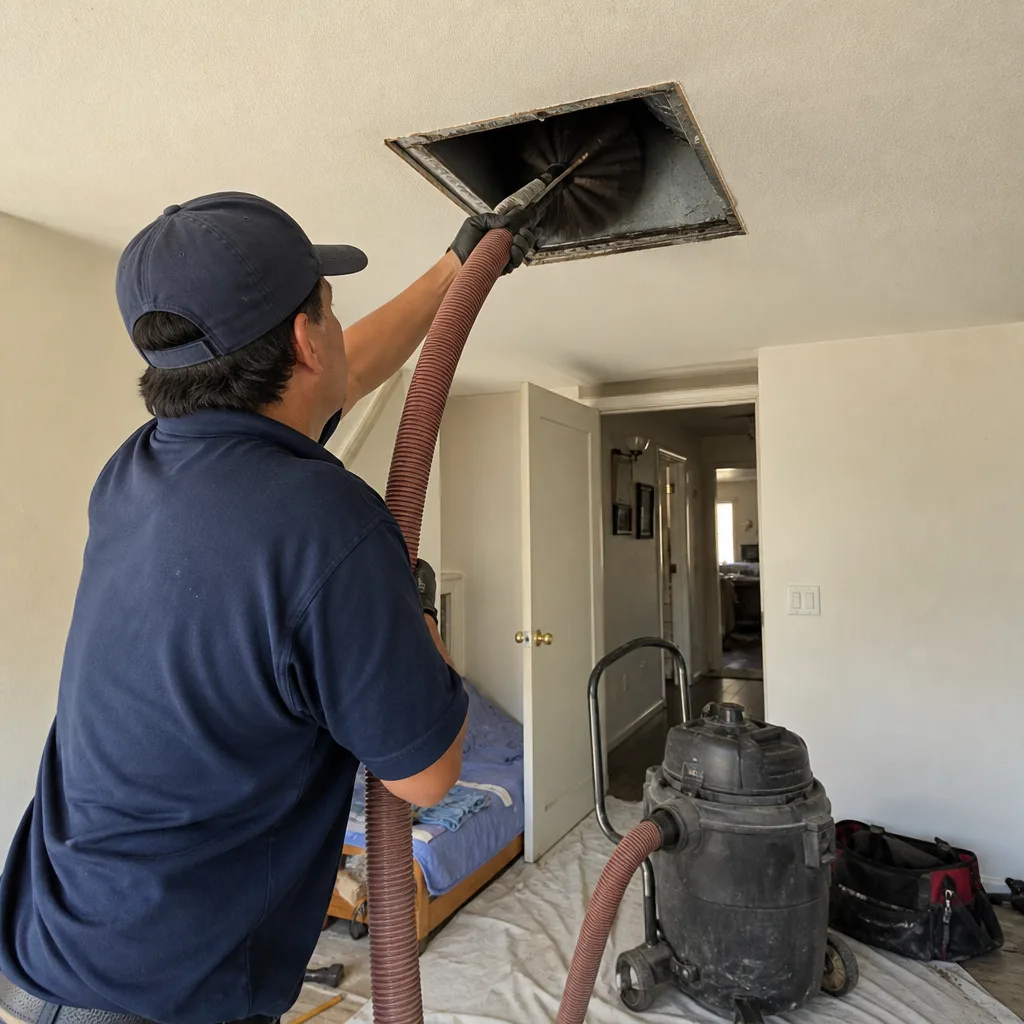 After
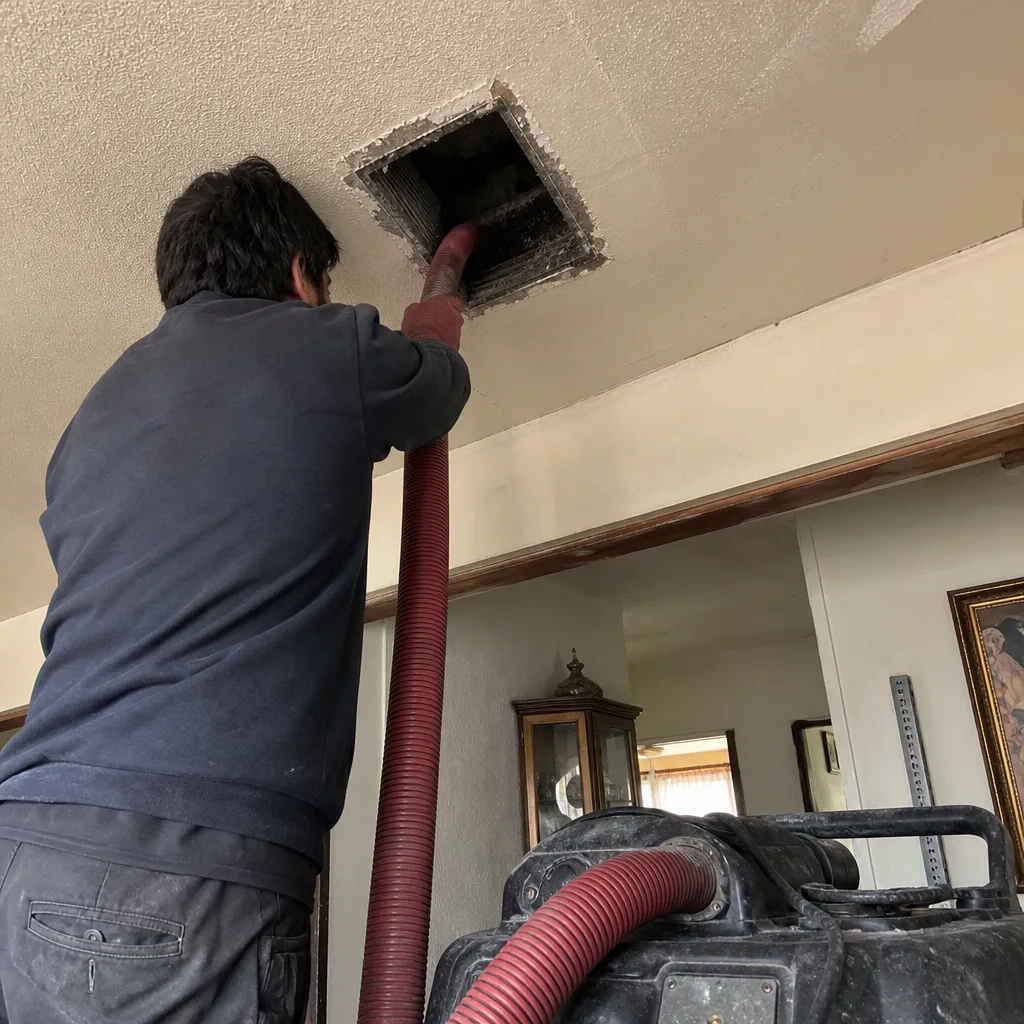 Before
 After
 Before
 After