
Last updated November 3, 2026
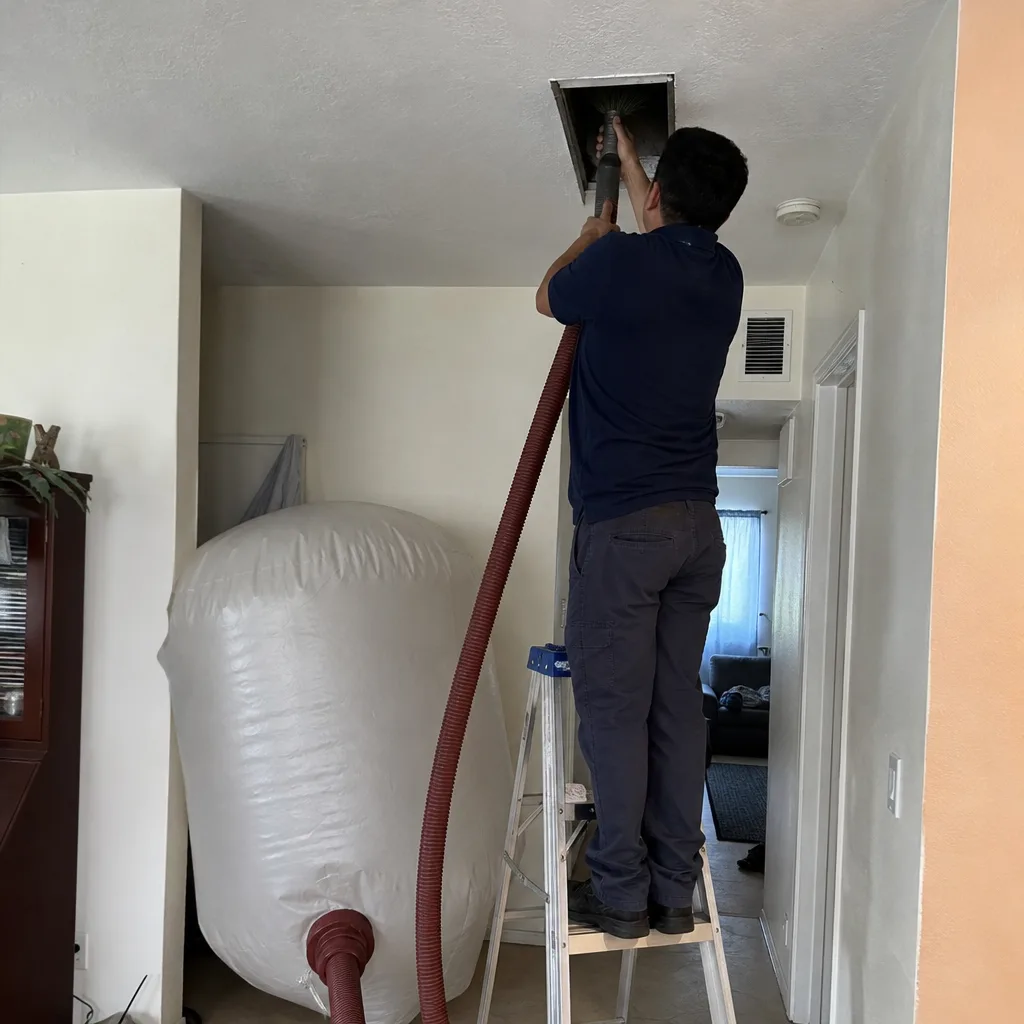
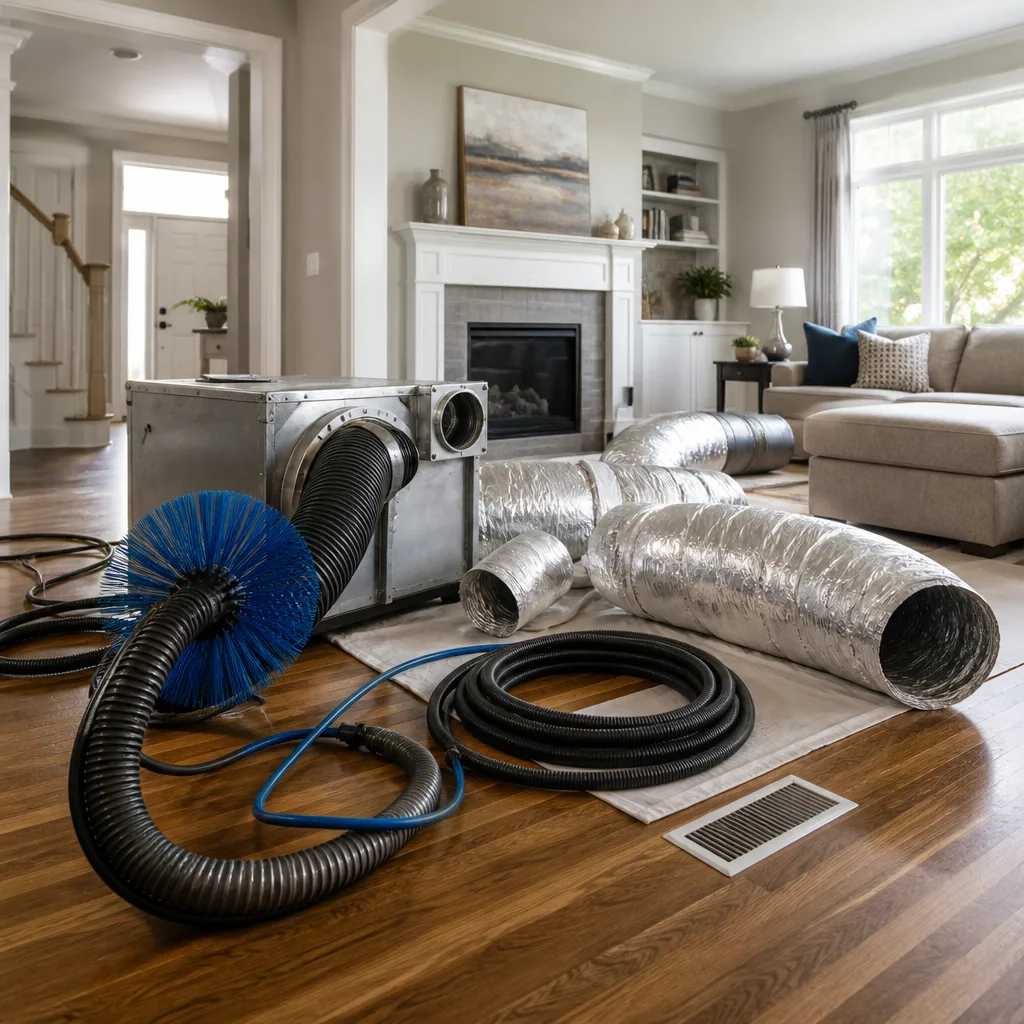 Whole-home duct cleaning
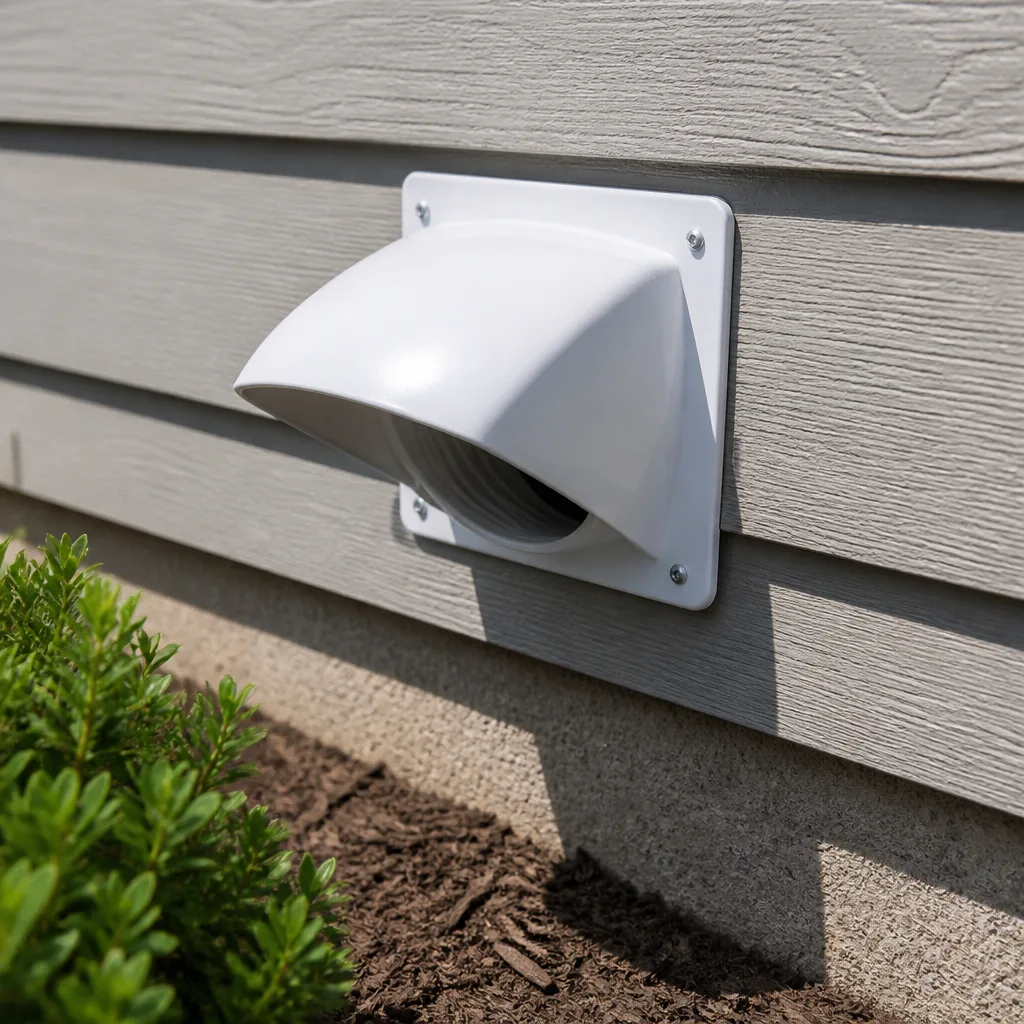 Dryer vent cleaning
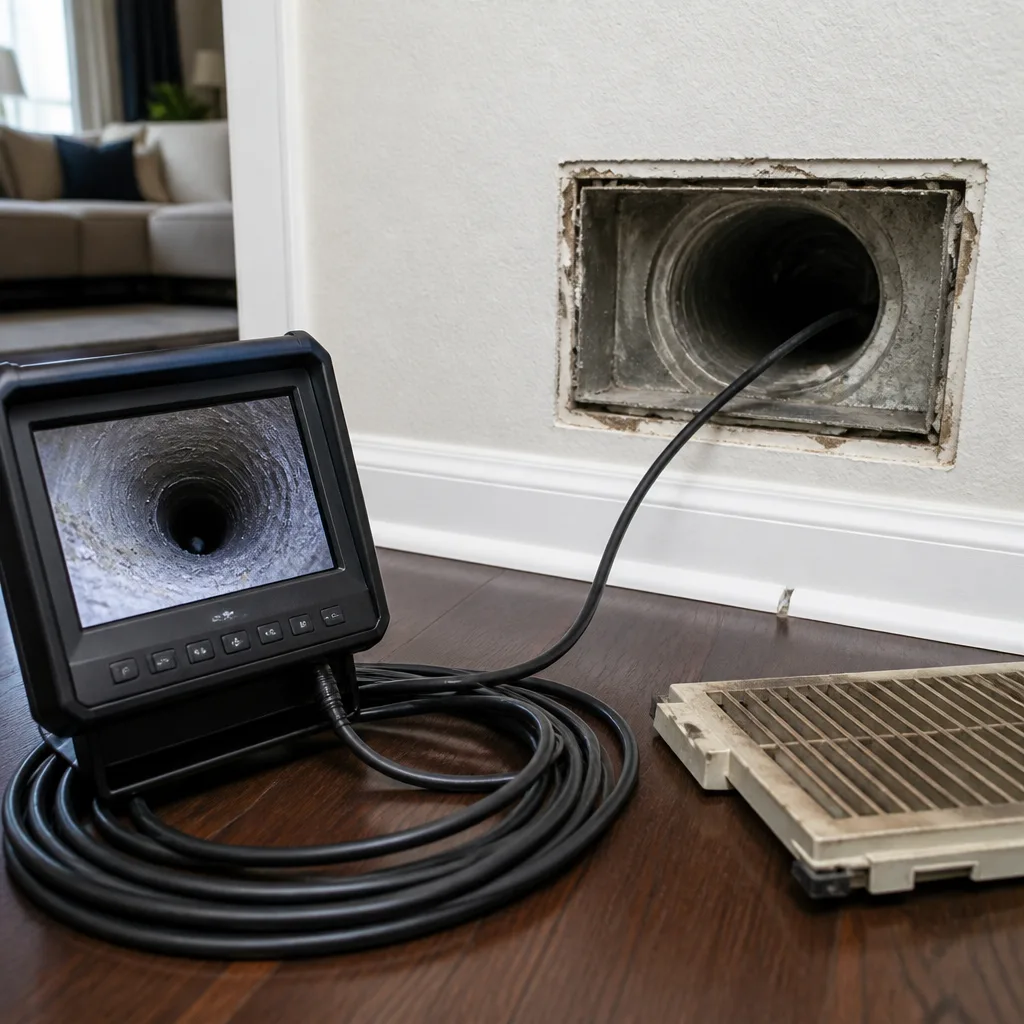 Camera inspection
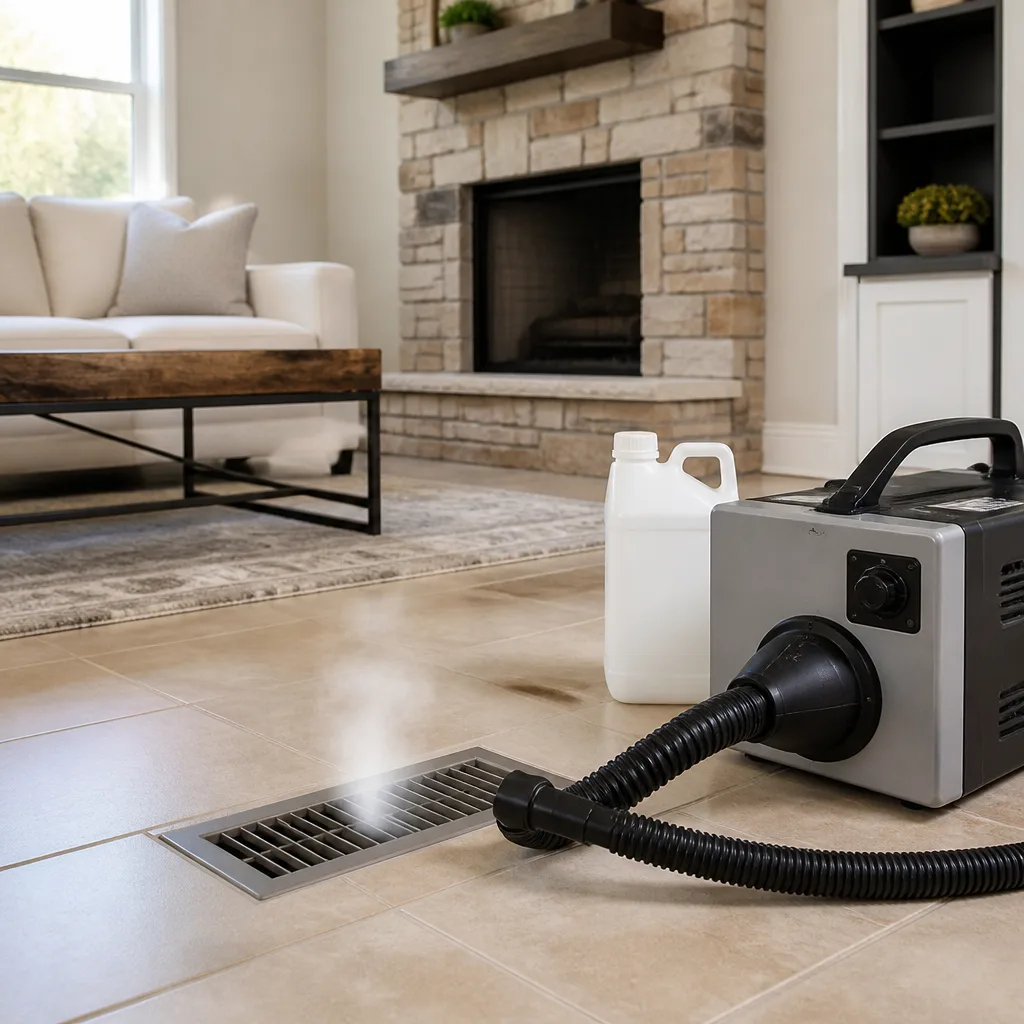 Sanitizing & deodorizing
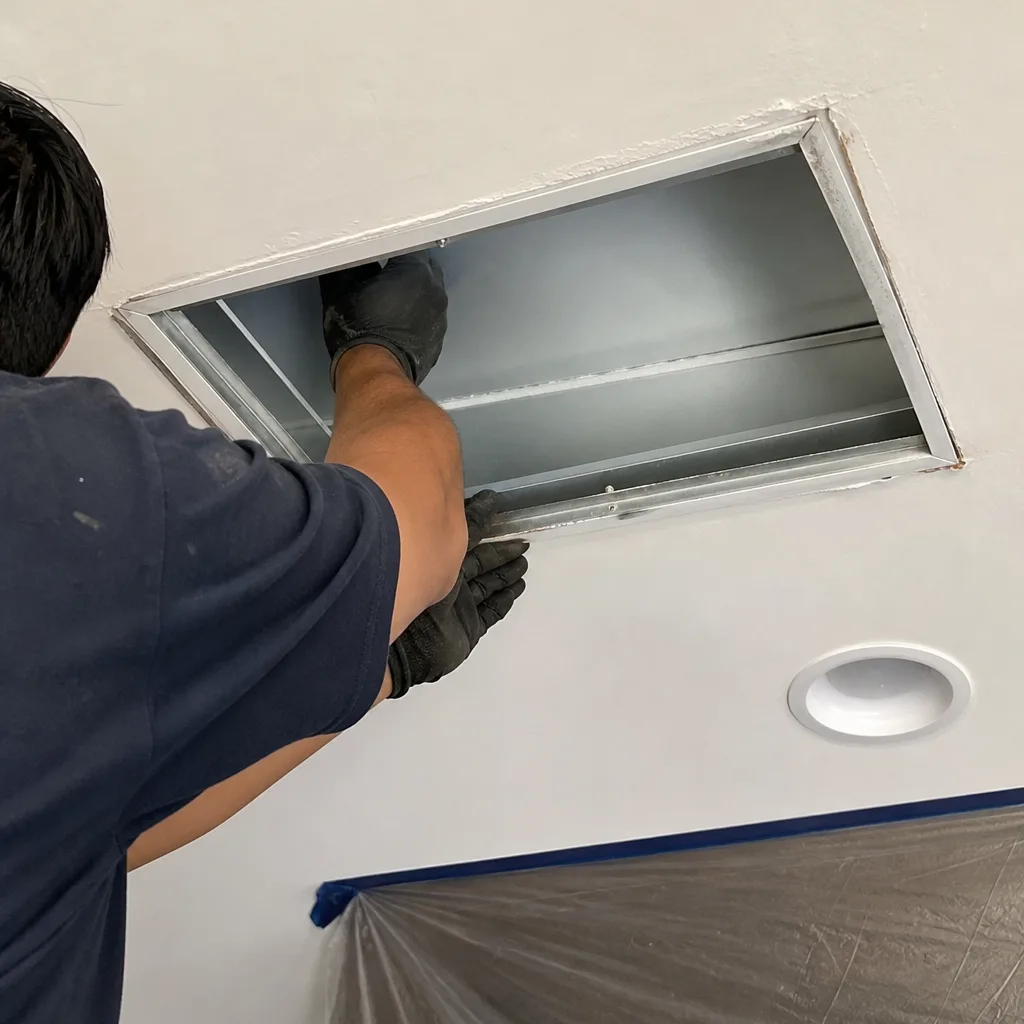
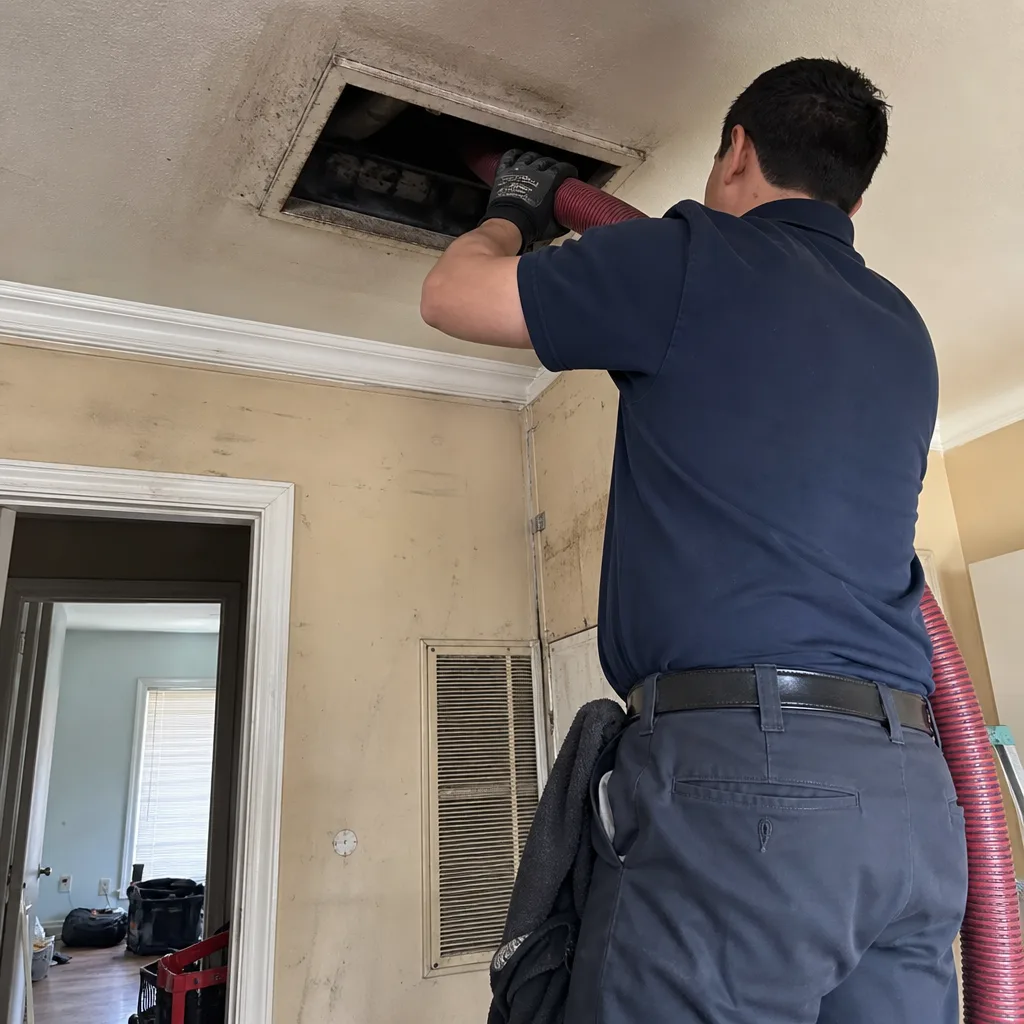
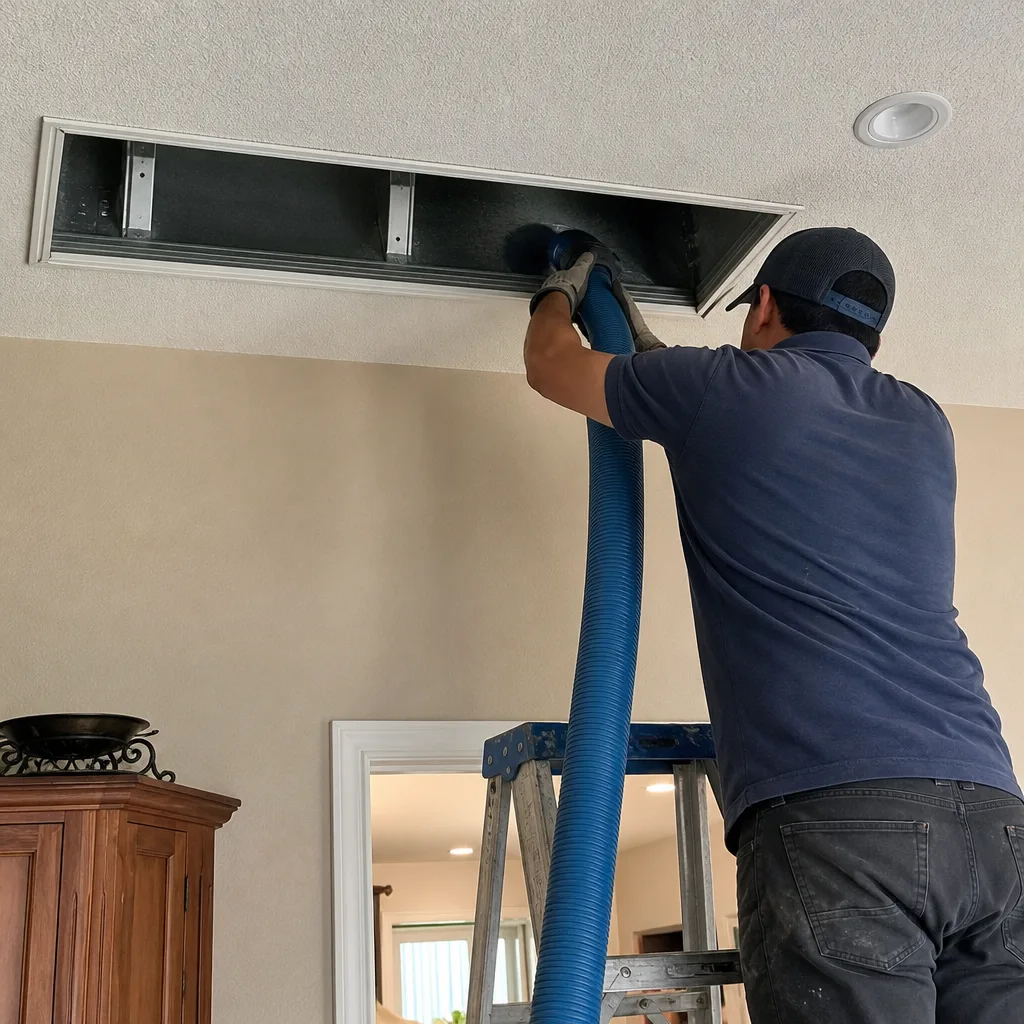
Whole-system duct and dryer vent check with before-and-after photos - you see exactly what came out of your vents
That "$99 whole-house special" is a bait ad - the real number appears once they are in your hallway, or the "clean" is a shop-vac at the register. We photograph the inside of your ducts before and after instead.
The Complete Air Duct Cleaning Guide for El Monte Homeowners
El Monte’s median home age sits around 50+ years, which means a significant portion of local duct systems were installed before modern flex duct standards. That matters more than most homeowners realize. When we open a return register in a 1960s El Monte rancher, we’re not looking at the same ductwork you’d find in a 2015 Arcadia build. Different materials, different sealing methods, different failure points. This guide – along with The Complete Guide to Air Duct Cleaning in El Monte – walks you through what actually lives inside your walls, how El Monte’s specific climate accelerates contamination, and what legitimate professional cleaning looks like when the equipment matches the job. You’ll learn how to evaluate a contractor, read a post-cleaning report, and understand why the cheapest quote usually means a shop-vac and a handshake.
Styles & brands we work with
- Whole-home duct cleaning
- Dryer vent cleaning
- Camera inspection
- Sanitizing & deodorizing
Quick Answer
Our Air Duct Cleaning services in El Monte typically cost $350 – $650 for a whole-home system, take 3 – 6 hours with professional equipment, and should include both negative-pressure extraction and mechanical agitation. Homes in El Monte with 50+ year old ductwork, pets, recent renovations, or proximity to the 10 Freeway corridor generally need cleaning every 2 – 4 years. The work should always include a pre-inspection with camera verification and a post-cleaning report showing what was removed.
Table of Contents
- Why El Monte’s Climate Makes Duct Cleaning Different
- Your Duct Material Dictates the Cleaning Method
- What a Legitimate Pre-Cleaning Inspection Looks Like
- The Professional Cleaning Process, Step by Step
- Why Negative Air Pressure Is Non-Negotiable
- How to Read a Post-Cleaning Report and Verify the Work
- Duct Repair: What Happens When Cleaning Uncovers Damage
- Dryer Vent Cleaning: The Fire Hazard Most El Monte Homes Share
- Common Mistakes to Avoid
- When to Call a Professional
- Frequently Asked Questions
- The Bottom Line
Why El Monte’s Climate Makes Duct Cleaning Different
A duct cleaning guide written for a coastal community doesn’t apply to El Monte. We’re 14 miles inland, and that distance translates into longer, hotter summers. While Santa Monica sits in marine layer fog through June, El Monte is already hitting 90 degrees. Your air conditioner runs harder, longer, and pulls more air through ductwork than a coastal system ever will. More air volume means more particulate deposition. Simple physics.
But the bigger variable is wildfire smoke. During Santa Ana wind events, El Monte sits directly in the smoke path from the foothills and canyon corridors. What settles inside your ducts isn’t just household dust. It’s fine particulate matter, carbon, and ash that binds to duct walls and blower components. When the next cooling season starts, that residue gets redistributed through your living space. We’ve opened systems in El Monte homes after a bad fire season and found a grey film coating the inside of the return plenum. That’s not something a standard dusting routine addresses.
Then there’s the agricultural history. El Monte was walnut and dairy country for generations. The soil itself is fine and silty, and it gets tracked in on shoes, pets, and open windows. Add the constant freeway particulate from the 10 and 605 corridors, and your duct system is filtering air that’s already carrying a heavier load than most of Los Angeles County. If you’re running a Duct Cleaning El Monte home system that hasn’t been opened in a decade, you’re not just dealing with dust. You’re dealing with a decade of compounded San Gabriel Valley air.
Your Duct Material Dictates the Cleaning Method
Not all ducts are created equal, and El Monte’s housing stock spans three distinct eras with three distinct materials. What works on one system will tear up another. A technician who arrives without knowing the difference is a technician who shouldn’t be in your attic.
Sheet Metal Ducts
Homes built in the 1950s through 1970s, which is a large portion of El Monte’s northeast neighborhoods, often have galvanized sheet metal supply trunks. These are the most forgiving to clean. Sheet metal can handle aggressive mechanical agitation, including contact brushing and air whips. The material doesn’t absorb moisture, doesn’t harbor microbial growth easily, and responds well to a Rotobrush system that physically scrubs the interior surface while negative pressure pulls loosened debris out. If you have sheet metal ducts, you want firm contact cleaning, not a soft pass.
Flex Duct
Flex duct is ubiquitous in 1980s and later construction. It’s a wire coil wrapped in plastic and fiberglass insulation, and it’s fragile. If a contractor runs a metal brush through flex duct with too much pressure, the inner liner tears. Once that liner is compromised, you now have insulation fibers circulating through your home, and a leak path that pulls attic air into your conditioned space. Proper flex duct cleaning uses gentler agitation, often a soft air whip at lower pressure, combined with strong negative air extraction. This is where equipment matters: a Nikro vacuum unit pulling consistent negative pressure is doing the real work, not the air whip. The agitation loosens. The vacuum removes.
Fiberboard Duct
Fiberboard is the problem child. Some El Monte homes built in the 1960s used fiberboard duct panels, which are compressed fiberglass with a foil facing. You cannot aggressively brush fiberboard. The surface is porous and friable. Water-based cleaning is completely off the table. The only acceptable approach with fiberboard is contact vacuuming with soft brushes at low pressure, and often we recommend evaluating whether the fiberboard should be replaced rather than cleaned. If a contractor tells you they’ll “power wash” your fiberboard ducts, end the conversation. That’s a technical red flag.
For every material, the principle holds: the tool must match the substrate. That’s why we run both Rotobrush and Nikro platforms. A sheet metal system gets the brush-fed agitation it needs. A flex system gets controlled air whip work with high-volume extraction. One machine doesn’t do both jobs well, and a company that only owns one is making do, not matching the work to the condition.
What a Legitimate Pre-Cleaning Inspection Looks Like
Any contractor who quotes a duct cleaning price over the phone without seeing your system is guessing. Not estimating. Guessing. A legitimate pre-cleaning inspection in El Monte should take 30 – 45 minutes and include several specific checks before a brush or air whip ever enters the ductwork.
- Register and grille inventory. The technician should count and identify every supply register, return grille, and access point. If there are 14 registers and the contractor planned on 10, that’s a problem you want caught before work starts.
- Camera inspection of the return and supply plenums. A push camera or a borescope through an access opening shows what you’re actually dealing with. We look for debris volume, moisture staining, rodent activity, and material type. You should be shown the footage, not told about it.
- Static pressure reading. This is the one most companies skip. A static pressure test tells you whether the system is breathing properly. If static pressure is elevated before cleaning, something is restricting airflow. It might be a clogged filter, a collapsed duct, or a blower problem. Cleaning alone may not fix it, and you deserve to know that before paying for a service that won’t solve the real issue.
- Duct breach identification. Disconnected joints, crushed flex runs, and separated takeoffs are common in El Monte’s older homes. An inspection should locate these before cleaning starts, because cleaning a breached duct means you’re vacuuming attic air directly into your living room. The breach gets fixed first, or as part of the same service call, not discovered and ignored.
- Filter and HVAC condition check. The technician should note the filter size, condition, and whether the air handler is accessible. If the blower motor is caked with debris, that’s part of the system that needs attention, not a separate upsell. It’s context.
A homeowner who sees this level of inspection understands they’re working with someone who treats ductwork as a system, not a tube to shove a hose into. That distinction is what separates Air Duct Cleaning in El Monte done properly from a surface-level pass. For deeper insight into what we check, see our full service page.
The Professional Cleaning Process, Step by Step
Here’s what legitimate whole-home duct cleaning looks like when it’s done with professional-grade equipment. This is the process we follow in El Monte homes, and it’s the process you should expect from any contractor you hire. If someone quotes 90 minutes for a full system, they are skipping steps.
- System prep and isolation. The HVAC system is powered down. Registers are mapped. Furniture is protected. The equipment is staged at the most central access point to minimize hose runs through the home.
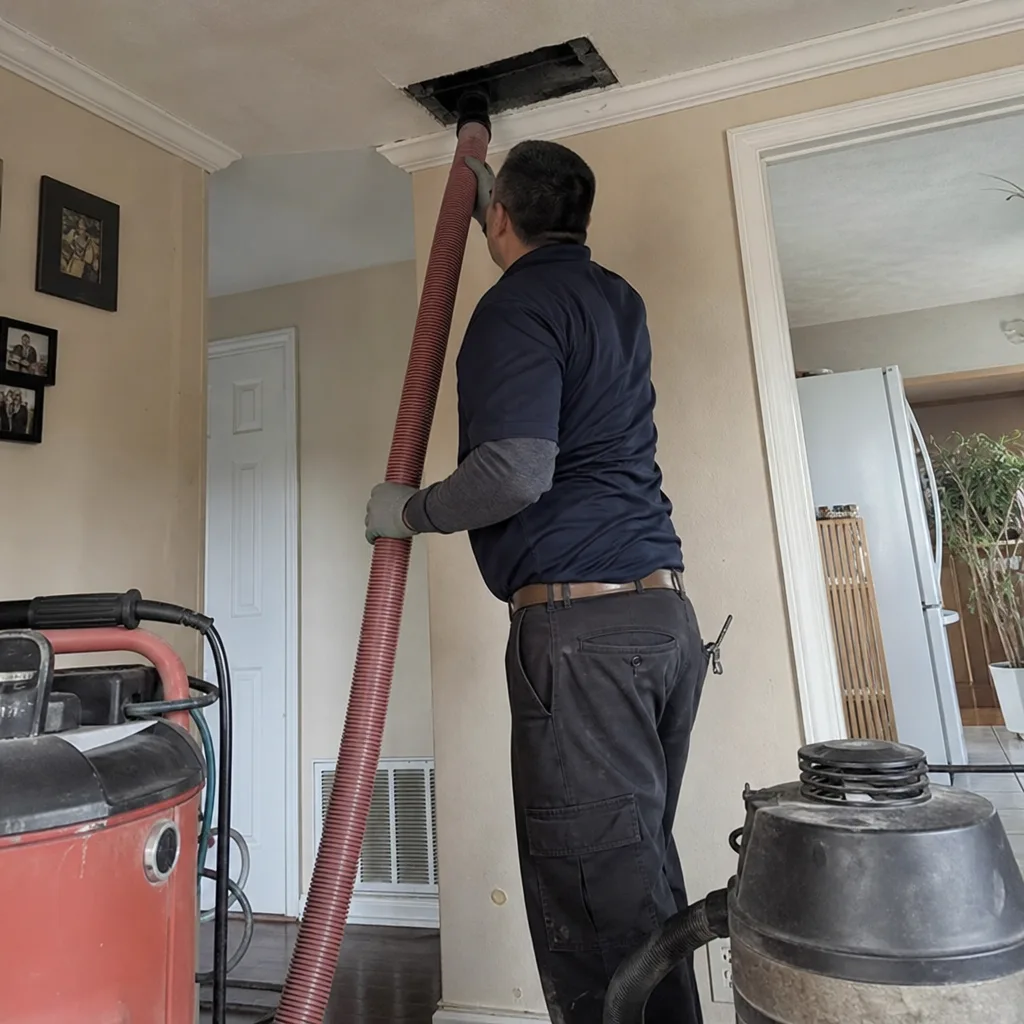
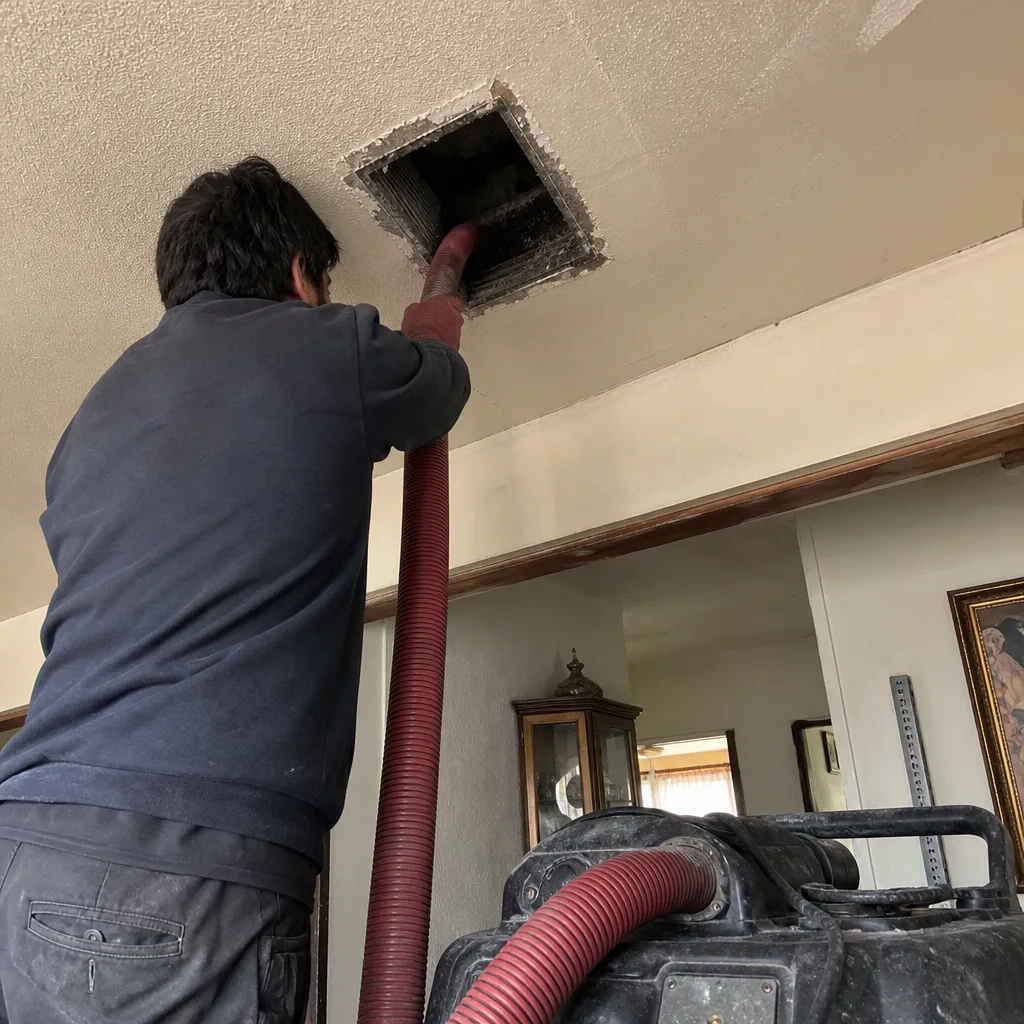
- Negative pressure establishment. The extraction unit, typically a Nikro or equivalent commercial vacuum, is connected to the main trunk line. The unit is fired up and creates negative pressure in the duct system before any agitation begins. This is the containment step. The system is now under suction, so anything loosened gets pulled toward the vacuum, not pushed into your living space.
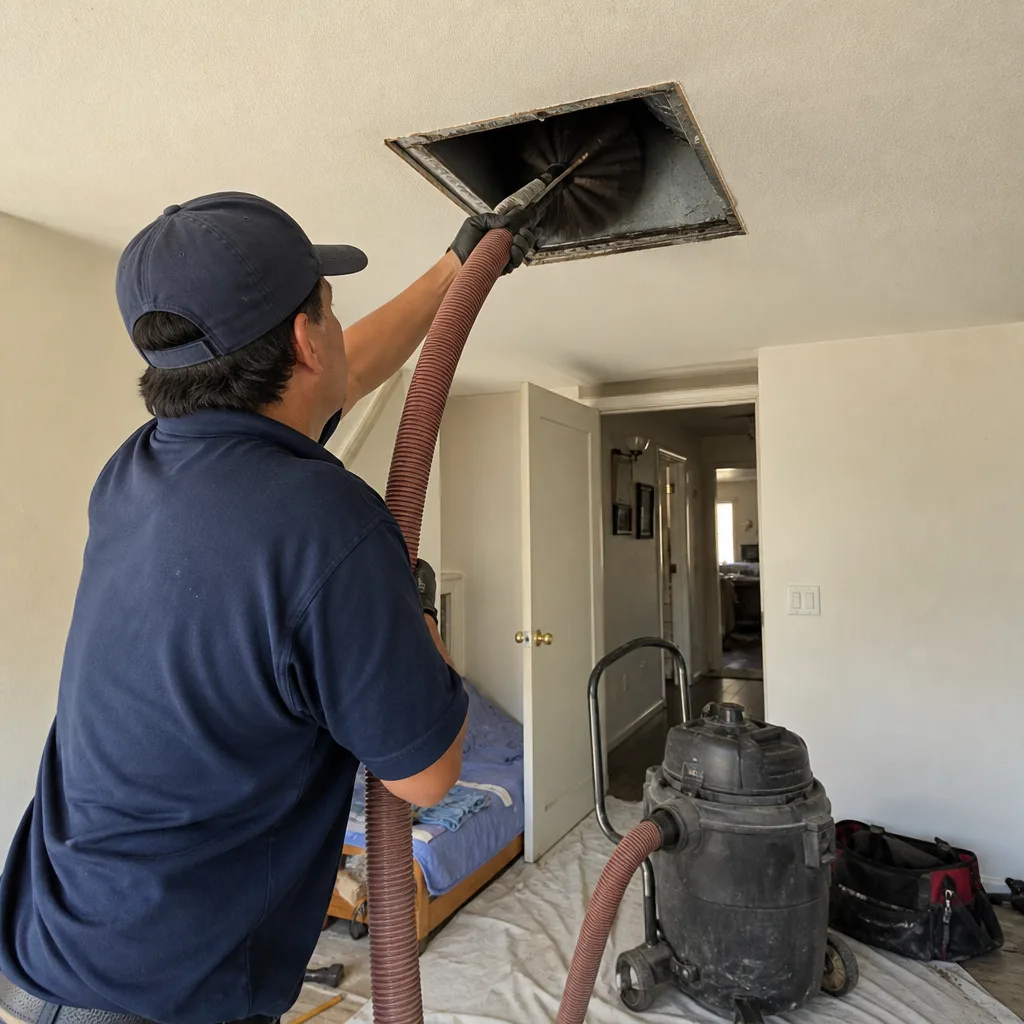
- Agitation and material contact. With the system under negative pressure, each supply run is accessed individually. On sheet metal systems, a Rotobrush with spinning nylon or polypropylene bristles is fed down each run to mechanically scrub the interior walls. On flex systems, an air whip is used at controlled pressure. The agitation is what breaks the debris bond off the duct walls. The vacuum is what removes it.
- Return side cleaning. The return side is often dirtier than the supply side. It pulls unfiltered air from the home before it reaches the filter. Return trunks and drops get the same aggressive cleaning as the supply side. In El Monte homes with floor returns, expect significant debris accumulation here.
- Plenum and blower cleaning (as accessible). The supply and return plenums are cleaned with contact tools and vacuum extraction. If the blower wheel is accessible, it’s cleaned with soft brushes. A caked blower wheel costs you airflow and motor life.
- Register and grille cleaning. Every register is removed, cleaned, and reinstalled. Caked registers restrict airflow and re-contaminate clean ducts within days.
- Post-cleaning camera verification. The same camera that documented the before condition now documents the after. You should see clean metal or clean flex liner in the footage. Not “mostly clean.” Clean.
- System restart and pressure confirmation. The system is powered back on. A post-cleaning static pressure reading confirms airflow has improved, or identifies remaining restrictions that need attention.
The whole process on a typical El Monte single-family home takes 3 – 6 hours depending on system size and material type. Anything dramatically shorter deserves scrutiny.
Why Negative Air Pressure Is Non-Negotiable
Negative pressure isn’t a preference. It’s the difference between cleaning your ducts and redistributing their contents into your living room. Here’s what happens when a contractor skips this step.
Without a high-volume extraction unit creating negative pressure, the system is open to the house air. The moment agitation begins, whether that’s a brush, an air whip, or a compressed air gun, the loosened debris follows the path of least resistance. That path is out the nearest open register and into the room. Drywall dust, pet dander, dead insects, pollen, and the fine grey particulates that accumulate in El Monte ductwork get aerosolized into your airspace. You have now paid someone to make your indoor air significantly worse.
A Nikro-style industrial extraction unit moves thousands of cubic feet per minute. That’s an order of magnitude beyond what a portable shop-vac can pull. The duct system under negative pressure functions like a controlled vacuum chamber. Agitation loosens the debris, and the pressure differential carries it directly to the collection point. It does not enter the home. This is standard industrial hygiene practice, and it’s non-negotiable for residential work.
Ask any contractor one question before you hire them: “What extraction unit are you using, and how many CFM does it pull?” If they can’t answer that question with a specific number, they don’t have meaningful extraction equipment. Walk away. A shop-vac is not a substitute, and “we cover the registers” is not containment.
We run Nikro industrial vacuum platforms on every cleaning job we do in El Monte. Not occasionally. Not as an upsell. Every job. It’s the baseline, not the premium tier. If you’re evaluating a quote and the company can’t name their extraction equipment, that’s all the information you need.
How to Read a Post-Cleaning Report and Verify the Work
After the cleaning is done, you should receive documentation. A verbal “looks good in there” is not verification. Here’s what a legitimate post-cleaning report includes and what to look for in each section.
- Before and after camera stills. Screen captures from the inspection camera showing representative sections of the supply and return trunks. The before images should show visible debris. The after images should show clean substrate. If the after images look identical to the before images, the work didn’t happen.
- Static pressure readings. A before reading and an after reading. The after number should be lower. If it’s unchanged or higher, there’s still a restriction somewhere, and the contractor should tell you what it is and what it means.
- Material condition notes. Any cracks, breaches, crushed sections, or moisture damage identified during cleaning should be documented. This transitions into a repair discussion, not a silent pass. If the contractor saw a separated duct joint and didn’t tell you, they weren’t paying attention or they didn’t want to deal with it. Either way, you need to know.
- Debris removal confirmation. A statement of what was removed, often with a photo of the collection canister. In El Monte homes with heavy particulate loads, it’s common to remove 5 – 15 pounds of debris from a full system. The photo is your proof that material actually came out.
- Filter condition and recommendation. If the filter was caked, the report should say so, and recommend a replacement schedule. A clean duct system feeding a caked filter is a system that re-contaminates itself in thirty days.
If a contractor refuses to provide post-cleaning camera footage, that’s a red flag. Modern inspection cameras are standard equipment for serious duct professionals. The work is verifiable, and you have a right to verify it. This is why we document every system we clean in El Monte with before and after footage. You should see what you paid for. Not be told about it.
Duct Repair: What Happens When Cleaning Uncovers Damage
In El Monte’s older housing stock, cleaning frequently reveals problems that were invisible before. A duct system that’s been running for 50 years has had time to develop cracks, separations, and crushed sections. When the debris is removed, the damage becomes visible. The question is whether your contractor can address it.
Many duct cleaning companies don’t do repair. They clean around the damage, document it, and leave. The homeowner now knows they have a breached duct, and is looking for a second contractor to fix it. That’s a broken process.
We approach it differently. Air Duct Repair in El Monte is a core part of our scope, not an afterthought. When our inspection or cleaning identifies a separated joint, a crushed flex run, or a damaged section that’s pulling attic air into the system, we fix it. Same crew. Same visit. The alternative, a cleaned but still-broken duct system, is a system that re-contaminates quickly and wastes conditioned air. You haven’t actually solved the problem. You’ve just made it temporarily cleaner.
Consider what a duct breach means in El Monte’s summer. The air handler is pulling hot attic air into the supply side, which means your AC is conditioning air that started at 130 degrees. Your energy bill reflects that inefficiency every month. A proper repair seals the system, and suddenly the conditioned air you’re paying for is actually reaching your rooms instead of escaping into the attic. Cleaning and repair are not separate services. They’re two phases of the same system-level job.
If you have a suspected breach, crushed duct, or a system that’s never been sealed, see our dedicated page on air duct repair for specifics on materials and methods.
Dryer Vent Cleaning: The Fire Hazard Most El Monte Homes Share
Here’s the uncomfortable truth: the lint buildup in your dryer vent is one of the most dangerous fire risks in your home, and it’s also the most ignored. The National Fire Protection Association identifies dryer vent fires as a leading cause of home structure fires. Lint is highly combustible, and a restricted vent causes the dryer to run hotter. That’s the combination that leads to an attic fire you never saw coming.
El Monte’s housing stock makes this worse. Many of the 1950s and 1960s ranches have long, horizontal dryer vent runs that exit through the roof or across the attic. Long runs with multiple elbows are exactly the configuration that accumulates lint fastest. A short straight vent might push lint out efficiently. A 20-foot run with two 90-degree bends is a collector, and every load of laundry adds more fuel.
Dryer Vent Cleaning in El Monte is a dedicated service for us, not an add-on thrown in at the end of a duct cleaning. The vent is accessed, cleared with proper brushes, and verified for airflow. A restricted dryer vent doesn’t just create fire risk. It also makes your dryer run longer, which costs you money every cycle and shortens the life of the appliance. If your clothes are taking more than one cycle to dry, that’s the symptom. The duct is telling you something. Listen to it.
We treat the dryer vent as its own system with its own risks and its own inspection protocol. It deserves the same level of attention as your supply and return ducts, not a quick pass with a flexible brush from the outside.
Common Mistakes to Avoid
- Hiring on price alone. The $99 whole-house duct cleaning special operates on one principle: get a tech in the door, then sell hard on “necessary” add-ons once the system is open. If a quote is dramatically below market, the model is built on upsells. The final invoice is rarely $99.
- Accepting a phone quote without an inspection. No legitimate contractor can accurately price duct cleaning in El Monte without seeing the system. Material type, accessibility, contamination level, and duct count all affect scope. A phone quote is a marketing hook, not a real estimate.
- Using a shop-vac contractor for a whole-home system. A portable vacuum doesn’t generate the CFM to extract debris from a full duct run. What it does is pull air from the nearest few feet while agitation pushes everything else further into the system or into your living space.
- Skipping the camera verification. If the contractor can’t show you the inside of your ducts before and after, you’re trusting their word. Camera inspection is standard practice with equipment serious technicians use. The footage is the proof.
- Cleaning ducts while a known breach exists. Cleaning a duct system with a separated joint or crushed run means you’re extracting attic air alongside duct debris. The breach needs to be addressed as part of the same job, which is why we do repair and cleaning together.
- Cleaning ducts without addressing the dryer vent. The dryer vent is a separate system and frequently a higher fire risk than the HVAC ducts. A full-home air quality approach addresses both. Ignoring the dryer vent because the HVAC was cleaned is missing the more dangerous system.
- Assuming newer homes don’t need duct cleaning. New construction in El Monte leaves drywall dust, sawdust, and construction debris inside ductwork. A 2-year-old home can have ducts dirtier than a 30-year-old home that’s been maintained. Age isn’t the only variable.
When to Call a Professional
There are specific situations where professional duct cleaning or repair is the clear next step, not a maybe – see DIY vs Professional Air Duct Cleaning: The El Monte Homeowner’s Decision Guide for help deciding. If you’ve completed a renovation and drywall dust is visible around every register, the ducts need cleaning now, not in six months. If your allergy symptoms worsen when the AC runs, the system is recirculating something that’s accumulated in the ductwork. If airflow from certain rooms is noticeably weak while others are fine, you likely have a restriction or a breach that needs diagnosis. If you see visible dust plumes from registers when the system starts, the buildup is beyond what filter changes will address. And if you can’t remember the last time the dryer vent was cleaned, that’s a call on its own, separate from any HVAC concern.
Duct Cleaning El Monte offers free estimates in El Monte and surrounding San Gabriel Valley communities. Call (844) 573-0760 and we’ll conduct a full inspection, show you what’s actually inside your system, and give you a straight answer on what it needs.
Frequently Asked Questions
Expect $350 – $650 for a complete system on a typical single-family home in El Monte, with larger homes or heavier contamination pushing toward the upper end. Prices below $200 should be treated as marketing hooks, not real service quotes. Call (844) 573-0760 for a specific number after we inspect your system.
Every 2 – 4 years is realistic for most El Monte homes, with the shorter interval applying to households with pets, smokers, recent renovations, or homes near major freeway corridors. Homes in areas with heavy wildfire smoke exposure may need attention sooner.
Lowball quotes are typically built on a business model that requires upselling once the tech is in the home. The initial price gets them through the door. The final invoice reflects “necessary” add-ons discovered during the service. A legitimate company prices the job accurately up front.
Request before and after camera footage from inside the ducts. A professional with proper inspection equipment can show you the system’s condition before work starts and after it’s complete. If a contractor can’t provide visual verification, that’s a red flag about what tools they’re actually using.
If allergens have accumulated in the duct system, cleaning removes that reservoir and can reduce what’s circulated when the HVAC runs. It’s not a cure for allergies, but it addresses one controllable source of indoor particulate. Homes near the freeways with more airborne particulate see the most pronounced difference.
Yes, but the process is more involved than a routine cleaning. Heavily contaminated systems require slower agitation, more extraction time, and often multiple passes to fully clear. An inspection will tell you what you’re actually dealing with. Call (844) 573-0760 for an honest assessment.
The Bottom Line
El Monte’s housing stock, climate, and air quality combine to make duct cleaning a maintenance requirement, not an elective. A 50-year-old duct system that’s been running San Gabriel Valley air through freeway particulate and wildfire smoke needs attention that a generic coastal cleaning regime won’t address. The material your ducts are made from dictates the cleaning method. The equipment your contractor runs determines whether the work is real or cosmetic. The verification you receive determines whether you can trust the result. Duct health, start to finish, means inspecting, cleaning, verifying, and repairing when needed – not running a hose and handing you a bill. For more guides & resources on keeping your system healthy, visit our blog.
Written by the team at Duct Cleaning El Monte, serving El Monte since 2013.
For a free estimate on air duct cleaning, dryer vent cleaning, or duct repair in El Monte, call (844) 573-0760. We’ll show you what’s inside your system and give you a straight answer.
See the difference
 Before
 After
 Before
 After
 Before
 After