
Last updated November 2, 2026
 Whole-home duct cleaning
 Dryer vent cleaning
 Camera inspection
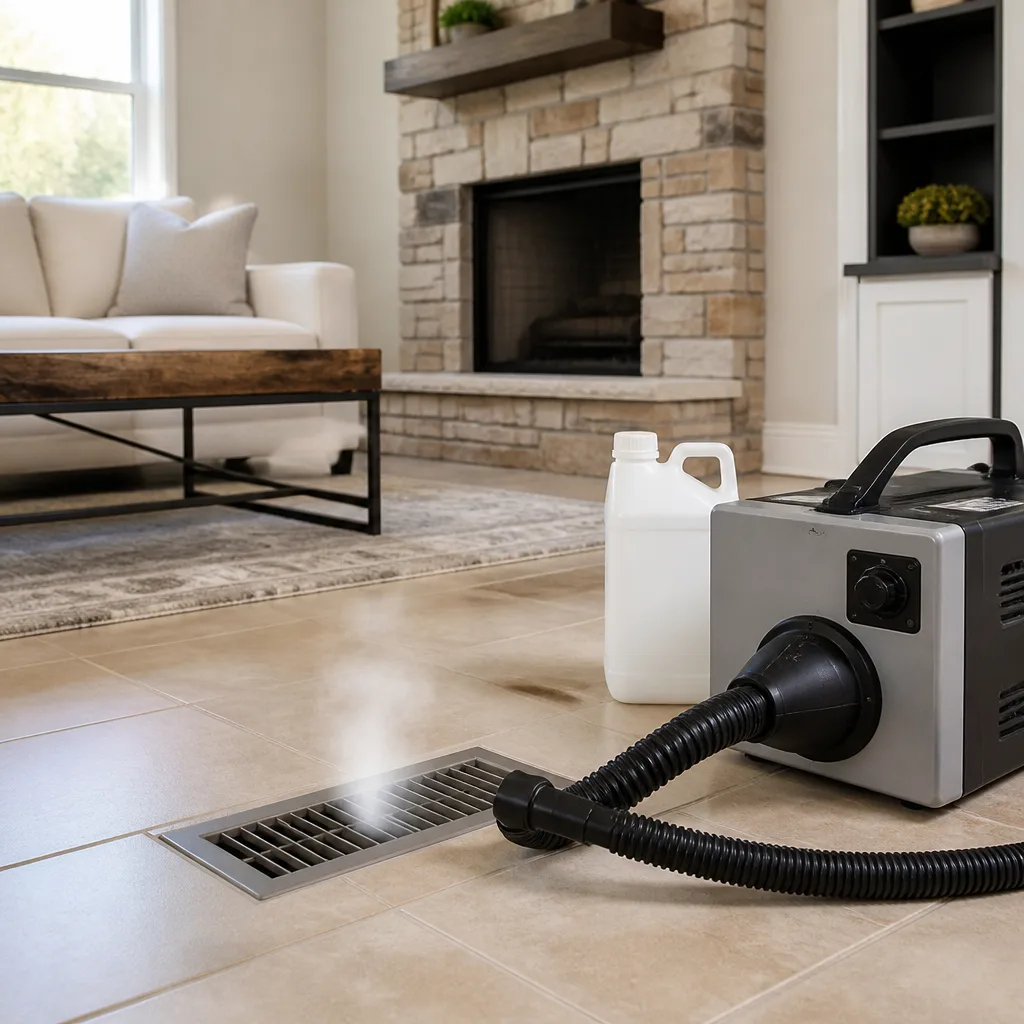 Sanitizing & deodorizing
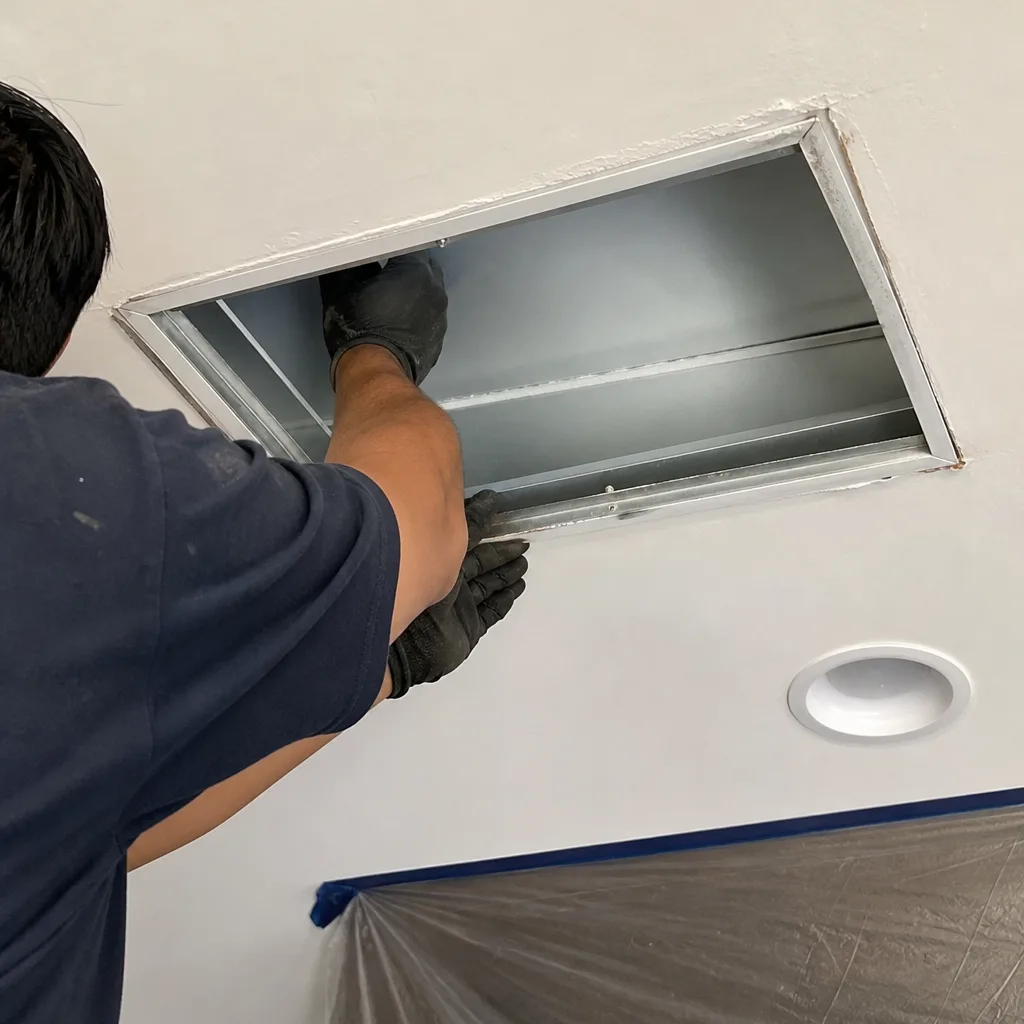
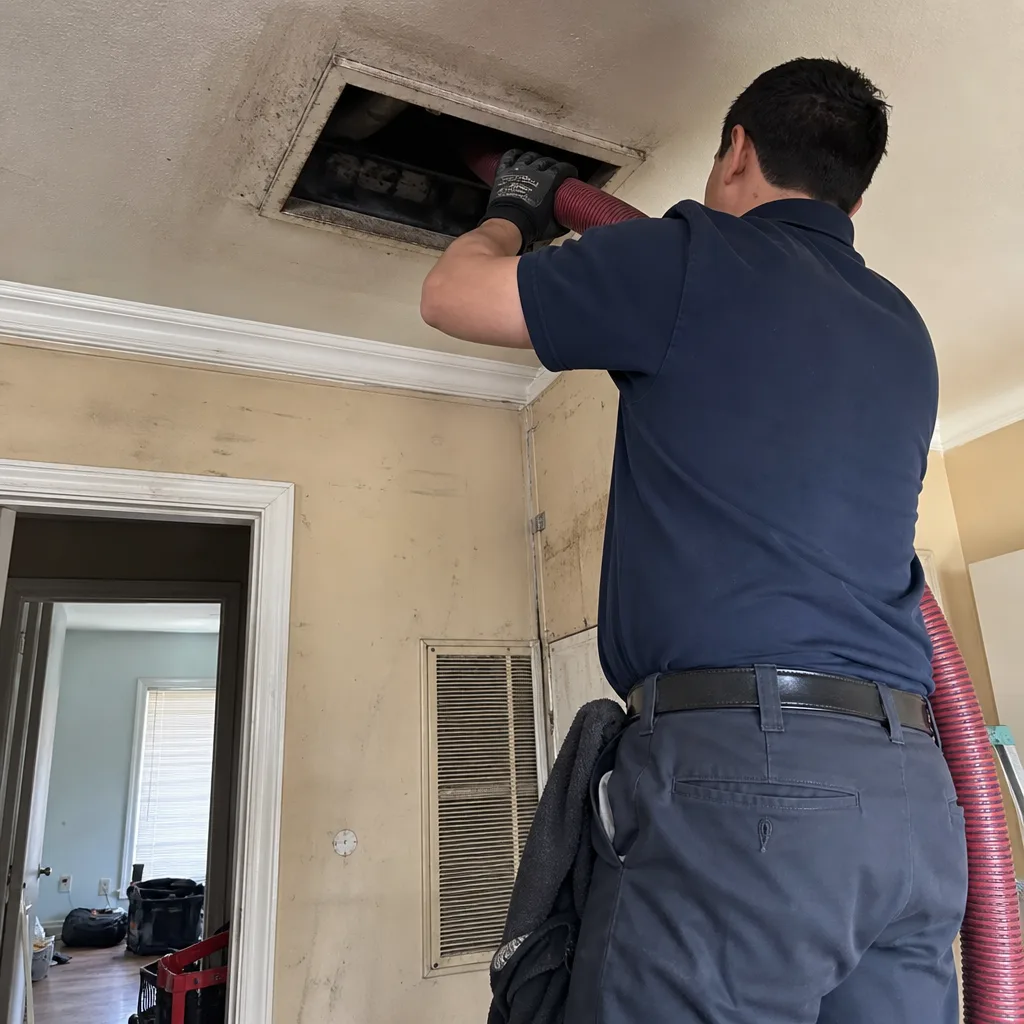
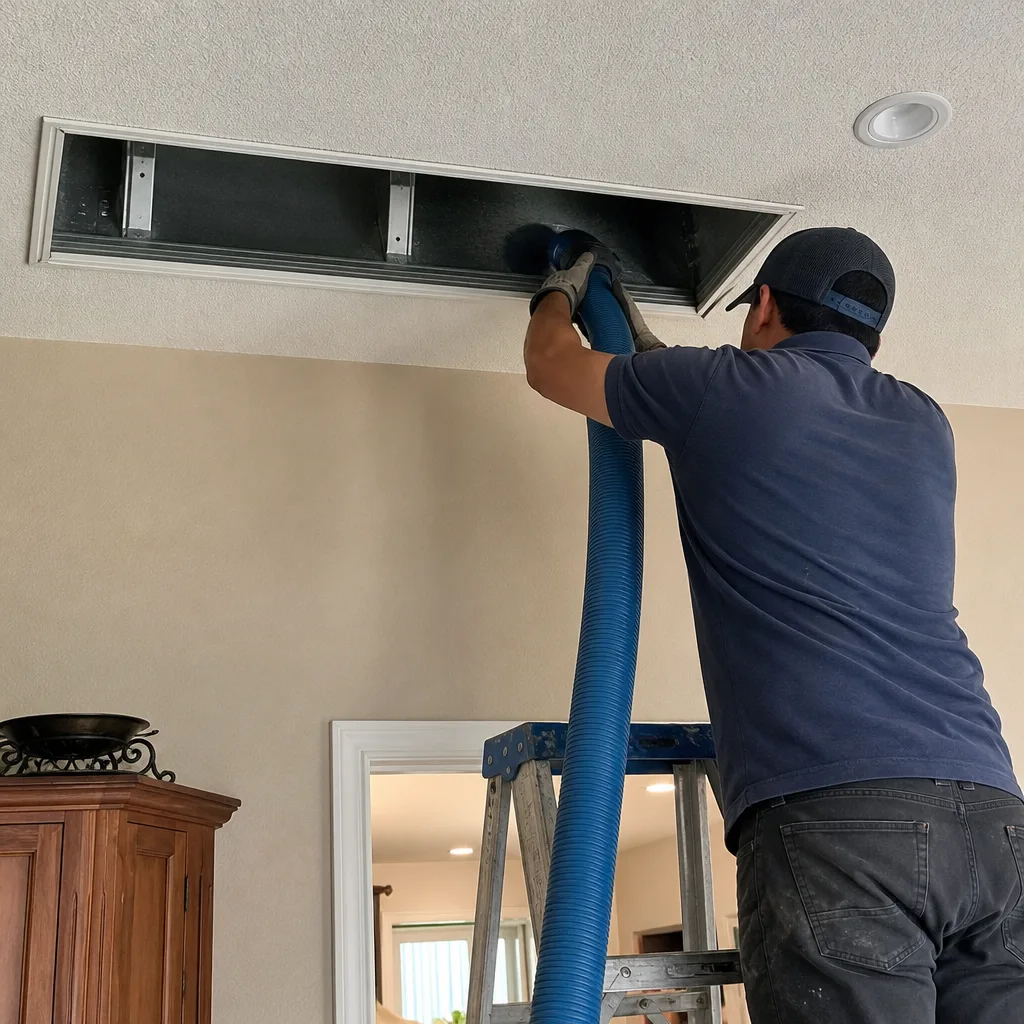
Whole-system duct and dryer vent check with before-and-after photos - you see exactly what came out of your vents
That "$99 whole-house special" is a bait ad - the real number appears once they are in your hallway, or the "clean" is a shop-vac at the register. We photograph the inside of your ducts before and after instead.
DIY vs Professional Air Duct Cleaning: The El Monte Homeowner’s Decision Guide
Here’s a number that surprises most homeowners we talk to in El Monte: the average single-family home has between 200 and 300 linear feet of ductwork running through its attic, walls, and crawlspace. The portion you can actually reach from a register opening with a household vacuum hose is about 12 to 18 inches. That’s the entire conversation about DIY versus professional duct cleaning in one sentence. This guide explains exactly where homeowner effort pays off, where it cannot physically accomplish the job, and how to make a smart call for your home’s specific situation.
Styles & brands we work with
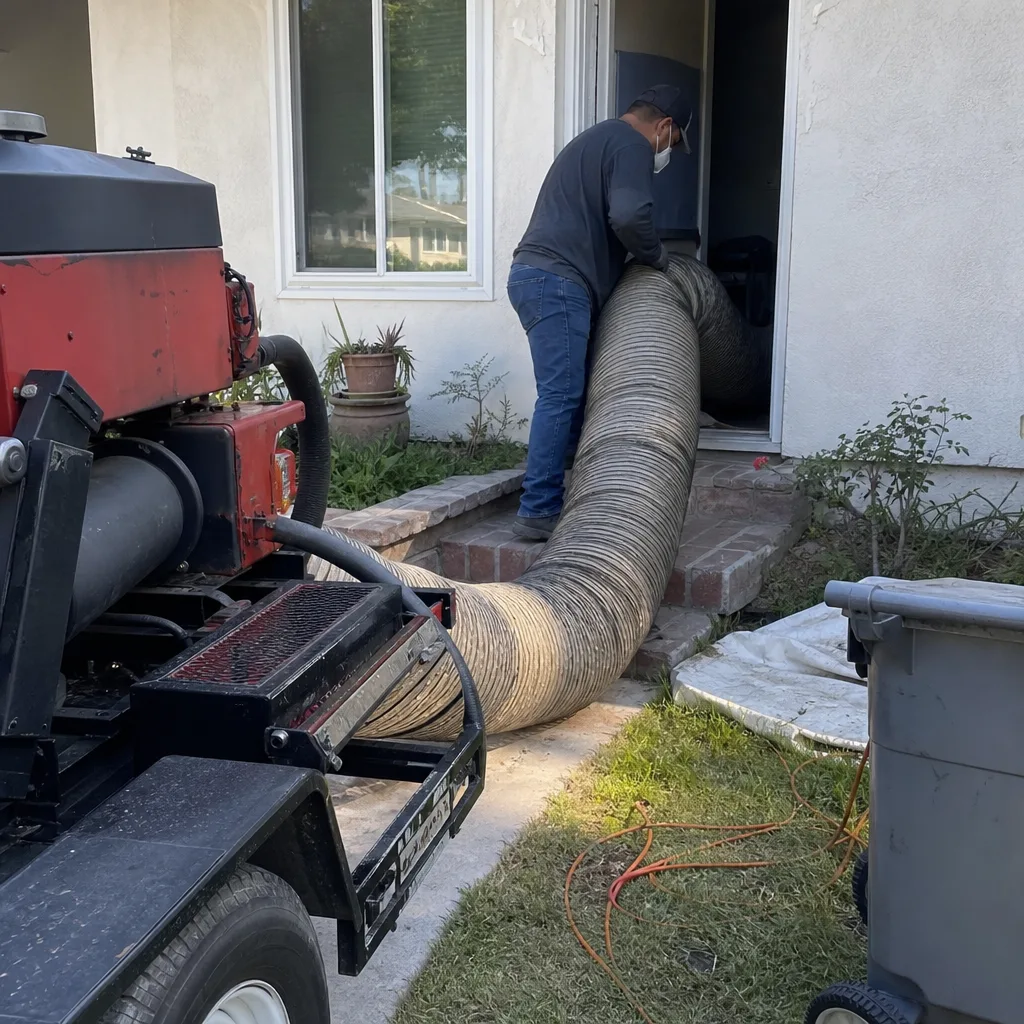
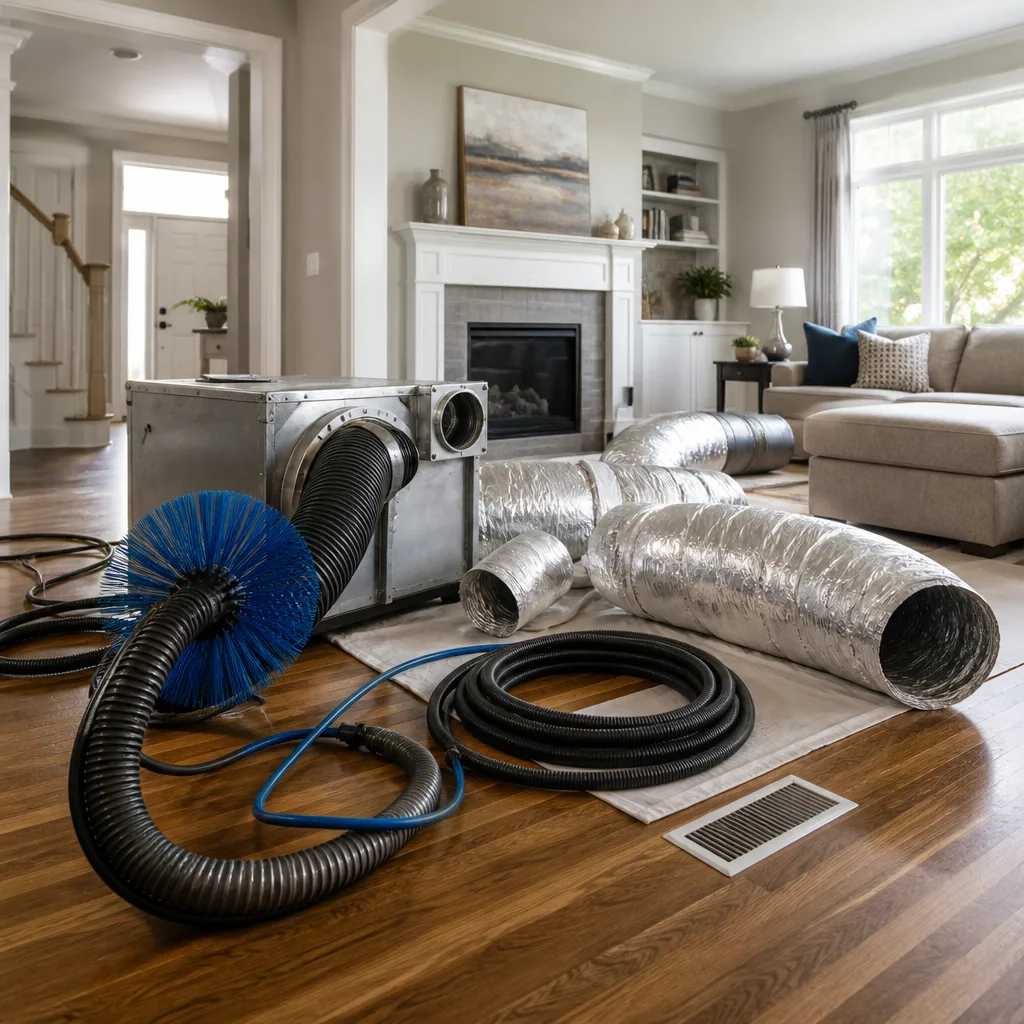
- Whole-home duct cleaning
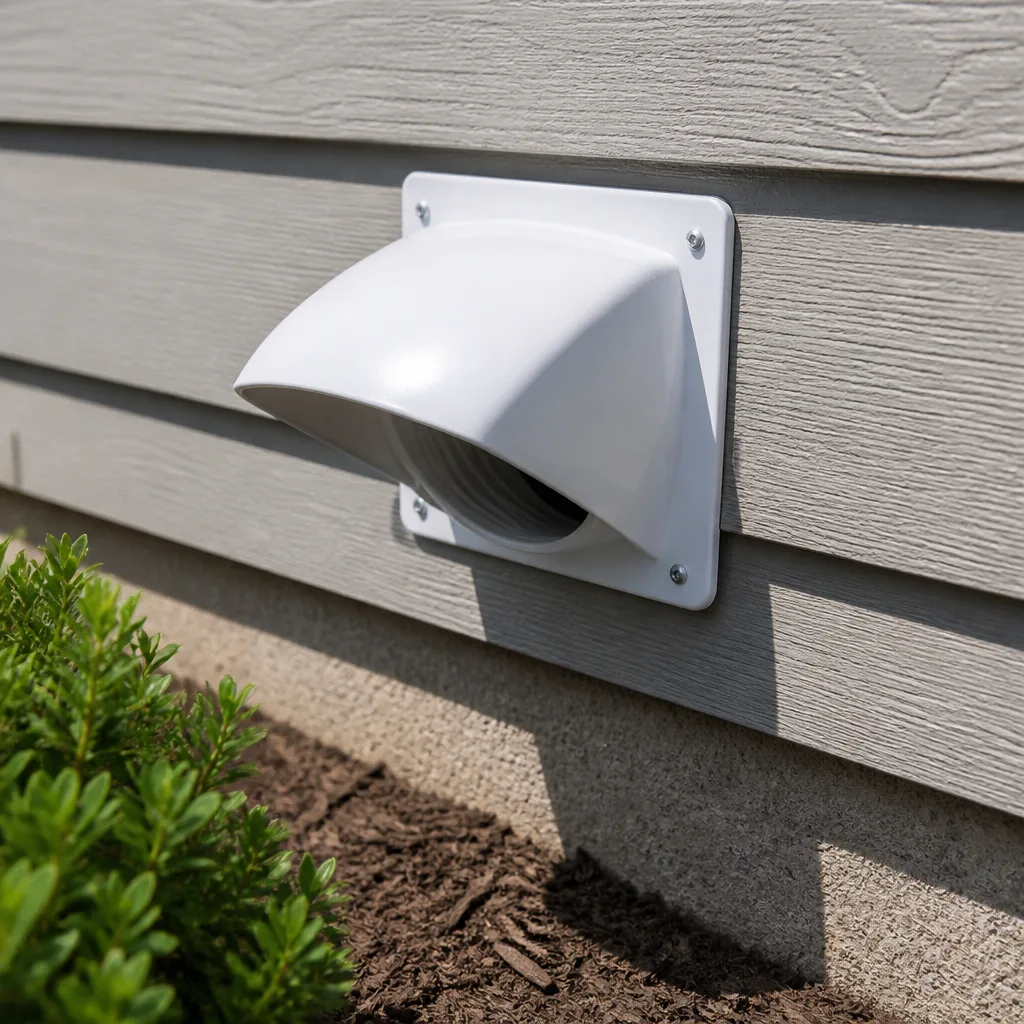
- Dryer vent cleaning
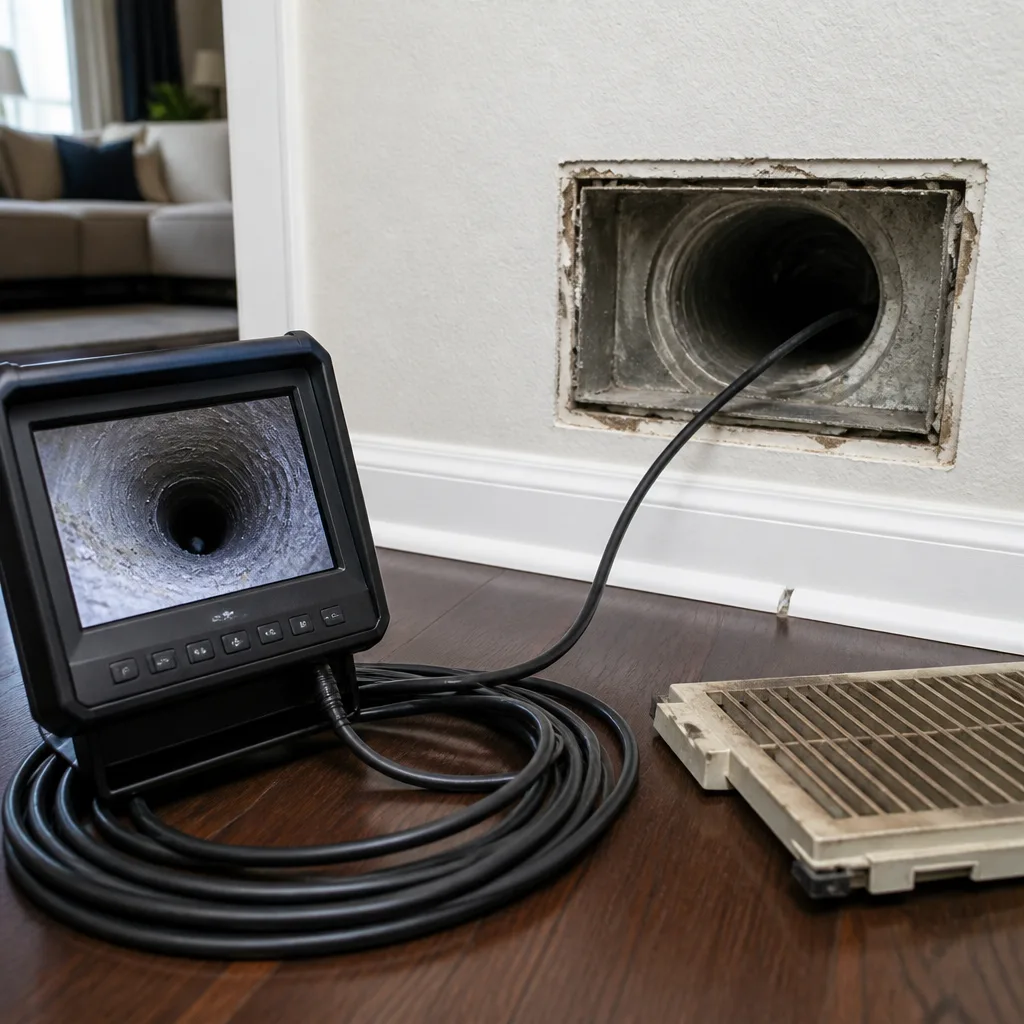
- Camera inspection
- Sanitizing & deodorizing
Quick Answer
Air Duct Cleaning in El Monte can be done DIY for register grilles, visible register boot interiors, filter replacement, and dryer vent lint brushing from the exterior exhaust point. It cannot clean the main trunk lines and branch runs that hold the majority of accumulated dust, debris, and biological material. Professional cleaning uses negative air pressure and mechanical brush agitation at airflow velocities that consumer equipment cannot generate. If you’re cleaning for routine maintenance, DIY helps. If you’re addressing years of buildup, renovation dust, or airflow problems, you’re renting or buying equipment that still won’t reach the problem.
Table of Contents
- What DIY Duct Cleaning Can Actually Accomplish
- The Equipment Gap: Why Consumer Tools Can’t Clean Trunk Lines
- The Risk Profile of DIY in Older El Monte Homes
- The Specific Scenarios Where Professional Cleaning Delivers Measurable ROI
- The Honest Cost Comparison: DIY Spending vs. One Scoped Professional Job
- How Professional Duct Cleaning Actually Works
- Common Mistakes to Avoid
- When to Call a Professional
- Frequently Asked Questions
- The Bottom Line
What DIY Duct Cleaning Can Actually Accomplish
Let’s start with what’s real. A homeowner who is willing to spend a Saturday afternoon with a vacuum, a screwdriver, a flashlight, and maybe a $30 register brush can do three things that genuinely matter.
First, register and grille cleaning. Every supply and return register in your El Monte home collects a visible film of dust, hair, and cooking grease. This is the gunk you see when you look down. Removing registers, wiping them with a degreaser, vacuuming the inside face, and letting them dry before reinstalling is simple, safe, and genuinely improves the air coming out of that opening. If the register is visibly coated, that’s what’s impeding air right at the endpoint. Five to ten minutes per register, done twice a year, and you’ve handled the cosmetic layer.
Second, filter housing and return cavity wipe-down. Pull your filter. Look at the filter housing, the return grille, the cavity behind the filter. In many El Monte homes, especially those built before the 1990s with central returns in a hallway, this cavity collects a felt-like layer of dust on the return side of the blower. Wiping it with a damp cloth and vacuuming what you can reach keeps that material from being pulled into the blower motor. Replace the filter with a MERV 8 to MERV 11 pleated filter and you’ve done more for your air quality than any single professional visit on a routine basis.
Third, dryer vent brush-out from the exterior. A homeowner can, with a $25 to $40 vent brush kit and a cordless drill, clean the first several feet of a dryer vent from the exhaust point outside. If your vent run is short (under 6 feet, straight to the exterior wall), this is genuinely useful. Lint is the leading cause of dryer fires according to the U.S. Fire Administration, and a Dryer Vent Cleaning in El Monte professional will tell you that even a partial brush-out between full services reduces risk. What it won’t do is clear a 15-foot run with two bends, or a vent that terminates on a roof.
Here’s the honest version: DIY duct cleaning delivers real maintenance value at the register and filter level. It does zero for the 200-plus feet of trunk line and branch duct behind the walls.
The Equipment Gap: Why Consumer Tools Can’t Clean Trunk Lines
This is where the conversation gets technical, because the DIY versus professional question is not about effort. It’s about airflow physics. We’ll break it down plainly.
Dust and debris in ductwork are not loose. The material that accumulates on the walls of HVAC trunk lines over years is bonded. It’s been pressed against the sheet metal or flex duct interior by repeated heating and cooling cycles. In El Monte’s climate, where air conditioning runs hard from June through October, the air inside ducts is cold and dry during cooling season, then warmer during winter heating cycles. That thermal cycling bakes particulate matter onto surfaces. A shop-vac’s nozzle, even with a long hose attachment, produces suction across a very small aperture. The airflow velocity drops dramatically just a few inches from the nozzle opening. By the time you’re 3 feet into a duct run, your shop-vac is doing nothing but making noise.
Professional duct cleaning uses two mechanisms simultaneously. The first is negative air pressure. A professional system, like the Nikro industrial vacuum units we run, connects to the duct system and pulls air through the entire system at 2,000 to 3,000 CFM or more, depending on the unit and setup. That creates a pressure differential that keeps dislodged debris moving toward the capture point instead of blowing back into the house. The second is mechanical agitation. Rotobrush brush-fed systems rotate stiff nylon or poly bristles against the duct wall while being pulled through the run, physically scrubbing the bonded material loose. These two mechanisms work together: agitation breaks the bond, negative air extraction captures and removes the debris. A consumer vacuum cannot replicate either one.
The capture side matters too. A professional extraction system vents into a HEPA-filtered collection unit, not into your living room. If you attempt to blow out a duct with a leaf blower or compress it into a trash bag taped to a register, you’re aerosolizing whatever was in the ducts and flooding your indoor air with it. That’s not just ineffective; it’s actively worse than doing nothing.
For homes with high-contamination scenarios, the equipment standard goes up further. Abatement Technologies-grade filtration, with negative air machines and HEPA capture, is the same class of equipment used in hospital isolation rooms and post-remediation environments. That is not what any El Monte homeowner has in the garage.
The Risk Profile of DIY in Older El Monte Homes
El Monte’s housing stock includes a significant number of homes built between 1950 and 1985. Many of those homes have never had their original ductwork replaced. That matters because the DIY risk profile is different on older systems, and some of the damage is not just expensive but invisible from the register opening.
Flex duct is easily punctured. Homes built in the 1970s and 1980s commonly used flexible duct with a thin plastic or foil exterior jacket and a fiberglass inner liner. That material degrades in attic heat. In an El Monte summer, attic temperatures routinely exceed 140°F. After 30 or 40 years, that flex duct exterior becomes brittle. Pushing a stiff rod, a dryer vent brush, or any improvised tool down a flex duct run will tear the inner liner or puncture the jacket. A 2-inch tear in flex duct means 20 to 30% of your conditioned air is now cooling your attic instead of your living room. You won’t see it from inside. Your electric bill will.
Disconnected joints from improper access. Duct runs in older El Monte homes have metal takeoff collars, tape joints, and mastic seals that have been through decades of thermal expansion. When a homeowner pulls at a register boot, reaches up with a vacuum, or forces a tool past a bend, a joint that was already weak can separate. A disconnected return joint pulls attic air, insulation dust, and rodent particulates directly into the air stream. A disconnected supply joint silently blows conditioned air into unconditioned space. Both failures are invisible without a pressure test or a camera inspection.
Disturbing settled debris without capturing it. Here’s a scenario we’ve seen repeatedly: a homeowner removes a register, sees dark material inside, sticks a vacuum hose in to “clean it,” and loosens years of settled dust, insect casings, and possibly rodent droppings without actually extracting any of it. The next time the blower cycles on, that disturbed material gets distributed through the entire house. You’ve traded a contained problem for an airborne one.
If you have an older home and you’re in the ducts, you are not cleaning them. You are investigating them without the tools to see what you found. That’s a risk equation with no upside.
The Specific Scenarios Where Professional Cleaning Delivers Measurable ROI
Professional duct cleaning is not a service every home needs every year. We won’t pretend otherwise. But there are five scenarios where the calculus changes completely, and these are the moments where a professional cleaning pays for itself in air quality, equipment longevity, and genuinely reduced particulates. For Seasonal Air Duct Cleaning Care for El Monte: Year-Round Homeowner’s Guide, see our seasonal maintenance breakdown.
1. Post-renovation or post-construction. If you’ve had drywall work, flooring sanding, painting, cabinet installation, or any substantial remodel done in your El Monte home, your ducts are now holding construction dust. Drywall dust is extremely fine, abrasive, and gets pulled through the return system, past the filter (which is often clogged or removed during the work), and into the blower motor and evaporator coil. That dust shortens blower motor life and reduces coil efficiency. A professional cleaning after a renovation removes it. DIY cannot reach it.
2. Post-rodent or pest remediation. If you’ve had rats, mice, or squirrels in your El Monte attic, and you or a pest control company have addressed the infestation, what’s left behind is droppings, urine stains, nesting material, and hair. A significant portion of that material is in your ductwork, especially if any return joints were loose or flex duct jacket was chewed. Rodent droppings in ducts are a well-documented source of hantavirus and salmonella risk. Professional cleaning with proper containment and HEPA filtration is the only safe way to remove that material. This is not a DIY scenario, period.
3. Post-wildfire smoke event. El Monte sits downwind of the San Gabriel Mountains and has been in smoke plumes from Angeles National Forest fires multiple times in the past decade. Wildfire smoke deposits ultra-fine particulates inside duct systems. Those particles contain volatile organic compounds. They get trapped in dust and re-released when the HVAC system runs. If your home was in a smoke event for more than a day or two, and you’ve changed the filter but still smell or sense smoke, the ducts are the remaining reservoir. Professional extraction is warranted.
4. HVAC system replacement. If you’re replacing your furnace, air handler, or full HVAC system in an El Monte home, and the existing ductwork will be reused, this is the single most logical time to clean. The new blower will be more efficient, which means higher static pressure initially, which means any loose material in the ducts will be pulled through the new system immediately. Cleaning the ducts at replacement gives the new equipment a clean start and preserves the manufacturer warranty’s operational assumptions. Most HVAC contractors won’t tell you this. We will.
5. Documented allergy or respiratory symptoms localized to the home. If someone in your household has allergy symptoms that improve away from home and worsen at home, and you’ve ruled out pets, moldy bathroom grout, and old carpet, the duct system is a distinct possibility. Dust mite allergy, cockroach allergen, and mold spore exposure are all associated with duct-bound particulates. A professional cleaning removes the reservoir. DIY cannot.
Outside these five scenarios, if your ducts were cleaned professionally within the last 3 to 5 years and you’ve maintained your filters and registers, you likely don’t need another full cleaning. There – we said it. This is what a service company looks like when it’s not interested in selling you something you don’t need. Our Air Duct Cleaning in El Monte work starts with an honest assessment, not a quota.
The Honest Cost Comparison: DIY Spending vs. One Scoped Professional Job
Let’s talk numbers, because the “DIY is cheaper” assumption deserves scrutiny. Most homeowners don’t actually know what a DIY duct cleaning effort costs once they buy the tools.
What a motivated homeowner actually spends to DIY
- Shop vacuum with long hose (if you don’t have one): $60 to $120 for a unit with enough hose to reach 15 feet. Most homeowners cannot reach the duct beyond the first boot with this.
- Register brush kit and flexible cleaning rods: $30 to $50 at a hardware store or online. These are designed for dryer vents, not HVAC trunk lines.
- Dryer vent brush kit with drill attachment: $25 to $40. Useful for the dryer vent, not the HVAC ducts.
- Camera scope or inspection mirror: $25 to $80 for a basic endoscope that connects to a phone. Without this, you can’t see what you’re cleaning or confirm what you’ve removed.
- Replacement register screws, foil tape, and cleaning supplies: $15 to $25.
Total realistic DIY spend: $155 to $315, before your time. That’s a Saturday, typically 4 to 6 hours, for the register-level maintenance work we described in the first section. You will not clean the trunk lines. The $155 to $315 buys you access to clean registers, filter housing, and the first 12 to 18 inches of each visible boot. That’s real, but it’s the end of the road.
Now, the professional job. A scoped professional duct cleaning in El Monte for a typical single-family home, with one furnace/air handler and 10 to 14 registers, is a flat-price-per-system arrangement in most reputable companies. You agree on a price before work starts. No per-vent pricing. No surprise add-ons. The job includes the entire system: supply plenum, return plenum, trunk lines, branch runs, all registers, and the blower compartment (with cover removal). It includes pre-inspection, the cleaning, and post-cleaning documentation. You get before-and-after photos of your own ducts in many cases.
We won’t quote a specific price here because system sizes and contamination levels vary, and a company that quotes over the phone without seeing the job is guessing. But a scoped professional job in El Monte typically costs less than what many homeowners spend on three DIY attempts that don’t solve the actual problem.
How Professional Duct Cleaning Actually Works
Homeowners who have never seen a professional duct cleaning often don’t know what they’re actually paying for. Here’s what a legitimate professional cleaning looks like, step by step, so you can tell the difference between a real job and a shop-vac in a truck.
- Inspection first. The technician opens a register or two, inspects the return plenum and blower compartment, and identifies the duct system layout. On older El Monte homes, this includes checking for flex duct condition, disconnected joints, and evidence of rodent activity. A camera inspection is often part of this step. If there’s duct damage, a company that does Air Duct Repair in El Monte can address it in the same visit. A cleaning-only company will either not find it or not tell you.
- System access and sealing. The technician cuts a clean access port into the supply plenum and another into the return, sized to the extraction equipment. Every register and grille is sealed with temporary covers or foam. The HVAC system is shut down at the breaker for the duration of the cleaning.
- Negative pressure established. The extraction unit, connected at the access port, pulls the entire duct system into negative pressure. This is the foundation of the process. Everything loosened during agitation is moved by this airflow toward the capture point, where it passes through HEPA or high-efficiency filtration before being exhausted outside or into the unit’s collection chamber.
- Mechanical agitation, branch by branch. The technician moves from register to register, removing the temporary cover at each one, inserting the agitation tool (Rotobrush rotating bristles, air whip, or skipper ball depending on duct condition and material), and working the entire branch run from the register to the trunk. This is the “scrub” that removes bonded debris. It’s repeated on every branch, on both supply and return sides.
- Blower compartment and coil. After the ducts are done, the technician opens the blower compartment, vacuums the blower wheel and housing, and if the evaporator coil is accessible, cleans it. This is frequently where contamination concentrates, and cleaning ducts without addressing the coil and blower leaves the system’s lung dirty while cleaning its windpipe.
- Access port closure and re-installation. The access ports are sealed with metal patching material and a proper sealant, not duct tape. Registers are reinstalled. The system is confirmed sealed. The HVAC is powered back on.
- Post-cleaning verification. A camera re-inspection at several representative points confirms what was removed. Before-and-after photos are provided. This is the part that separates a real operation from a fly-by-night.
Any company doing this job in under 2 to 3 hours on a standard home is cutting corners. Proper mechanical cleaning of an entire duct system is not a 45-minute service call.
Common Mistakes to Avoid
- Believing a “whole-house duct cleaning special” that quotes a price before looking at the system. In El Monte’s mixed housing stock, duct layouts range from simple return-and-supply systems in 1,200-square-foot stucco homes to sprawling systems in two-story additions. A price without a system inspection is a marketing hook, not a bid.
- Using a leaf blower to “blow out” the ducts. This pressurizes the duct system and forces accumulated dust, rodent droppings, and debris through every crack and into the house. The leaf blower doesn’t have HEPA filtration. You are aerosolizing your own filth.
- Pushing a dryer vent brush down HVAC ducts. Dryer vent brushes are stiffer and longer than HVAC agitation tools and are designed for smooth metal vent pipe. In flex duct, they tear the inner liner. In rigid metal ducts with sharp bends, they can get stuck. The tool you buy for one job is not a universal duct-cleaning instrument.
- Skipping the blower compartment. If you clean the ducts but leave a dust-caked blower wheel, the first HVAC cycle re-contaminates everything you just cleaned. The blower and coil are function-critical parts of the same air path.
- Using duct tape to seal access holes. Duct tape fails in attic heat. The adhesive degrades, the tape peels, and you’ve created a leak. Professional access port sealing uses metal patches and mastic or aluminum tape designed for HVAC use.
- Letting a technician work without showing you the before-and-after. The single most common boiler-room criticism of the duct cleaning industry is that the customer cannot verify the work was done. A legitimate operation can and will show you a camera view of your own ducts before and after. If that’s not part of the service, ask why.
When to Call a Professional
You now know exactly what you can do yourself: registers, filter housing, visible boot interiors, and a basic exterior dryer vent brush-out. Everything else requires extraction airflow and mechanical agitation that only professional equipment generates. If you’ve had a renovation, a pest problem, a wildfire smoke event, a decade or more without cleaning, or an HVAC replacement with the existing ducts retained, this is a professional job, not a weekend project. The risk of partial DIY is spending $150 to $300 on tools that don’t reach the problem and then paying for the professional job anyway. For How to Hire an Air Duct Cleaning Contractor in El Monte: A Step-by-Step Guide, read our detailed contractor checklist. Duct Cleaning El Monte offers free estimates in El Monte and across the San Gabriel Valley. Call (844) 573-0760, tell us what you’re seeing and smelling in your home, and we’ll tell you honestly whether the problem is in your ducts and what it will take to fix it.
Frequently Asked Questions
Professional air duct cleaning in El Monte is typically quoted as a flat price per system, meaning the entire duct network for one furnace or air handler, rather than per vent. Pricing depends on the number of systems, the level of contamination, and whether repairs are needed. The right approach is to have a technician inspect the system and provide a scoped quote before any work begins. Call (844) 573-0760 for a free estimate and an honest assessment of what your home actually needs.
DIY duct cleaning tools typically cost $150 to $315 and only clean the first foot or so of each register boot. The trunk lines and branch runs remain untouched. If the problem you’re trying to solve is in the deep ductwork, you will spend that money and still need a professional cleaning. The economics only work in your favor if your goal is register and filter maintenance, which is genuinely worth doing yourself.
For most El Monte homes, a full professional duct cleaning every 3 to 5 years is sufficient, assuming regular filter changes and no intervening contamination events. Homes with pets, smokers, recent renovations, or documented rodent activity may need cleaning sooner. The trigger should be a specific reason: visible dust blowing from registers, unexplained allergy symptoms, post-renovation dust, or a known pest problem, not a passing of time alone.
Companies that quote very low prices often do what’s called a “blow and go” job: they poke a vacuum hose into a few registers, spend 30 minutes in the house, and leave the trunk lines largely untouched. They rely on the homeowner being unable to verify the work. A legitimate professional cleaning takes 2 to 3 hours or more and includes camera before-and-after documentation. If the quote feels too low for a full-day service, it likely is not a full-system cleaning.
For air quality maintenance, yes, changing a MERV 8 to MERV 11 filter every 1 to 3 months is the single most effective thing you can do. It removes airborne particles from the air stream before they enter the blower and coil. But filtration only helps with what’s suspended in the air. It does nothing for material already bonded to the duct walls or settled in the plenum. If your ducts already hold accumulated debris, more frequent filtering won’t remove it.
Look for three things. First, clear before-and-after camera documentation of your actual ducts. Second, a flat price per system quoted after inspection, not a per-vent price quoted blind over the phone. Third, the ability to tell you what they would do if they find damaged ductwork during the cleaning. Companies that only clean and cannot repair will often fail to mention damage they encounter. A company that offers cleaning and Air Duct Repair in El Monte has no reason to hide what they find. Ask about the equipment: Rotobrush and Nikro systems are industry-standard professional platforms, not contractor-grade substitutes.
The Bottom Line
The DIY versus professional duct cleaning decision comes down to one question: is the problem you’re trying to solve in the first 18 inches of the ducts, or in the other 200 feet? Register cleaning, filter maintenance, and a basic dryer vent brush-out are legitimate homeowner tasks with real value. Everything else is an equipment physics problem that a shop-vac cannot solve. El Monte homeowners with older homes should be especially cautious about untrained access into brittle flex duct and suspect joints. When you need the full system cleaned, call a company that can document the work and repair what it finds. For more on our full scope of service, start at our Duct Cleaning El Monte home page.
Written by the team at Duct Cleaning El Monte, serving El Monte since 2013. For more guides & resources, visit our blog.
See the difference
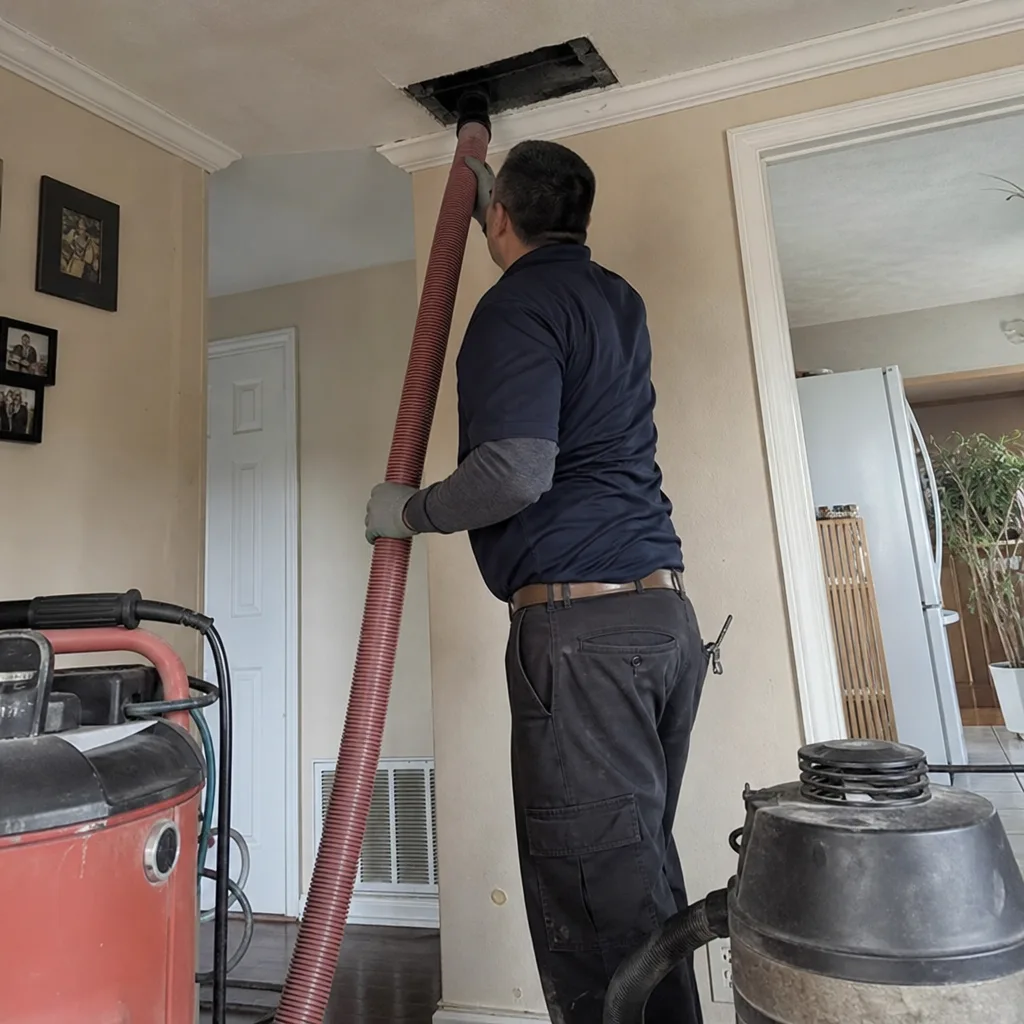 Before
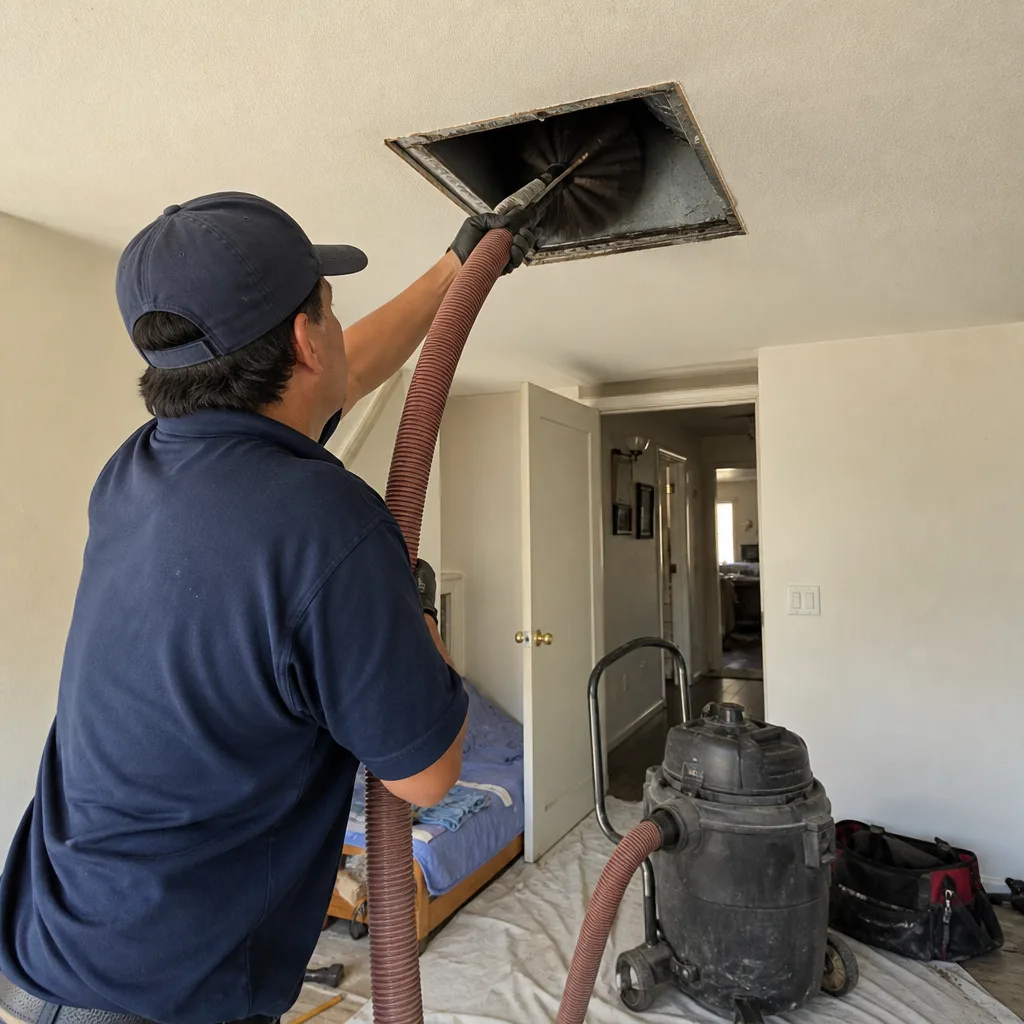 After
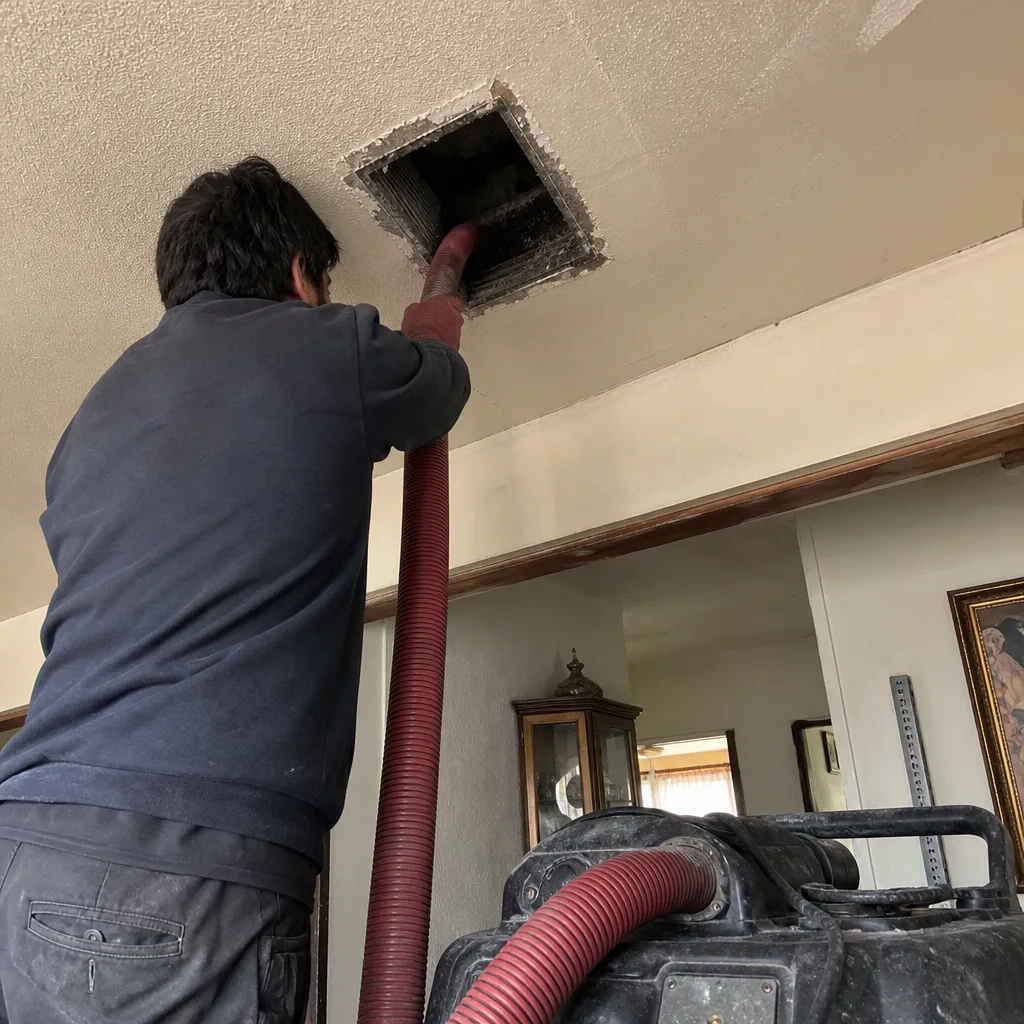 Before
 After
 Before
 After